
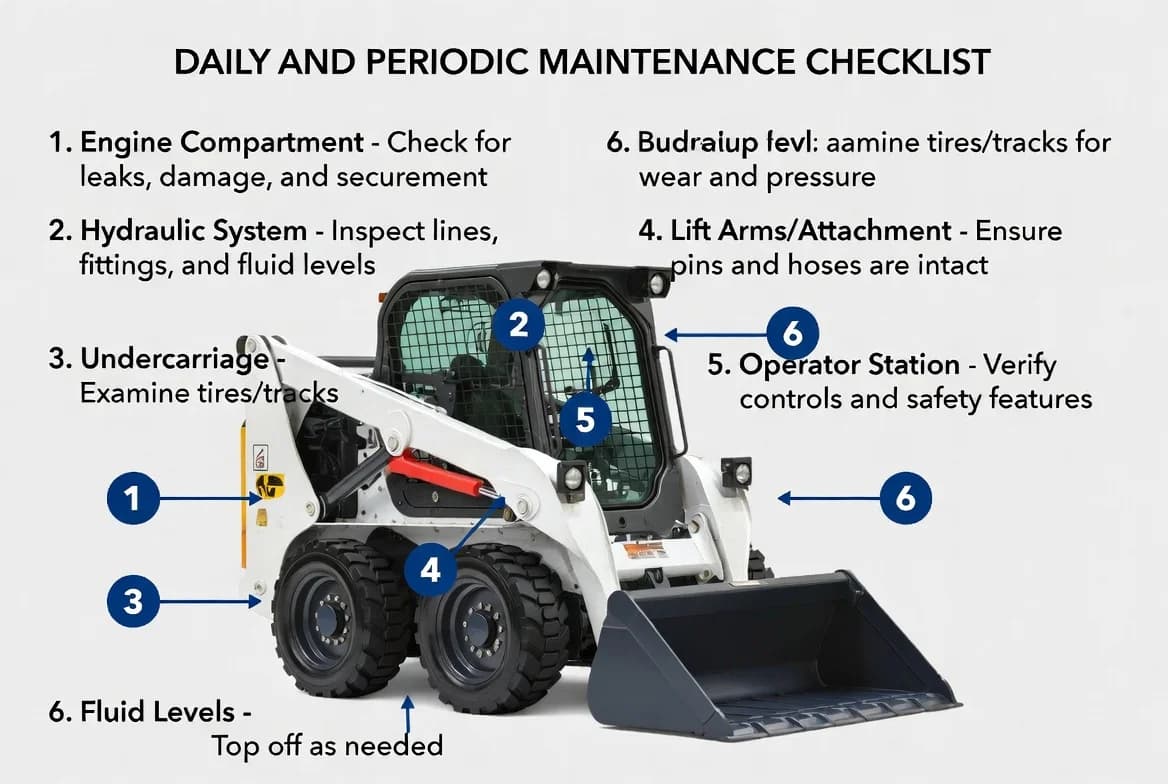
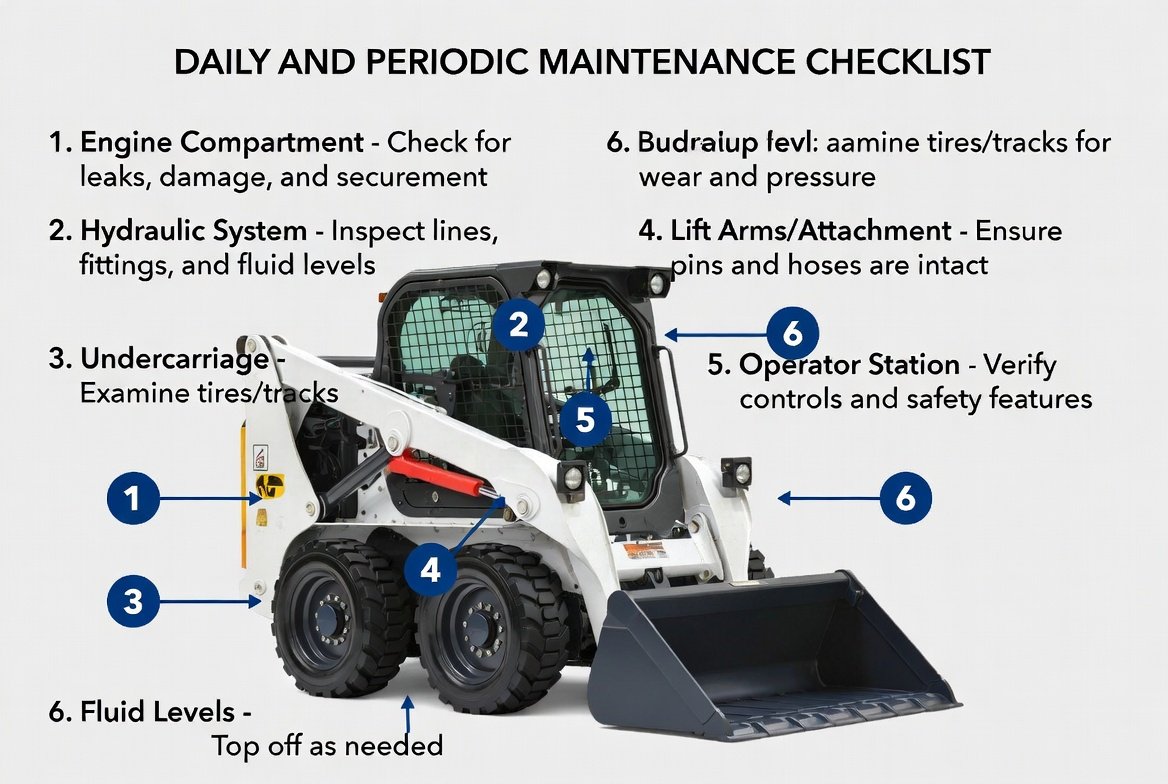
A structured daily and periodic maintenance program is the foundation of reliable skid-steer and compact-track-loader operation. The following checklist organizes the essential inspection and service items into a practical sequence that can be completed efficiently at the start of each shift and at scheduled intervals.
Daily Inspection Items
Walk around the machine and look for obvious damage, leaks, loose or missing parts, and unusual wear. Check that all safety guards, covers, and warning labels are in place. Inspect the tires or tracks for proper inflation or tension, cuts, embedded objects, and uneven wear. Examine the lift arms, quick-attach plate, and attachment for cracks, excessive pin wear, and proper locking engagement.
Check all fluid levels: engine oil, hydraulic oil, coolant, and fuel. Look for leaks at hoses, fittings, cylinders, and the engine. Inspect the radiator and hydraulic cooler for debris and clean as needed. Verify that the air-filter restriction indicator is not showing excessive restriction. Test all lights, the horn, the backup alarm, and any cameras or mirrors.
Enter the operator station and check that the seat belt, seat adjustment, and all controls function smoothly. Confirm that the parking brake holds and that the interlock systems (seat, restraint bar, etc.) operate correctly. Review the instrument panel for any warning lights or fault codes.
Periodic Maintenance
Follow the manufacturer’s service intervals for engine oil and filter, hydraulic oil and filters, fuel filters, air filters, and coolant. Grease all pivot points at the recommended frequency—often daily or every 8–10 hours for high-use machines. Inspect and adjust track tension or tire pressure regularly. Check final-drive oil levels and condition at the intervals specified in the manual.
At longer intervals, inspect the drive chains or belts (if equipped), the battery and charging system, and the condition of all hydraulic hoses. Replace wear items such as bucket cutting edges, teeth, and quick-attach wedges before they cause secondary damage. Keep a written or digital record of all inspections and services; trending this data helps predict component life and schedule downtime.
Best Practices
Perform inspections on level ground with the machine cold or at normal operating temperature as appropriate for the check being performed. Use only fluids and filters that meet the manufacturer’s specifications. Never ignore a warning light or unusual noise; investigate immediately. Train every operator on the inspection routine so that consistency is maintained across shifts and personnel.
A disciplined maintenance checklist takes only a few minutes each day yet prevents the majority of unexpected failures, extends component life, and keeps the machine safe and productive. Make the checklist a non-negotiable part of every shift.
Get More Expert Guides & Updates
Subscribe for Machinery.org guide updates and product learning content.