

Preventive care reduces downtime and protects the machine’s working life.
SEO title
Skid Steer Maintenance Schedule
URL slug
/skid-steer-maintenance-schedule/
Meta description
Use a skid steer maintenance schedule for daily, weekly, monthly, 250-hour, and 500-hour inspections, fluid service, filters, cooling, tires, tracks, and attachments.
A skid steer works in dust, mud, debris, heat, and repeated load cycles. Preventive maintenance keeps those conditions from turning normal wear into unexpected failure. The best schedule combines time-based checks, hour-based service, and condition-based inspection. It also follows the operator’s manual, because fluid types, intervals, filter locations, and adjustment procedures vary by model.
Maintenance should not be treated as a repair activity. Its purpose is to identify wear before production is interrupted. A loose pin can become an elongated bore. A small hose leak can become a burst line and contaminated system. A clogged cooler can cause overheating and shorten engine or hydraulic life. Daily inspection takes minutes, while the failure it prevents may cost days.
This guide provides a general schedule and explains the systems that deserve the greatest attention. It should be adapted to the machine, environment, and workload.

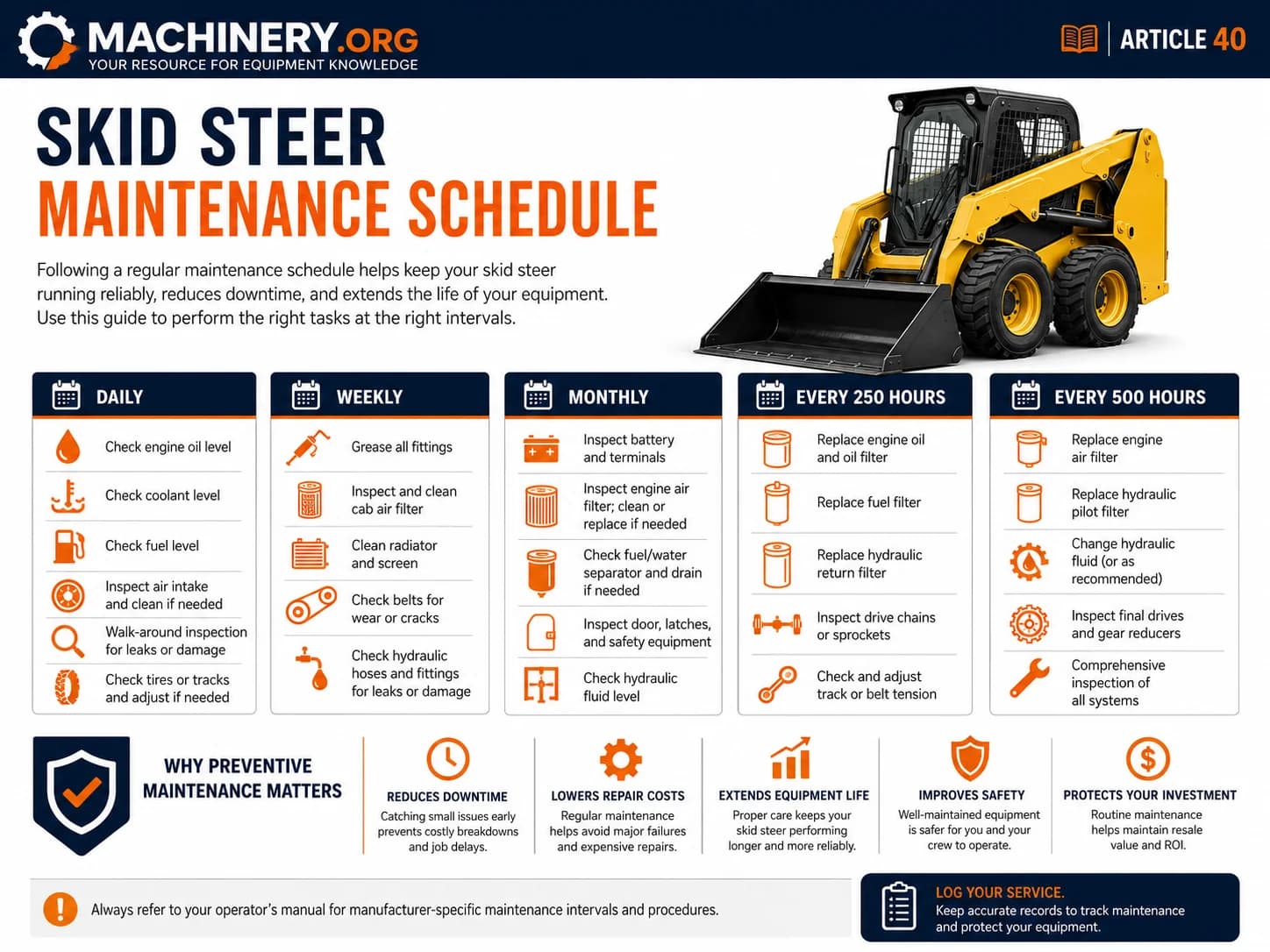
Figure 40.1. Machinery.org preventive maintenance intervals for daily, weekly, monthly, 250-hour, and 500-hour service.
Daily maintenance
Daily checks should be completed before operation and repeated after the shift when the machine works in severe conditions. Check engine oil, coolant, fuel, and hydraulic oil according to the correct procedure. Inspect beneath and around the machine for leaks. Clean debris from steps, the cab, engine compartment, and cooling-air inlets. Check the tires or tracks, attachment lock, hydraulic hoses, lift-arm pins, lights, alarms, and safety systems.
The operator should also note changes in sound, control response, smoke, temperature, and vibration. These observations create an early warning system. A maintenance log is more useful when it records symptoms, not only completed check boxes.
Weekly care
Weekly maintenance often includes greasing pivot points, cleaning the radiator and screens, inspecting the cab air filter, checking belts, and reviewing hoses and fittings. Greasing intervals may be shorter when the machine operates in water, abrasive dust, or continuous heavy cycles. Old grease and dirt should be wiped away so fresh lubricant reaches the joint instead of sealing contamination against the pin.
Monthly inspection
Monthly checks should examine the battery, terminals, air filter condition, fuel-water separator, door latches, restraints, lift-arm stops, and hydraulic oil level. Inspect structural welds and the quick-attach plate closely. Wear in the coupler can create movement that damages both the machine and attachments. Check tire wear or track condition for patterns that suggest alignment, pressure, tension, or operating problems.
Engine oil and filter service
Engine oil carries contaminants and protects internal parts. Use the required viscosity and specification. Warm oil drains more completely, but service should be performed safely. Replace the filter, inspect the old oil for unusual metal or contamination, refill accurately, run the engine, check for leaks, and verify the final level after settling.
Fuel and air systems
Dirty fuel and restricted air flow reduce power and increase smoke or fuel use. Drain water separators as required and replace fuel filters at the correct interval. Air filters should be inspected without introducing dirt into the intake. An element should not be repeatedly cleaned beyond the manufacturer’s guidance. Check the intake plumbing for loose clamps or cracks that could allow unfiltered air into the engine.

Figure 40.2. Skid steer inspection map covering the engine, hydraulic hoses, quick attach, tires or tracks, cooling system, battery, filters, and loader arms.
Hydraulic system service
Hydraulic oil and filters protect pumps, valves, cylinders, and motors. The correct fluid is essential. Mixing incompatible fluids can change viscosity, additive performance, and seal behavior. Keep fill points and service tools clean. Inspect cylinder rods, hose routing, couplers, and fittings. A high-pressure leak should never be checked with a hand; escaping fluid can penetrate skin.
Cooling system
Skid steers frequently overheat because dust and debris restrict the radiator, oil cooler, or screen. Clean from the correct direction so debris is removed rather than pushed deeper. Check coolant level only when safe, inspect hoses and clamps, and verify that fans and belts operate correctly. Repeated overheating must be diagnosed rather than managed by temporary shutdowns.
Tires, tracks, and drive components
Maintain tire pressure, wheel-nut torque, track tension, and undercarriage cleanliness. Inspect drive chains or sprockets where applicable. Uneven tire size or pressure can create driveline stress. On tracked loaders, packed debris and incorrect tension can accelerate roller, idler, sprocket, and track wear.
Loader arms, pins, and quick attach
Inspect lift arms and pivot points for cracks, movement, worn bushings, and loose pins. Check that the quick-attach plate is flat, the locking mechanism moves freely, and pins engage fully. Attachment wear should be repaired before it damages the carrier interface. Never work under raised arms without the approved support device installed.
General interval framework
Daily: fluid levels, leaks, cooling inlets, tires or tracks, hoses, attachment lock, and safety devices.
Weekly: grease, filters and screens, belts, radiator cleaning, and detailed hose inspection.
Monthly: battery, air intake, fuel-water separator, structure, latches, and hydraulic level.
Approximately 250 hours: engine oil and filters, fuel filter, hydraulic return filter, and drive-system inspection as specified.
Approximately 500 hours and beyond: larger filter and fluid services, final-drive inspection, and comprehensive system review as specified.
Maintenance records
Record date, machine hours, service performed, parts used, fluid quantities, technician, and any defects discovered. Good records prevent missed service, support warranty claims, improve resale value, and reveal repeated failures. Digital or paper systems can work; consistency matters more than complexity.
Severe-service adjustments
Dust, high heat, cold starts, demolition debris, salt, mud, water, and long hydraulic attachment use may require shorter intervals. The machine’s indicators and fluid analysis can help refine the schedule. Preventive maintenance should respond to real working conditions rather than assuming every hour is equally demanding.
Frequently Asked Questions
Is the same maintenance schedule correct for every skid steer?
No. This guide is a general framework. The operator’s manual and manufacturer requirements control the exact tasks and intervals.
What is the most important daily maintenance task?
A complete walk-around is the foundation because it can reveal leaks, damage, loose parts, cooling restrictions, and attachment problems before startup.
Should service records be kept after the warranty ends?
Yes. Records support maintenance planning, troubleshooting, resale value, and proof of machine care throughout ownership.
Key Takeaway
A reliable skid steer is built through repeated small maintenance actions. Inspect daily, service at the correct hours, keep systems clean, and record every important finding.
Publishing note: Confirm model-specific specifications, service intervals, attachment requirements, and applicable safety rules before publication or field use.
Get More Expert Guides & Updates
Subscribe for Machinery.org guide updates and product learning content.