
Introduction
Pallet forks are among the most useful and cost-effective attachments a skid steer owner can buy. They transform a compact machine into a practical material handler capable of lifting, carrying, staging, and organizing a wide range of loads. On construction sites they move pallets of block, brick, drywall, or bagged materials. On farms they handle seed, feed, fencing supplies, and crates. In warehouses, yards, and landscape operations they help move palletized goods and bulky materials safely and efficiently. Because of this versatility, pallet forks often become one of the most frequently used attachments in the fleet.
Despite their simplicity, pallet forks require more skill and attention than some new operators expect. The load sits out in front of the machine, visibility can be limited, and stability changes quickly if the operator raises the load too high, travels too fast, or carries the weight too far from the carriage. For Machinery.org readers, the best way to think about pallet forks is as a productivity tool that rewards careful setup and disciplined handling. Used correctly, they speed up daily work. Used carelessly, they create unnecessary risk.
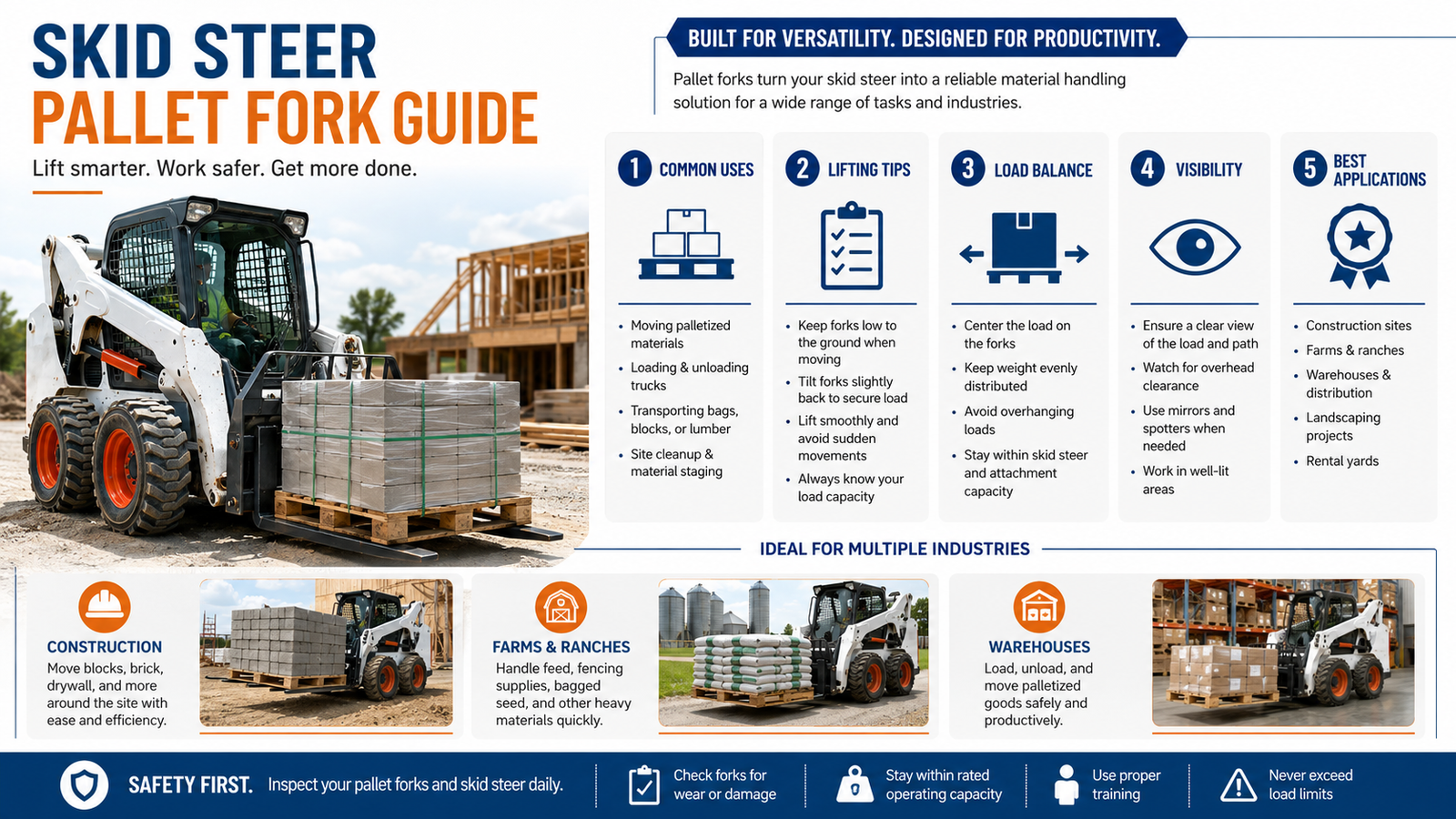
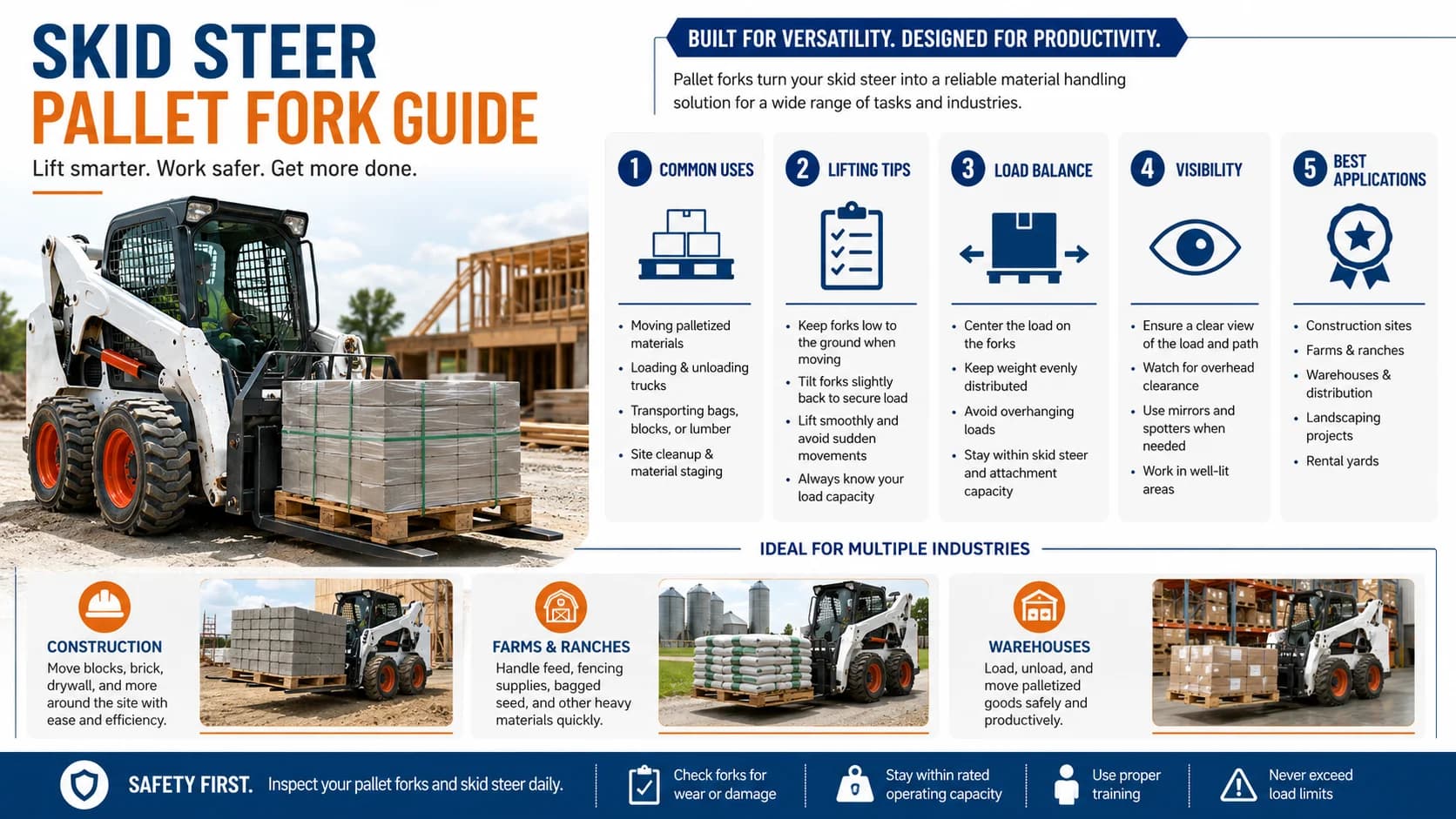
Figure 62.1 – Skid steer pallet fork guide.
Image Description: An infographic showing a skid steer with pallet forks, common uses, lifting tips, load balance reminders, and industry applications.
Where Pallet Forks Excel
Pallet forks are ideal wherever materials arrive, are stored, or need to be staged on pallets. Builders use them to unload trucks and place materials closer to the work area. Farmers use them for bulk bags, feed pallets, and fencing materials. Landscape and supply yards use them to handle bagged products and hardscape items. They are also valuable for general property management because they can move awkward items that a bucket does not hold as effectively. The key benefit is control: instead of scooping or dragging, the operator can lift and place with precision.
Excellent for construction materials, bagged goods, feed, seed, fencing supplies, and pallets of block or stone.
Useful for staging materials near crews to reduce manual handling time.
Often one of the easiest attachments to justify because of broad day-to-day usefulness.
Can improve site organization by keeping materials off the ground and easier to access.
Load Handling Basics
Safe fork operation begins with load placement. The load should be centered on the forks and kept as close to the carriage as possible. Fork spacing should support the pallet evenly, and the machine’s rated operating capacity must never be exceeded. Once lifted, the load should be carried low, with the boom arms lowered enough to maintain stability and visibility. Sudden starts, hard braking, or sharp turns can quickly destabilize both the machine and the load, especially on uneven terrain.
Slope awareness is essential. On grades, the heavy end of the machine should remain uphill whenever possible, and travel paths should be chosen carefully. Operators must also maintain a clear view or use a spotter when visibility is compromised. When unloading trucks or stacking materials, the operator should move deliberately and verify the landing surface before committing the load.
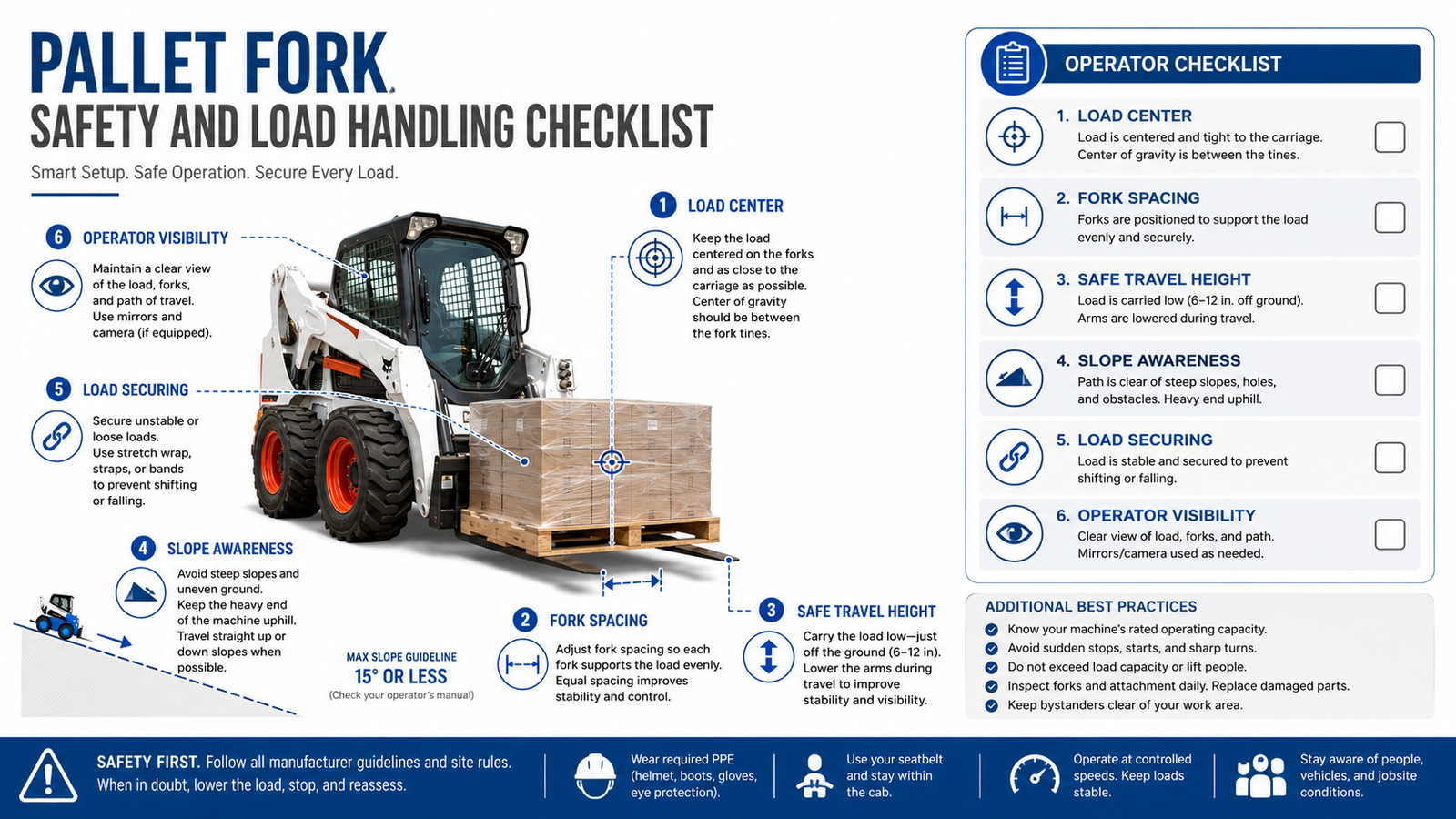
Figure 62.2 – Pallet fork safety and load handling checklist.
Image Description: A checklist-style infographic covering load center, fork spacing, safe travel height, slope awareness, load securing, and operator visibility.
Inspection and Attachment Condition
Pallet fork productivity depends on condition as much as technique. The forks themselves should be inspected for cracks, bent tines, worn heels, or damaged locking mechanisms. The carriage should be secure and the quick-attach system fully engaged. If operators frequently handle abrasive or heavy loads, regular inspection becomes especially important. Even a strong set of forks can become unsafe if neglected over time.
Operators should also inspect the machine. Tire or track condition, steering response, hydraulic function, and service brakes all influence safe material handling. This is particularly important in busy jobsites where loads must move through narrow spaces or around people and other equipment. A clean, well-maintained machine makes load handling more predictable and professional.
Buying Advice for New Owners
When buying pallet forks, buyers should consider carriage width, tine length, load capacity, visibility, and job type. Longer forks may help with oversized pallets, but they can also encourage poor load balance if operators attempt to handle more than the machine should carry. For many owners, a reliable general-purpose fork set is all that is needed. Others may need heavier-duty models for masonry, supply-yard, or agricultural use. A good dealer can help buyers match tine class and capacity to the machine’s intended work.
Pallet Fork Best Practices
Center the load and keep it close to the carriage.
Carry loads low during travel to improve stability and visibility.
Use slow, smooth motions and avoid sudden turns or stops.
Inspect tines, carriage locks, and the quick-attach system regularly.
Never exceed the rated operating capacity of the machine or the attachment.
Frequently Asked Questions
What makes pallet forks so useful on a skid steer?
They allow the machine to move palletized and bulky materials with more control and precision than a bucket, making them highly valuable in construction, agriculture, and storage environments.
How high should a load be carried while traveling?
Loads should usually be carried low to the ground during travel, only high enough to clear obstacles safely. Lower travel height improves stability and visibility.
Can pallet forks damage a skid steer if overloaded?
Yes. Overloading can destabilize the machine, overload components, and create serious safety hazards. Always follow both machine and fork capacity ratings.
Key Takeaway
Pallet forks are one of the most valuable skid steer attachments because they expand material-handling capability dramatically. Their full value appears when the operator respects stability, visibility, and attachment condition every time a load is moved.
Get More Expert Guides & Updates
Subscribe for Machinery.org guide updates and product learning content.