Introduction
One of the most important financial questions a buyer can ask is whether a skid steer should be rented or owned. The right answer depends on utilization, cash flow, downtime tolerance, attachment needs, and long-term operating plans. There is no single rule that fits every reader. A contractor running jobs every week may gain the most value from ownership. An occasional property owner may lose money by buying a machine that sits unused for most of the year. The smart decision is the one that aligns financial commitment with expected work volume.
Renting offers flexibility. Ownership offers control and equity. Renting allows the user to select the right machine for a short-term project without tying up capital in a long-lived asset. Ownership can deliver a lower effective cost per hour when the machine is used regularly and managed well. For Machinery.org readers, the decision becomes clearer when they evaluate the machine as a business or productivity tool rather than as a simple piece of equipment they happen to like.
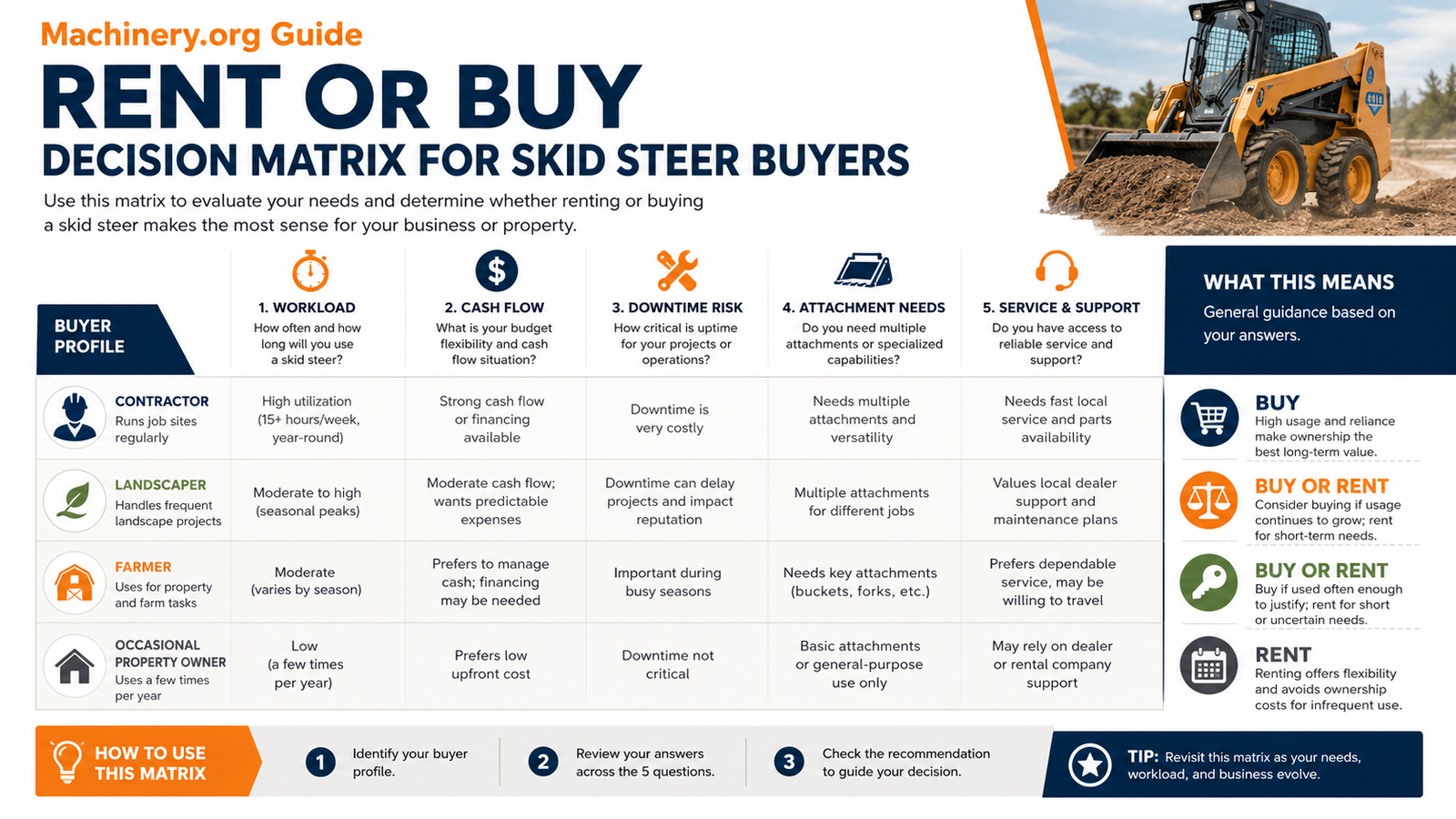
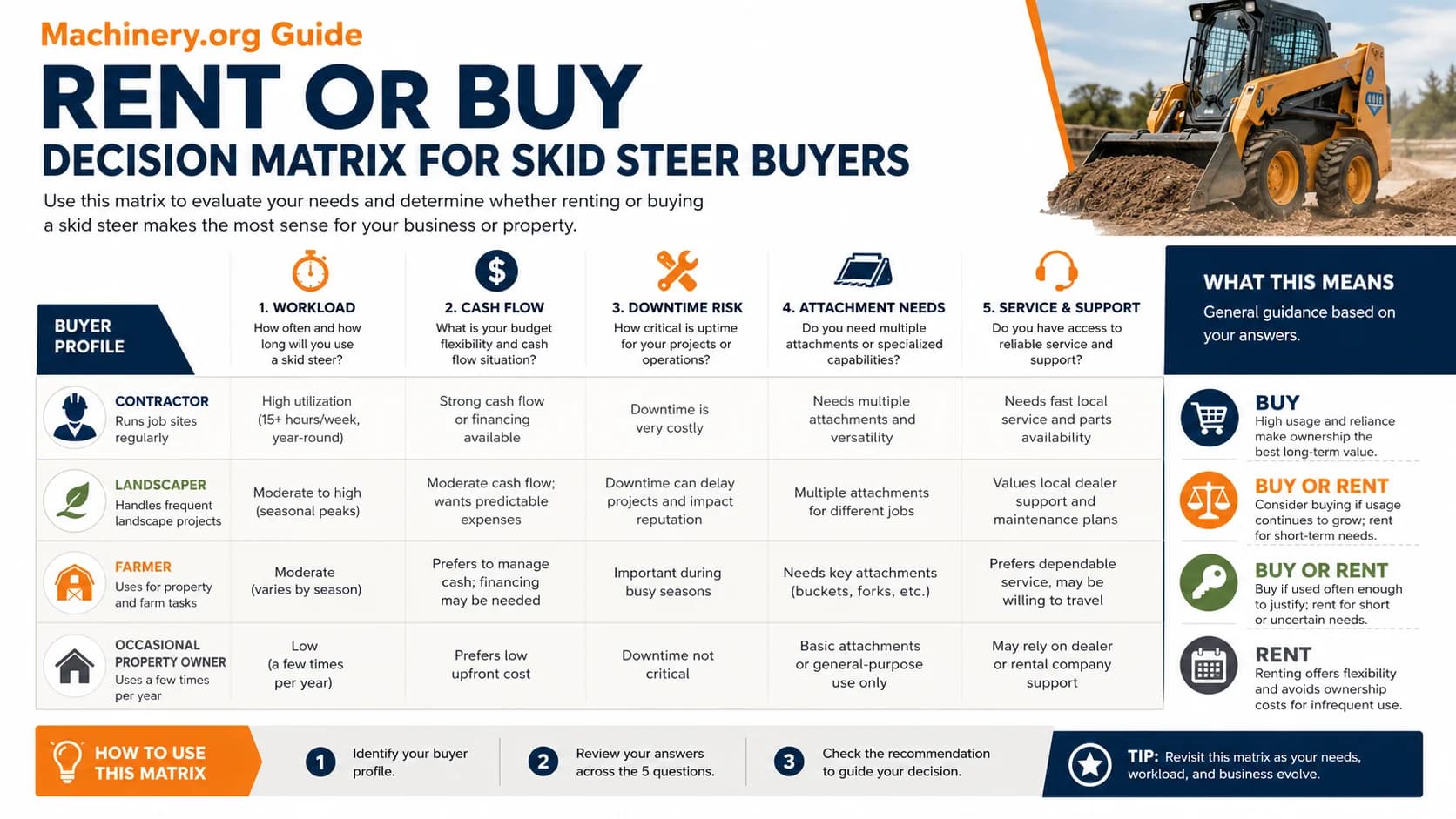
Figure 60.1 – Rent or buy decision matrix for skid steer buyers.
Image Description: A decision matrix infographic comparing buyer profiles such as contractors, landscapers, farmers, and occasional property owners for rent-versus-buy decisions.
When Renting Makes Sense
Renting is often the best answer for low utilization, seasonal needs, specialty projects, uncertain business growth, or situations where the correct machine size may vary from project to project. Rental also shifts much of the maintenance responsibility to the rental company and reduces the risk of long-term ownership costs. That can be especially useful for occasional users, property owners, and businesses still exploring whether a skid steer will become a regular part of operations.
Good fit for a few projects per year or for short bursts of seasonal use.
Helps conserve cash and reduce up-front capital commitment.
Makes it easier to select different machine sizes or hydraulic packages as jobs change.
Can reduce maintenance and storage burden for occasional operators.
When Ownership Makes Sense
Ownership becomes attractive when the machine is used often enough to justify payments, maintenance, and storage. Businesses that need dependable daily access, specific attachments, or predictable machine availability often benefit from owning. There is also a long-term value case: a well-maintained skid steer can retain resale value, support multiple attachments, and generate a lower hourly cost than repeated rental once utilization rises. Owners can also configure the machine exactly the way they want, without depending on rental inventory.
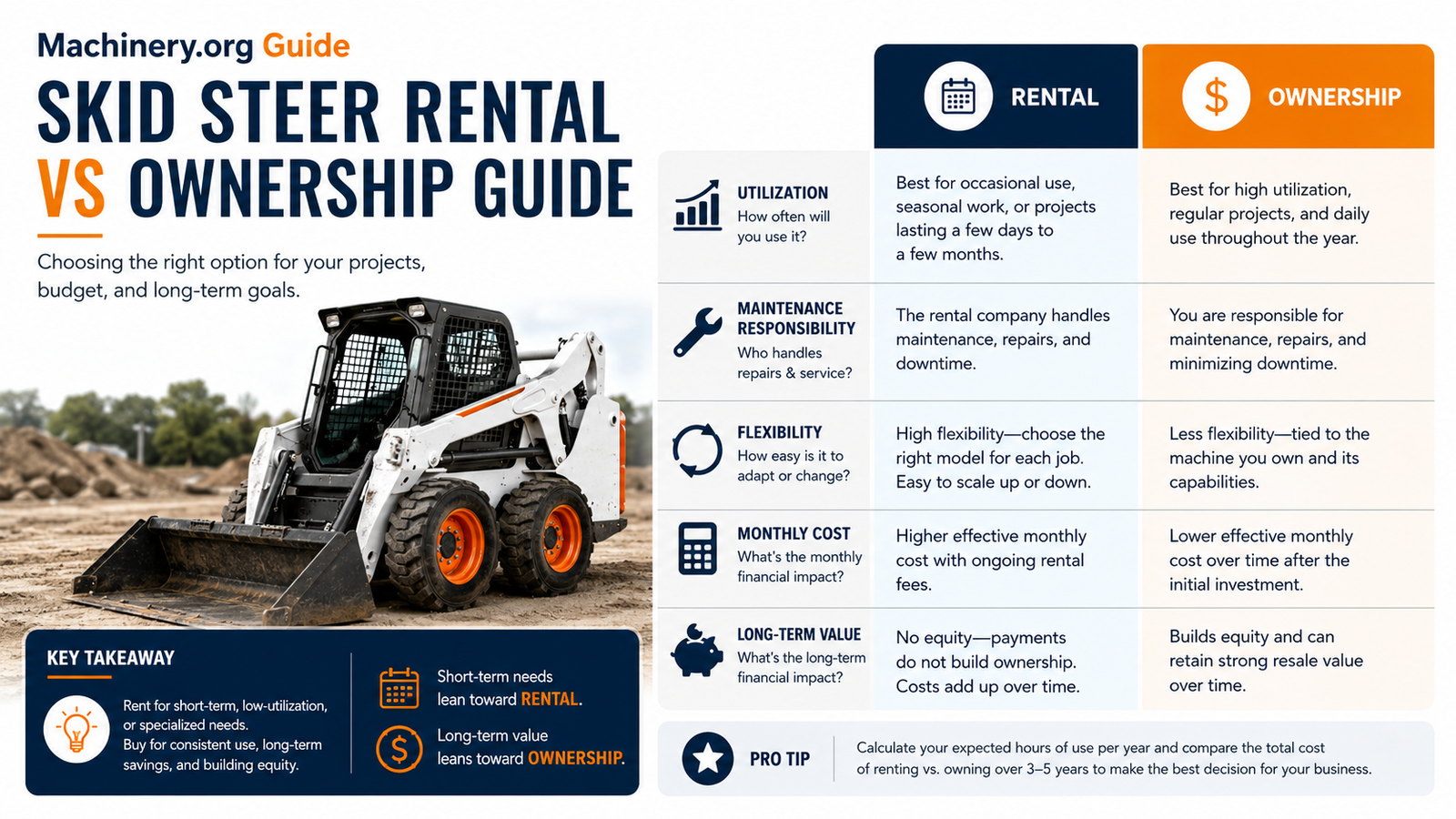
Figure 60.2 – Skid steer rental vs ownership comparison guide.
Image Description: A comparison chart contrasting rental and ownership across utilization, maintenance, flexibility, monthly cost, and long-term value.
How to Evaluate the Decision
A practical evaluation starts with workload. Ask how many hours per week or month the machine will realistically work. Then consider whether those hours are steady or highly seasonal. Next evaluate cash flow and financing comfort. Then consider downtime: if the machine becomes critical to your revenue, ownership may offer better continuity, especially when supported by a strong dealer. Finally, compare attachment plans. If your work depends on multiple attachments or a very specific hydraulic package, ownership may create more consistency and lower friction over time.
The Hidden Costs and Benefits
Neither path is free of trade-offs. Rentals can become expensive if used frequently, and availability is never guaranteed during busy seasons. Ownership, on the other hand, introduces repairs, service scheduling, depreciation, and storage. The best decision often emerges from a three- to five-year view. A buyer who only compares a single rental invoice with a single purchase price may miss the bigger picture. What matters is total cost, access, productivity, and how the machine supports your work over time.
Decision Questions to Use
How many hours per year will the machine work?
Will the machine be needed on short notice or can use be planned around rental availability?
Do you need the same attachment package consistently?
Are you comfortable managing maintenance, storage, and resale?
Would capital be better used elsewhere in the business right now?
Practical Conclusion
If use is infrequent, renting usually protects cash and lowers risk. If use is regular and strategic, ownership often creates better long-term value. In the middle are hybrid cases where some companies own one general-purpose machine and rent specialized machines or attachments as needed. That blended approach can be the smartest option of all. The best rent-versus-own decision is not emotional. It is operational. It should be based on how the machine fits the real workload, not on what looks good on paper alone.
Frequently Asked Questions
How many hours of use usually justify ownership?
There is no universal threshold, but regular recurring use throughout the year often strengthens the case for ownership. The more consistently the machine is used, the easier it becomes to spread ownership costs across productive hours.
Is renting always cheaper at the beginning?
Renting often has the lower up-front cost, but it is not always cheaper over time. Frequent rentals can add up quickly when a machine becomes a regular need.
Can a mixed strategy work?
Yes. Many businesses own a general-purpose skid steer for everyday use and rent specialized attachments or additional machines only when demand spikes or unusual projects appear.
Key Takeaway
Rent when flexibility and low commitment matter most. Buy when the machine will be used consistently enough to turn ownership into a long-term productivity and value advantage.
Get More Expert Guides & Updates
Subscribe for Machinery.org guide updates and product learning content.