
Introduction
A stump grinder attachment gives a skid steer the ability to remove unwanted stumps quickly and efficiently, which is valuable for land clearing, landscaping, property cleanup, and site restoration. Instead of relying on slow excavation or manual cutting methods, the operator can grind the stump down to or below ground level, making the area easier to backfill, grade, and reuse. This turns an obstacle into a manageable task and helps property owners reclaim space more cleanly.
Stump grinding is especially attractive for contractors and property managers because it reduces labor while leaving less disruption than full stump excavation in many situations. But success depends on planning. Stump size, wood condition, underground hazards, debris control, and work-zone safety all influence both productivity and risk. A stump grinder is extremely useful, but it should always be operated with a deliberate process.
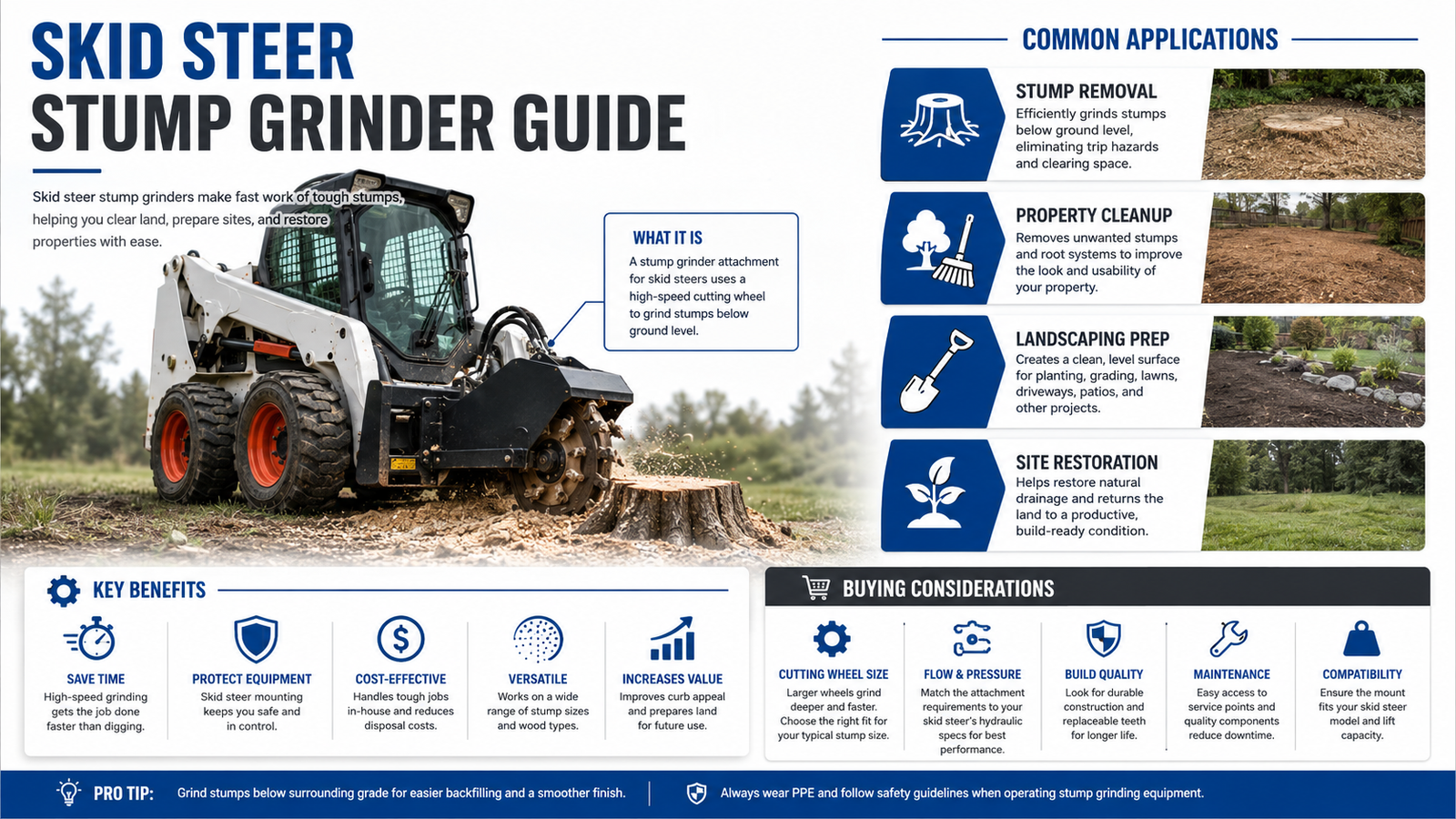
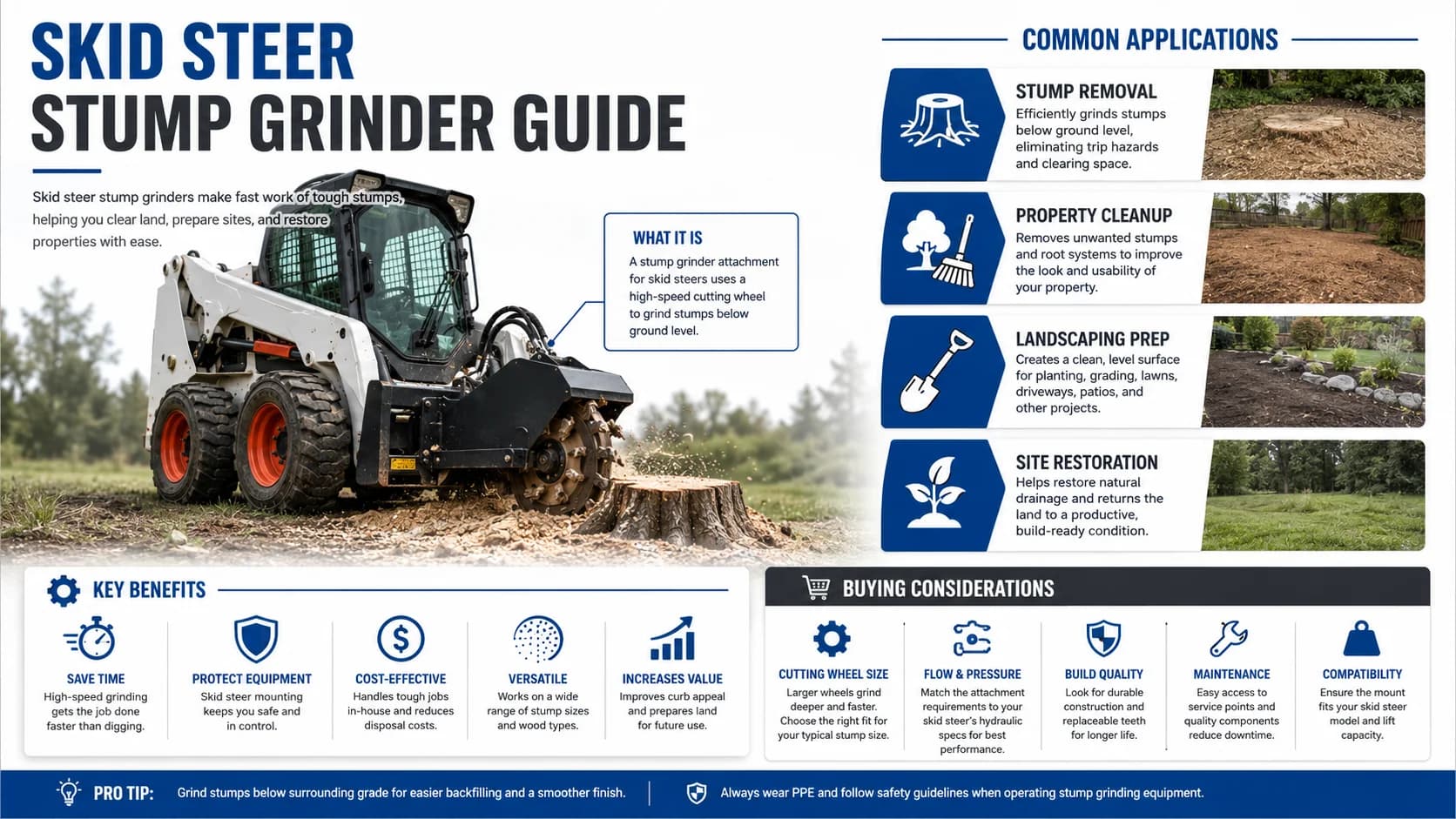
Figure 69.1 – Skid steer stump grinder guide.
Image Description: An infographic showing a stump grinder attachment, what it is, common applications, key benefits, and buying considerations.
Best Uses and Key Benefits
Stump grinders are commonly used after tree removal, during property improvement projects, in landscape renovation, and as part of site preparation work. They are also useful in lot cleanup where remaining stumps create trip hazards or interfere with future grading and planting. Their biggest benefit is that they remove the visible obstacle while producing a manageable wood-chip byproduct that can be cleaned up or reused.
Useful for stump removal after tree cutting or storm cleanup.
Improves property appearance and eliminates trip hazards.
Supports landscaping, patio, driveway, and planting preparation.
Often causes less overall ground disturbance than full stump extraction.
Planning the Job Before Grinding
The first planning step is to inspect the stump and surrounding area. The operator should look for rocks, concrete, nails, buried metal, irrigation lines, utility risks, and unstable ground. The work zone should then be marked and kept clear of bystanders. Because debris can be thrown outward during grinding, a proper safety radius is essential. Personal protective equipment such as eye, face, hearing, and foot protection should be part of the standard routine.
Stump size and wood condition also influence the process. Harder species, wider stumps, and extensive root flare require more time and more careful grinding passes. The operator should approach the task methodically rather than trying to remove too much material at once.
Figure 69.2 – Stump grinding safety and work-zone checklist.
Image Description: A safety infographic covering debris safety zone, protective gear, stump inspection, ground hazards, cutter tooth inspection, and cleanup steps.
Safety Checklist and Work-Zone Control
A strong stump-grinding routine includes establishing a debris safety zone, checking the cutter teeth, confirming protective gear, inspecting the stump itself, and scanning the ground for hidden hazards. Once grinding is complete, cleanup matters too. Shutting down properly, allowing the cutter to stop, raking chips, and restoring the site all contribute to a professional result. Stump grinding is not finished when the cutting stops; it is finished when the area is clean and safe.
Routine maintenance should include inspection of cutter teeth, tooth pockets, fasteners, and hydraulic connections. Worn teeth reduce efficiency and can create more vibration and stress. Like all demanding attachments, the stump grinder rewards owners who inspect and service it consistently.
Ownership Advice
Buyers should look at cutter wheel design, service access, tooth replacement cost, and the attachment’s hydraulic requirements. Some users only need occasional property-level capability, while others may use a stump grinder regularly in landscaping or land improvement work. The right choice is the one that fits your machine and the size of stumps you commonly encounter.
Frequently Asked Questions
What is the main advantage of a stump grinder?
It removes stumps quickly while causing less broad disturbance than many full-excavation methods.
How large should the safety zone be?
Always follow manufacturer guidance, but the key principle is to keep people, pets, and vehicles well away from the debris area during grinding.
Do stump grinder teeth need frequent inspection?
Yes. Tooth condition directly affects performance, safety, and overall grinding efficiency.
Key Takeaway
A stump grinder is an efficient attachment for clearing unwanted stumps and reclaiming usable space. Its best results come from planned work zones, proper inspection, and steady operating discipline.
Get More Expert Guides & Updates
Subscribe for Machinery.org guide updates and product learning content.