
SEO Title
Skid Steer Transport and Trailer Guide
URL Slug
/skid-steer-transport-and-trailer-guide/
Meta Description
Learn how to select a suitable trailer, position and secure a skid steer, inspect the towing system, and prepare for safer equipment transport.
Transporting a skid steer safely requires more than driving it onto a trailer and attaching a few chains. The tow vehicle, hitch, trailer, ramps, brakes, tires, securement equipment, and load position must work as one system. A mistake in any part of that system can create trailer sway, brake failure, shifting cargo, component damage, or a serious road incident.
The correct transport procedure depends on the actual machine weight, installed attachment, trailer rating, tow-vehicle rating, local law, and manufacturer instructions. Because legal requirements differ by country, state, province, and road class, this guide provides general planning principles rather than a substitute for local regulations. Operators and owners must verify current legal requirements before transport.
This article covers trailer selection, loading preparation, weight distribution, tie-down methods, road-ready inspection, and post-departure checks. The aim is a repeatable transport routine that protects the machine, the towing equipment, and everyone sharing the road.
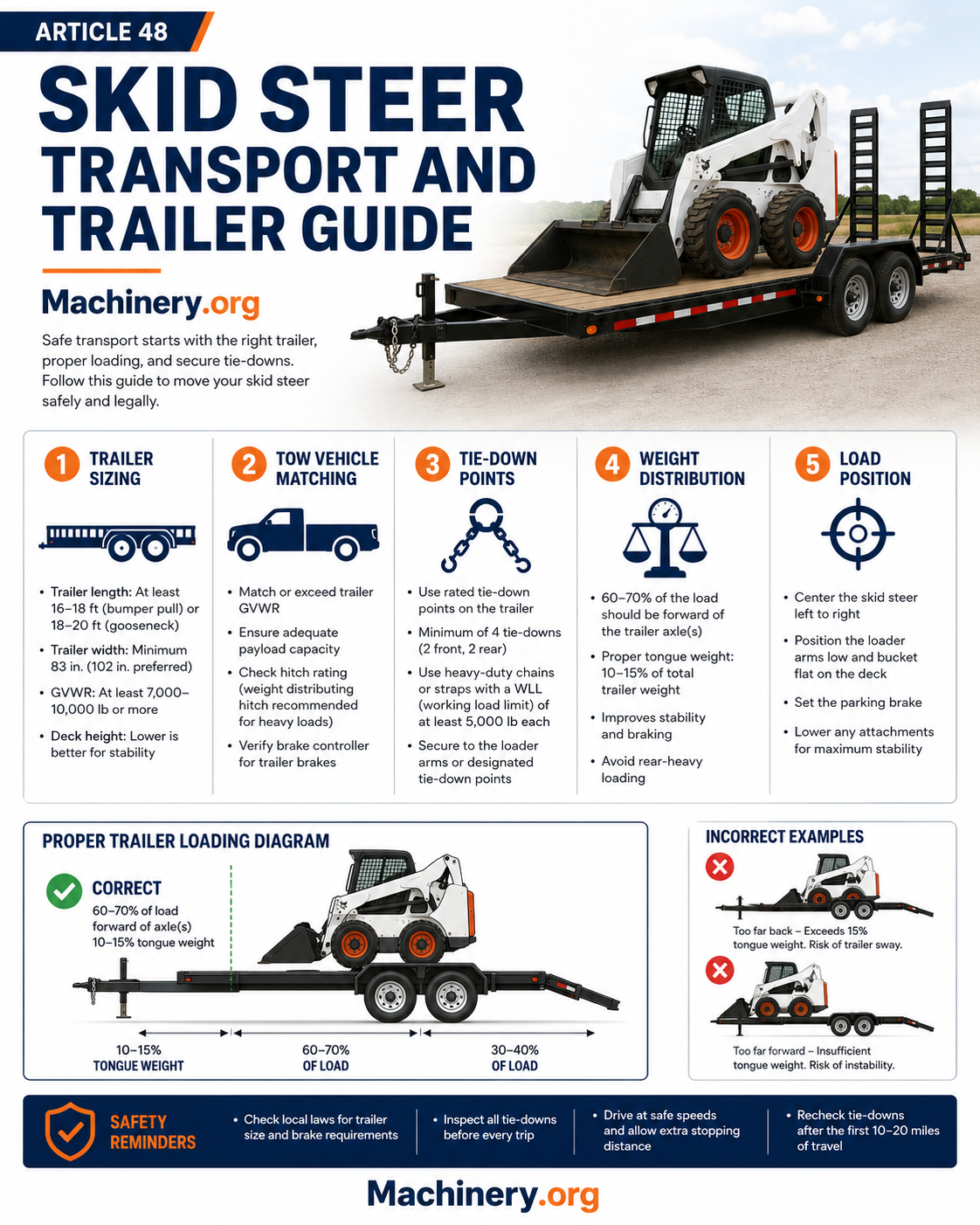
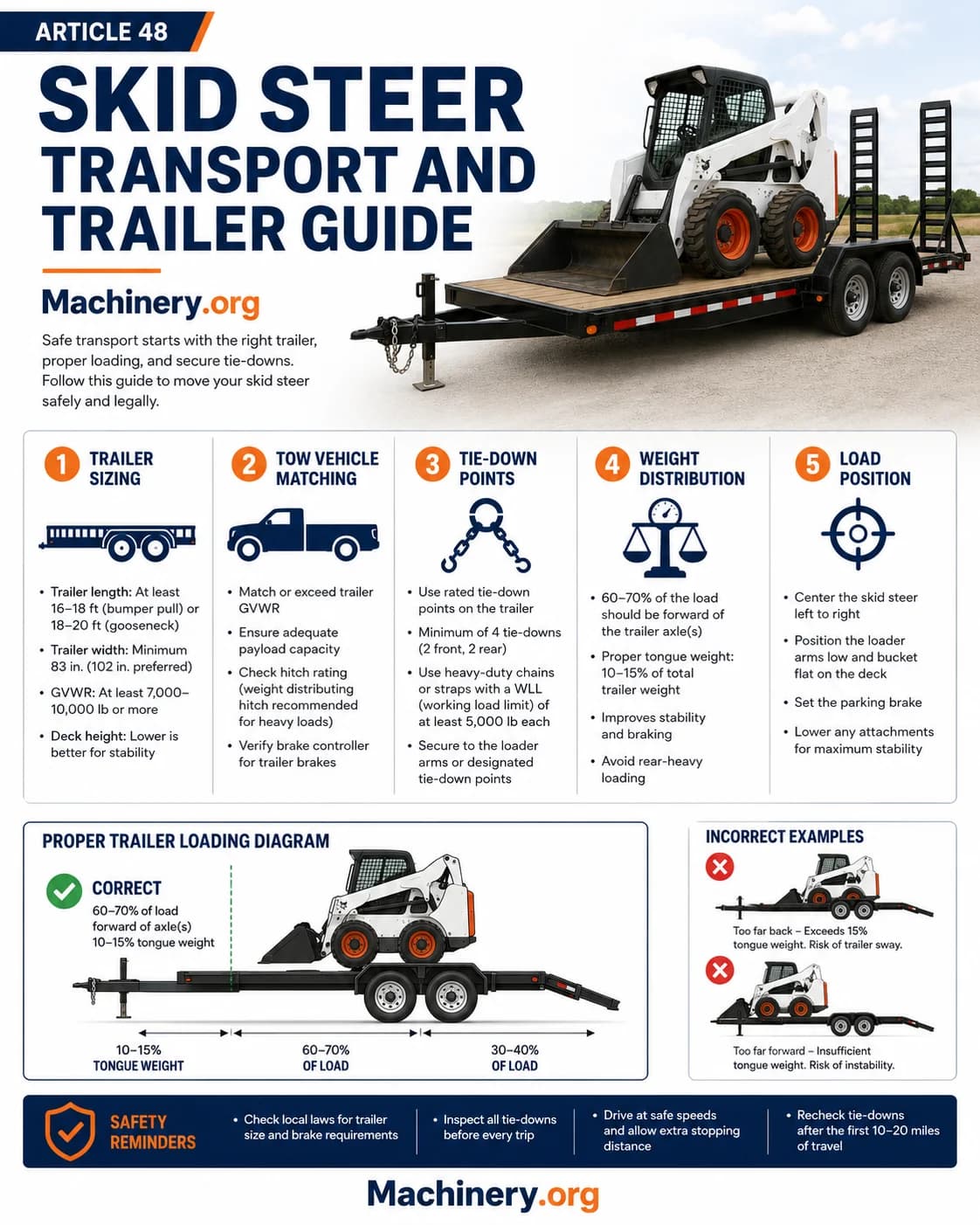
Figure 48.1. Machinery.org transport overview covering trailer sizing, tow-vehicle matching, securement, weight distribution, and skid steer position.
Confirm the complete transport weight
The skid steer operating weight shown in a brochure may not represent the exact transport load. Fuel, bucket, forks, tracks, counterweights, cab configuration, and other attachments can change the total. The trailer must also carry chains, binders, spare attachments, and support equipment placed on the deck. Owners should use reliable machine and attachment weights and, when necessary, verify the loaded combination on a certified scale.
Trailer payload capacity is not the same as gross vehicle weight rating. Payload is the remaining capacity after the trailer’s empty weight is subtracted from its rating. Axle ratings, tire ratings, wheel ratings, deck structure, ramp capacity, hitch rating, and tow-vehicle limits must also support the actual combination. The lowest-rated component controls the safe limit.
Match the tow vehicle, hitch, and brake system
The tow vehicle must be rated to pull and control the loaded trailer. Check the manufacturer’s towing capacity, gross combined weight rating, payload, rear axle rating, hitch rating, and any required weight-distribution system. Tongue weight becomes part of the tow vehicle’s payload, along with passengers, tools, and cargo in the vehicle.
Trailer brakes, brake controller, breakaway system, safety chains, lighting connector, and hitch coupler should be inspected before every trip. A powerful tow vehicle does not compensate for weak trailer brakes or an overloaded rear axle. The combination must accelerate, steer, and stop predictably under real road conditions.
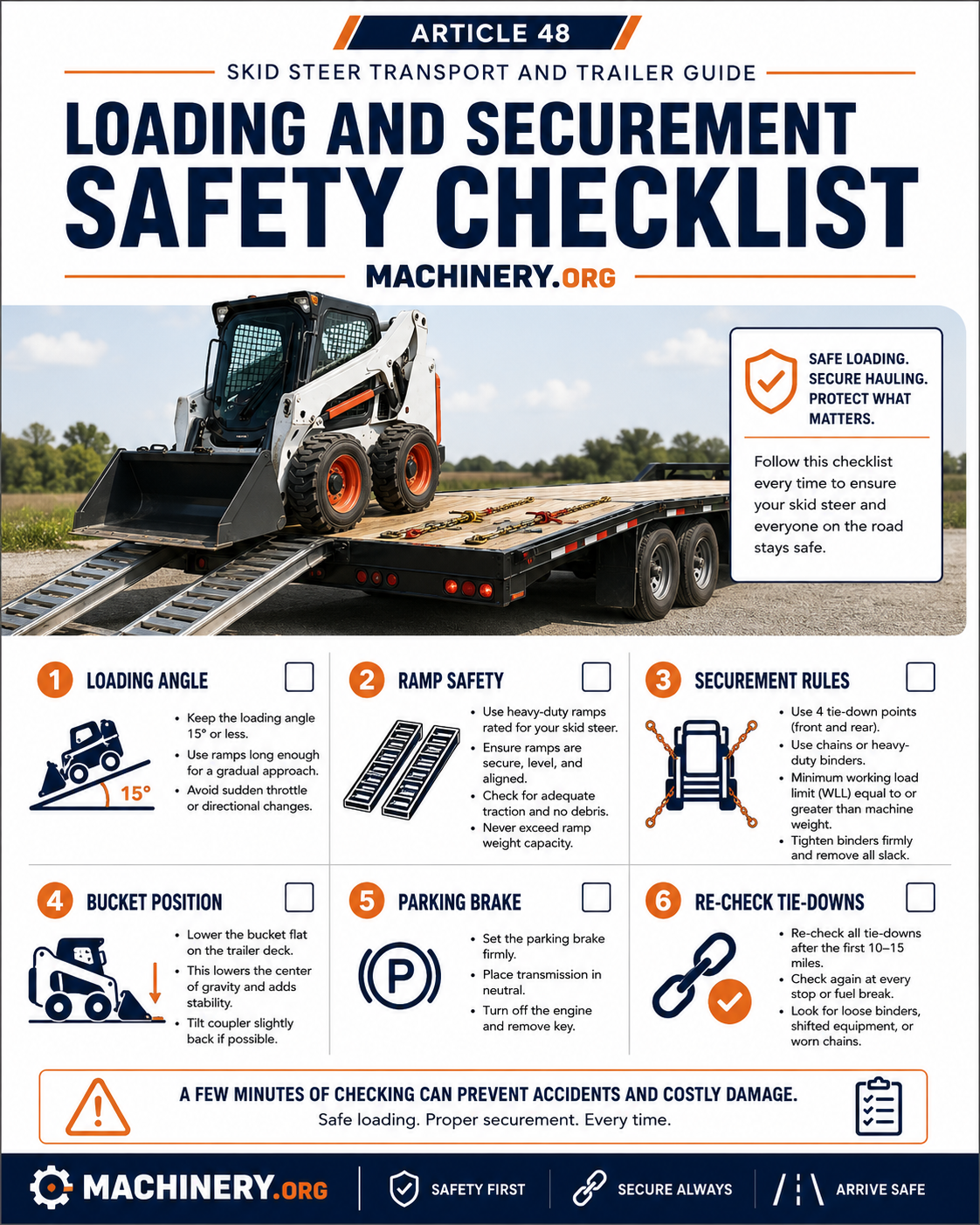
Figure 48.2. Machinery.org loading and securement checklist for ramps, loading angle, bucket position, parking brake, and tie-down rechecks.
Prepare a stable loading area
Load and unload on firm, level ground whenever possible. The trailer should be coupled to the tow vehicle, the parking brake applied, and wheels secured as appropriate. Ramps must be rated for the machine, fully seated, aligned with the tires or tracks, and free from mud, oil, ice, and loose material. A gradual loading angle reduces the risk of the machine high-centering or becoming unstable as it transitions from the ramp to the deck.
The operator should wear the seat belt, keep the attachment low, travel straight, and avoid sudden steering corrections. A spotter can help with alignment but must remain visible and outside the machine’s path. No one should stand behind the trailer, between the ramps, or beside a machine that could slide or turn unexpectedly.
Position the skid steer for balanced loading
The machine should be centered left to right and placed to achieve the correct axle and tongue-weight distribution for the trailer design. Too much weight behind the trailer axles can reduce tongue weight and encourage sway. Too much weight forward can overload the hitch, tow-vehicle rear axle, or front of the trailer. A general percentage shown in an infographic is not a universal rule; the final position must be verified against the trailer, tow vehicle, and actual scale weights.
Lower the bucket or attachment to the deck, place the controls in the required safe position, set the parking brake, and shut down according to the operator manual. Secure separate attachments independently when required. Do not rely on hydraulic pressure or the parking brake as cargo securement.
Use rated securement equipment
Chains, straps, binders, anchor points, and hooks must be rated, undamaged, and suitable for the machine weight and local rules. Use manufacturer-designated tie-down points when available. The securement arrangement should prevent forward, rearward, sideways, and vertical movement. Sharp edges, hydraulic hoses, cylinders, and vulnerable components should not be used as anchor points.
Securement requirements differ by jurisdiction and machine weight, so confirm the required number and working load limit of tie-downs. Each chain and binder should be inspected for stretch, cracks, bent links, damaged hooks, worn threads, or improper repairs. Remove slack and lock binders according to their design.
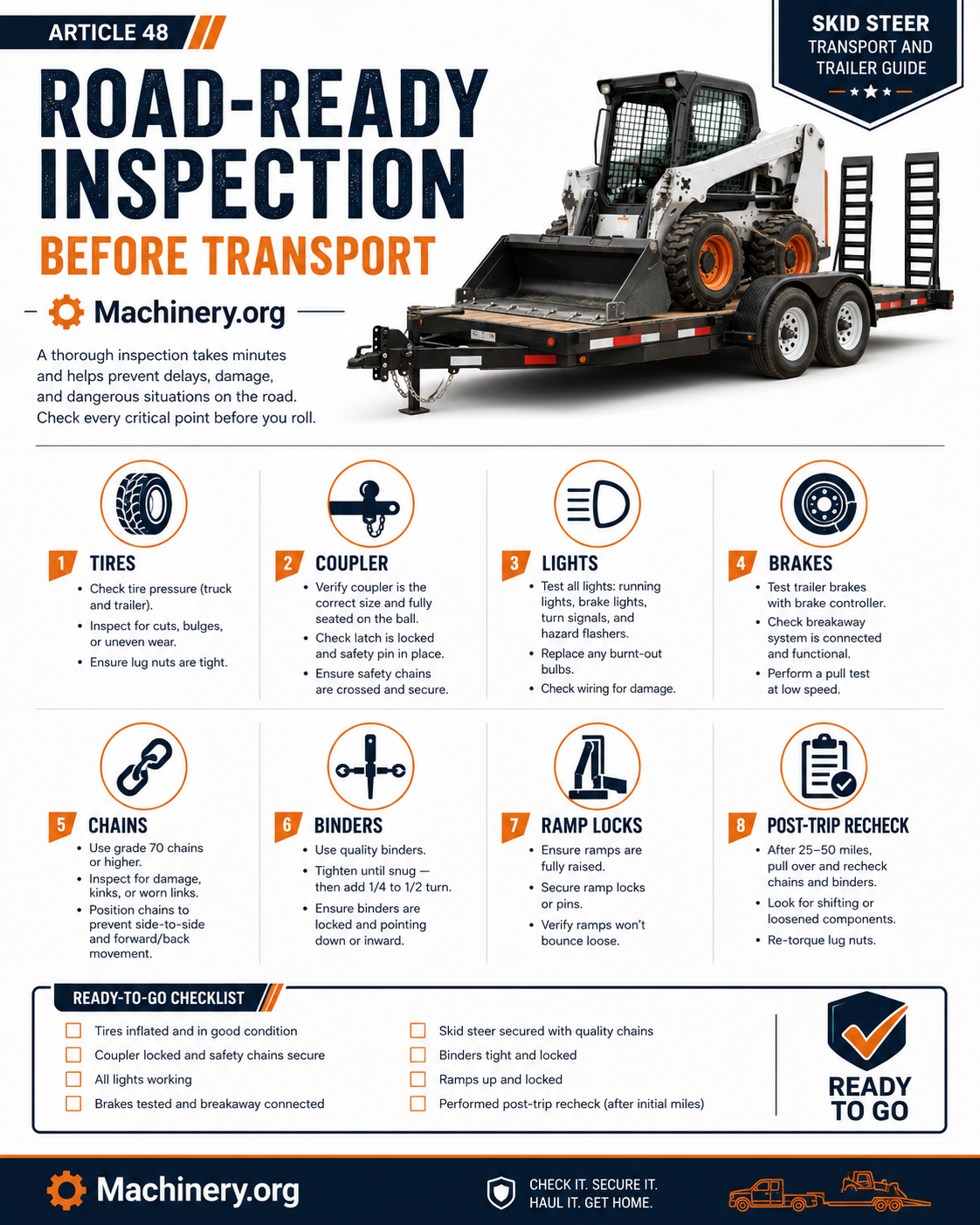
Figure 48.3. Machinery.org road-ready inspection of trailer tires, coupler, lighting, brakes, chains, binders, ramp locks, and post-trip checks.
Complete a road-ready inspection
Inspection area
Checks before departure
Why it matters
Tires and wheels
Pressure, cuts, tread, lug nuts, bearing condition
Supports load and helps prevent roadside failure.
Hitch and coupler
Correct size, fully seated, latch locked, safety pin installed
Prevents trailer separation.
Safety chains and breakaway
Crossed or routed correctly, connected to approved points, switch functional
Provides backup protection if the primary connection fails.
Lights and wiring
Tail, brake, turn, marker, license, and hazard lights
Maintains visibility and legal signaling.
Brakes
Controller response, trailer brake function, breakaway battery
Provides controlled stopping for the loaded combination.
Securement
Chains, straps, binders, attachment restraint
Prevents machine movement and damage.
Ramps and loose equipment
Pins, locks, tools, spare attachments
Prevents objects from moving or falling onto the road.
Recheck after departure
The first miles of travel can settle the load and reduce tie-down tension. Stop in a safe place and recheck the machine, chains, binders, ramps, tires, and lighting. Repeat inspections at legally required intervals, fuel stops, and after rough roads, emergency braking, or any event that may have shifted the load. Listen for new vibration and watch mirrors for movement or trailer sway.
Transport checklist
Verify actual machine, attachment, trailer, and cargo weights.
Confirm tow vehicle, hitch, axle, tire, brake, and trailer ratings.
Load on stable ground using clean, rated, correctly seated ramps.
Position the skid steer for correct balance and scale-confirmed axle loads.
Lower the attachment, shut down correctly, and use rated tie-down points.
Test lights, brakes, breakaway system, coupler, safety chains, and ramp locks.
Recheck securement shortly after departure and throughout the trip.
Legal note: Transport and cargo-securement laws change by location and may be updated. Verify current requirements with the relevant transportation authority, trailer manufacturer, tow-vehicle manual, skid steer manual, and qualified transport professionals.
Frequently Asked Questions
Can I choose a trailer based only on the skid steer brochure weight?
No. Include fuel, attachments, counterweights, cargo, and trailer empty weight. Confirm payload, axle, tire, ramp, hitch, and tow-vehicle ratings.
Is the parking brake enough to secure the machine?
No. The parking brake and lowered attachment are part of the shutdown procedure, but the machine still requires approved cargo securement.
Why should tie-downs be rechecked after departure?
The machine and securement equipment can settle during the first miles, reducing tension. A safe stop and recheck can identify movement before it becomes dangerous.
How many chains are required?
Requirements depend on machine weight, securement design, and local law. Follow current regulations and use designated tie-down points with adequate working load limits.
Key Takeaway
Machinery.org takeaway: Safe transport depends on the complete combination: accurate weights, compatible ratings, stable loading, balanced positioning, rated securement, and repeated inspection. Verify local law and manufacturer guidance every time the transport setup changes.
Get More Expert Guides & Updates
Subscribe for Machinery.org guide updates and product learning content.