
Introduction
A trencher attachment turns a skid steer into a practical utility and irrigation installation machine. It allows operators to cut narrow trenches for water lines, electrical conduit, drainage, low-voltage systems, and fence or foundation-related work without the expense of a dedicated trencher in every case. For contractors, farms, and property managers, this can be a highly efficient way to tackle recurring installation work using an existing compact machine platform.
Still, trenching is one of those jobs where planning matters as much as equipment. Soil conditions, trench depth, chain type, spoil placement, underground utilities, and site access all affect the result. A trench that is poorly planned can interfere with drainage, create unsafe work conditions, or require extensive rework. That is why Machinery.org readers should view trenching as a process rather than a simple act of digging. The best results come when site planning, chain choice, and operating rhythm all work together.
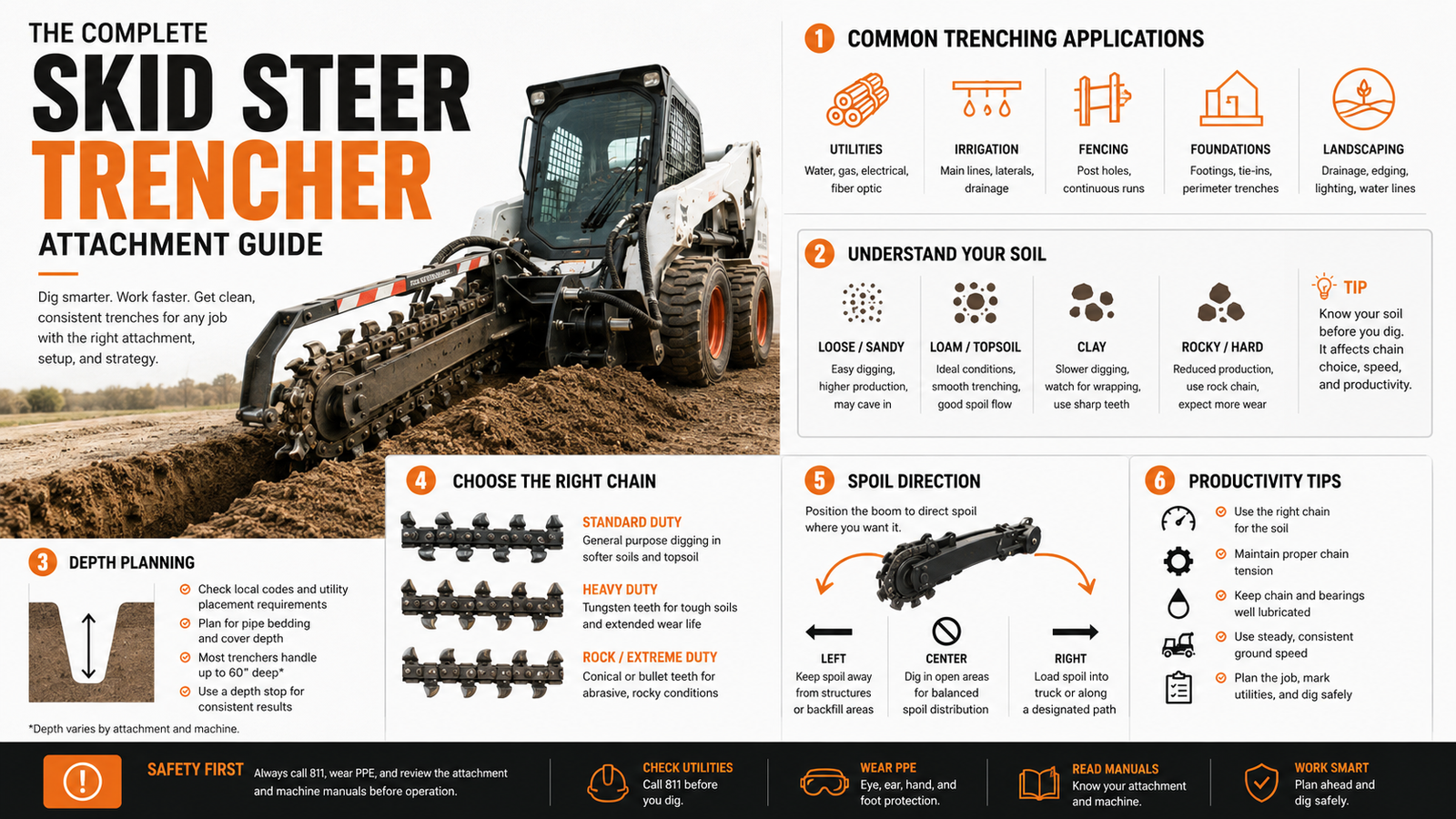
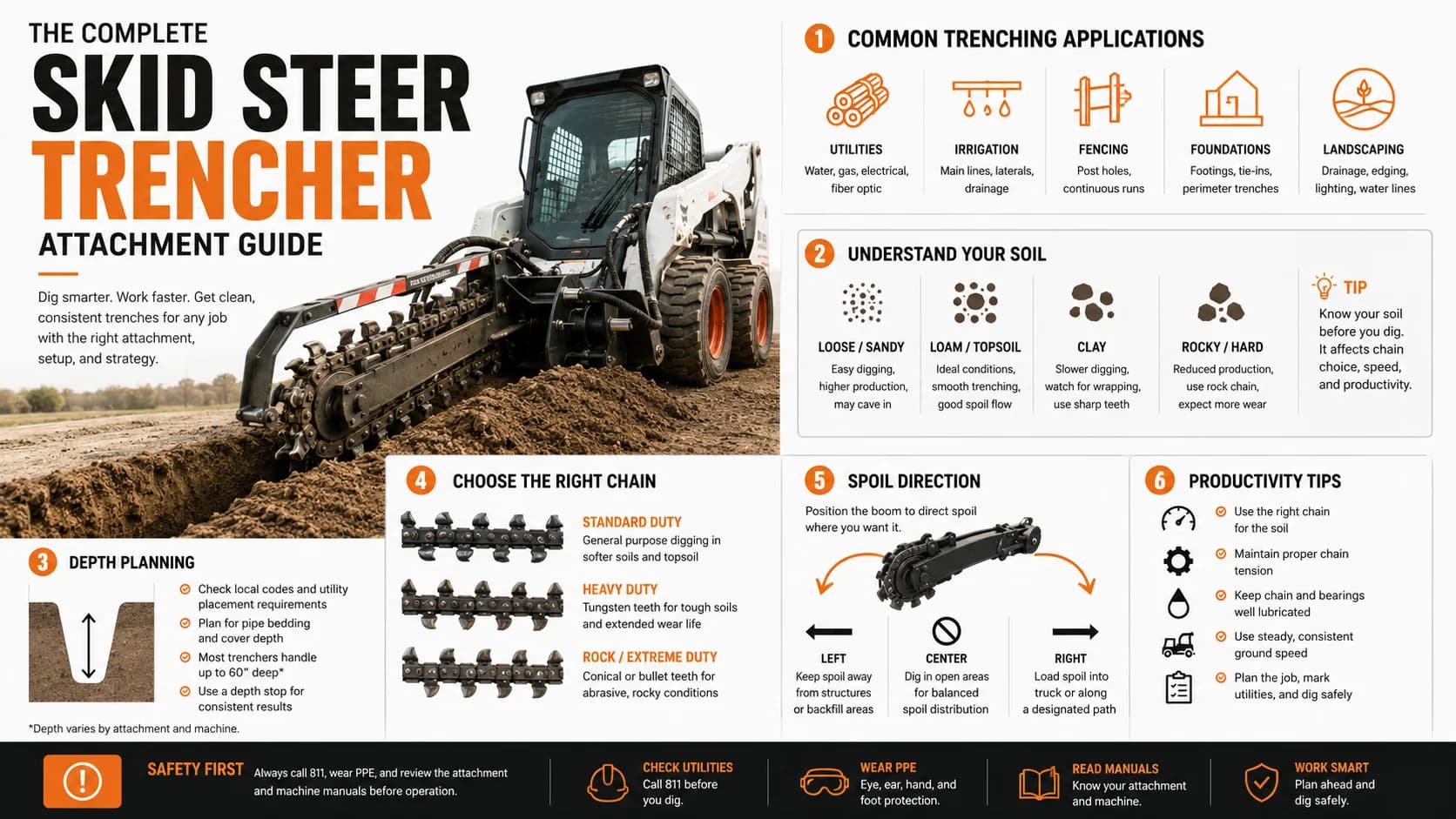
Figure 64.1 – Skid steer trencher attachment guide.
Image Description: An infographic showing common trenching applications, soil awareness, chain options, spoil direction, and productivity tips for a skid steer trencher.
Typical Applications and Attachment Strengths
Skid steer trenchers are commonly used for utility runs, irrigation lines, fencing-related foundations, drainage channels, and landscape edge or conduit work. Their strength lies in creating relatively narrow, controlled trenches efficiently. Compared with broader excavation methods, they reduce unnecessary soil disturbance and can move quickly across long linear runs. This makes them especially attractive where the operator needs neat work with minimal restoration after installation.
Useful for water, gas, electrical, telecom, irrigation, and drainage installation.
Efficient for long, narrow trench runs where clean spoil control matters.
Often reduces surface disruption compared with wider excavation methods.
Can be adapted to different ground conditions by using the correct chain and tooth setup.
Understanding Soil and Choosing the Chain
Soil conditions strongly influence chain selection and productivity. Softer soils may work well with standard chain configurations. Harder ground, clay, or rocky conditions may require more durable teeth or specialized chain designs. If the chain is poorly matched, production slows, wear increases, and the trench may finish rough or inconsistent. This is one reason professional operators often treat chain choice as a serious planning decision rather than an afterthought.
Depth planning also matters. Operators should know the required trench depth before starting and should confirm local installation requirements for whatever line or conduit is being installed. A trench that is too shallow can fail inspection or create future risk, while one that is too deep increases unnecessary work and backfill needs.
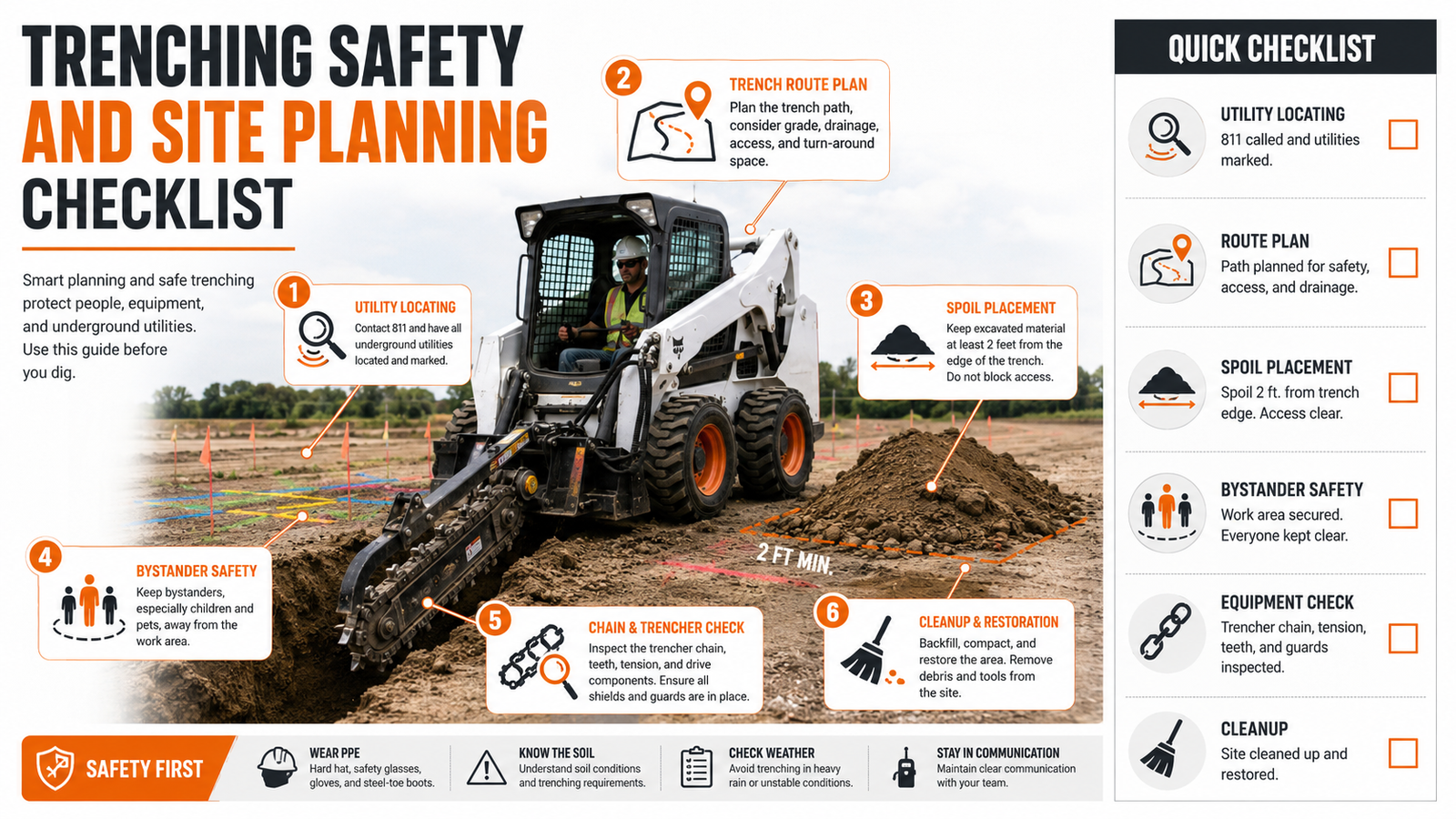
Figure 64.2 – Trenching safety and site planning checklist.
Image Description: A trenching checklist infographic showing utility locating, route planning, spoil placement, bystander safety, equipment inspection, and cleanup steps.
Site Planning and Safety
The first trenching rule is always to identify underground utilities. No trench should begin until utilities have been located and marked according to local practice. Once that is done, the operator should map the trench route, think about grade and drainage, identify turn-around space, and choose where spoil will be placed. Spoil should not block access or slide back into the trench. In many settings, a simple site plan can prevent most of the common trenching mistakes that waste time later.
Bystander safety is also essential. Even though a skid steer trencher may look less dramatic than a large excavator, the moving chain and the cut trench create significant risk. The operator should maintain a clean work area, keep others away from the trench path, inspect chain tension, and ensure guards and shields are in place. Cleanup and restoration after the trench is completed are part of the job, not separate afterthoughts.
Ownership and Practical Buying Advice
For buyers considering a trencher, the key questions are how often trenching will be required, what depth and soil conditions are common, and whether the machine has the hydraulic performance to support the chosen attachment. Some owners only need a light-duty trencher for property improvements. Others need a more capable setup for contractor or utility-support work. Dealer support, replacement parts, tooth availability, and serviceability should all play a role in the buying decision.
Trenching Checklist
Locate and mark all underground utilities before trenching.
Match the chain and teeth to the soil condition and the job.
Plan the trench route, spoil placement, and cleanup before starting.
Inspect chain tension, teeth, guards, and hydraulic connections daily.
Monitor trench depth and keep the work area safe and organized.
Frequently Asked Questions
What is the biggest safety rule in trenching?
The most important rule is to locate underground utilities before digging. Safe trenching starts with proper utility marking and route planning.
Why does chain choice matter?
Different chain and tooth configurations perform differently in soft soil, clay, and rocky ground. The right chain improves productivity and reduces wear.
Are skid steer trenchers good for irrigation work?
Yes. They are commonly used for irrigation and drainage because they can cut narrow, efficient trenches with limited surface disruption.
Key Takeaway
A trencher attachment can deliver fast, neat installation work, but success depends on route planning, utility safety, the correct chain choice, and consistent inspection. Smart trenching is as much about planning as it is about digging.
Get More Expert Guides & Updates
Subscribe for Machinery.org guide updates and product learning content.