
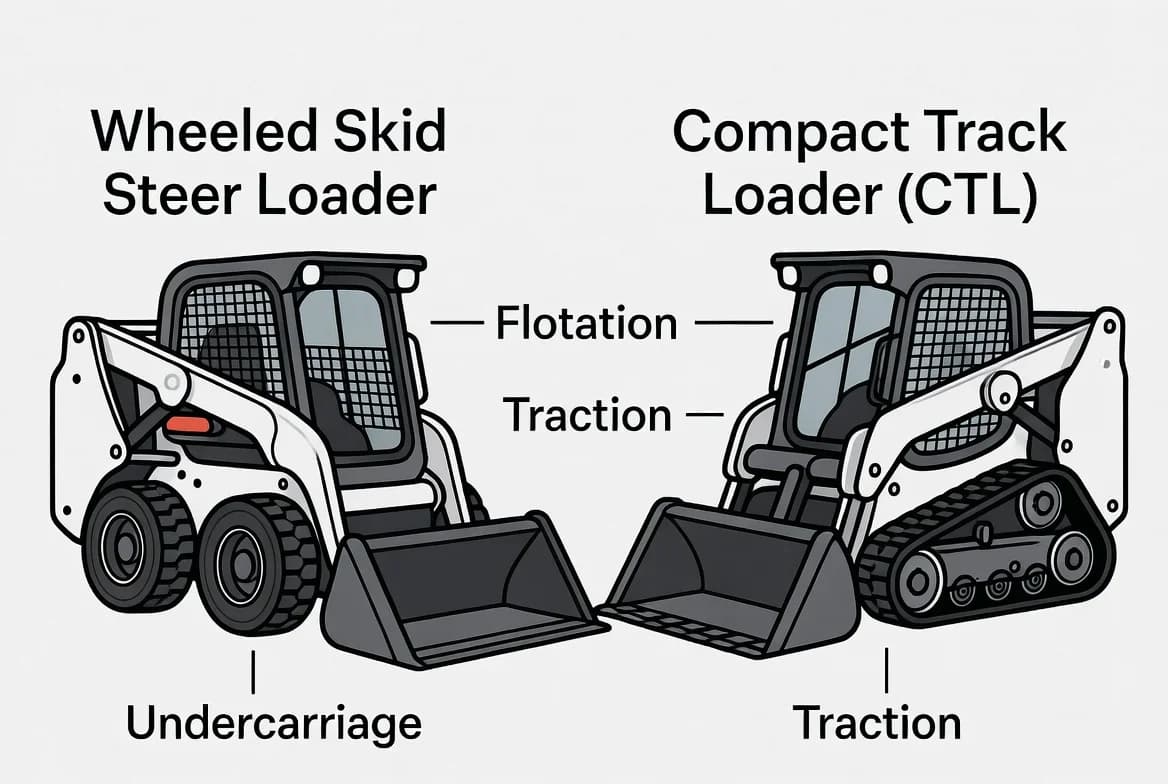
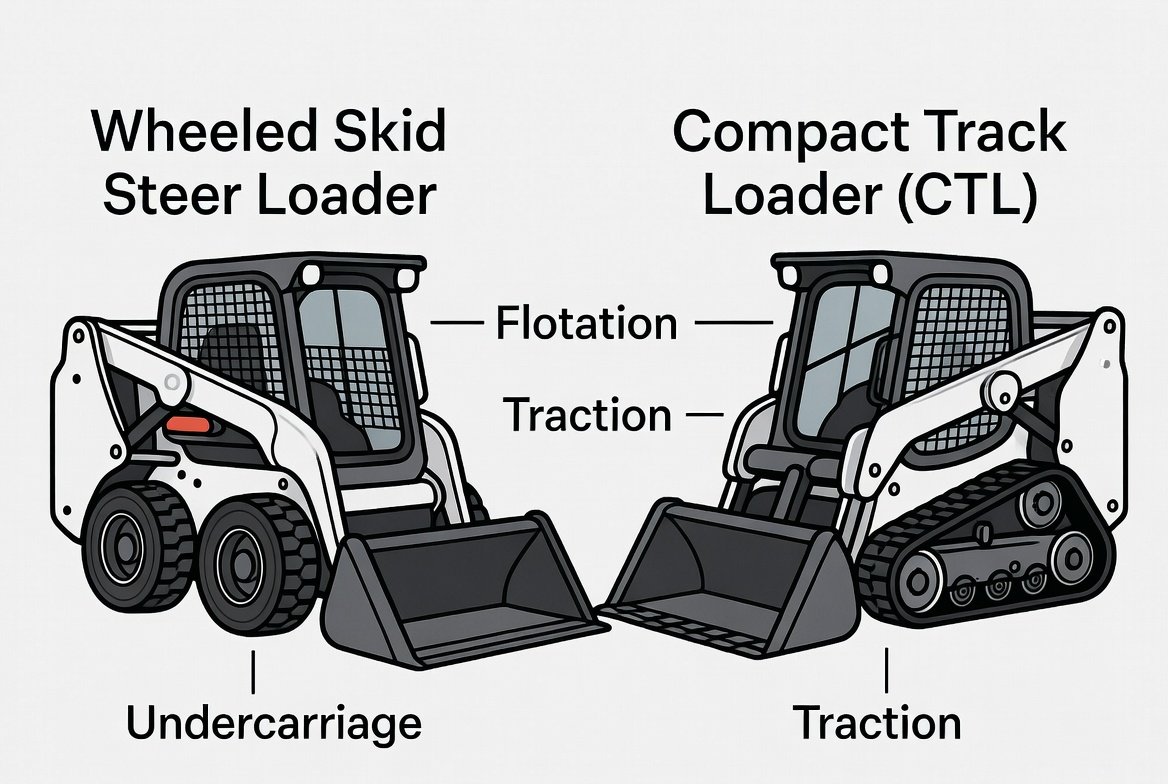
The fundamental difference between a skid steer and a compact track loader (CTL) is the undercarriage. A skid steer rides on four wheels and steers by skidding the wheels on one side; a CTL rides on continuous rubber tracks. Ground pressure for a typical skid steer is in the range of 25–40 psi, while a comparable CTL operates at approximately 3.5–6 psi—roughly one-third to one-fifth the pressure. This difference determines performance on soft, wet or finished surfaces. On firm, flat surfaces such as concrete, asphalt or compacted gravel, the skid steer is faster (often 10–12 mph versus 6–9 mph for a CTL), more manoeuvrable for tight turns, and less expensive both to purchase and to maintain. Tire replacement is cheaper than track and undercarriage component replacement. On soft, muddy, uneven or turf-sensitive ground the CTL provides superior traction, lower ground disturbance and better stability. Rated operating capacity is calculated differently (50 % of tipping load for wheeled machines versus 35 % for tracked machines under SAE J818), so published ROC figures must be compared carefully. Purchase price for a CTL is typically 20–30 % higher than a same-size skid steer. Annual undercarriage costs are also higher. The correct choice is therefore driven by the predominant ground conditions and the relative importance of speed versus flotation and traction.
When comparing specific models, always consult the current manufacturer specification sheets and load charts for the exact configuration under consideration. Published typical ranges above are drawn from industry sources current as of 2025–2026 and are intended for orientation; individual model performance can vary with options, undercarriage, and attachment configuration. A structured decision matrix that weights the factors most important to the intended application—terrain, duty cycle, transport, residual value, and operator preference—produces the most reliable selection.
Total cost of ownership remains the ultimate measure. Capital cost, fuel or energy, maintenance, transport, residual value and downtime must all be quantified over the planned ownership period. Side-by-side demonstration on the actual job site, when possible, remains the most conclusive validation of which machine will deliver the higher productivity and lower risk for a given contractor or fleet.
Get More Expert Guides & Updates
Subscribe for Machinery.org guide updates and product learning content.