

SEO Title
Skid Steer Winter Operation and Storage Guide
URL Slug
/skid-steer-winter-operation-and-storage-guide/
Meta Description
Prepare a skid steer for cold starts, winter traction, snow work, daily shutdown, and long-term storage with a practical seasonal checklist.
Cold weather changes how a skid steer starts, lubricates, grips the ground, charges its battery, and responds hydraulically. Snow, ice, salt, moisture, and freezing temperatures also accelerate corrosion and expose maintenance problems that may remain hidden in warm weather. Winter reliability depends on preparation before the first cold morning, careful operation during the season, and a proper storage routine when the machine will sit unused.
The correct winter procedure varies by model, fuel system, emissions system, battery, coolant, hydraulic oil, local climate, and attachment. The operator and service manuals remain the primary source for fluid grades, warm-up guidance, block-heater use, starting limits, storage preparation, and maintenance intervals. Generic advice should never override model-specific instructions.
This guide covers cold starts, battery and fluid care, traction, warm-up, snow operation, shutdown, corrosion control, and off-season storage. The objective is to protect reliability without creating unsafe practices such as prolonged unnecessary idling, using unapproved starting fluids, or operating before visibility and hydraulic response are adequate.
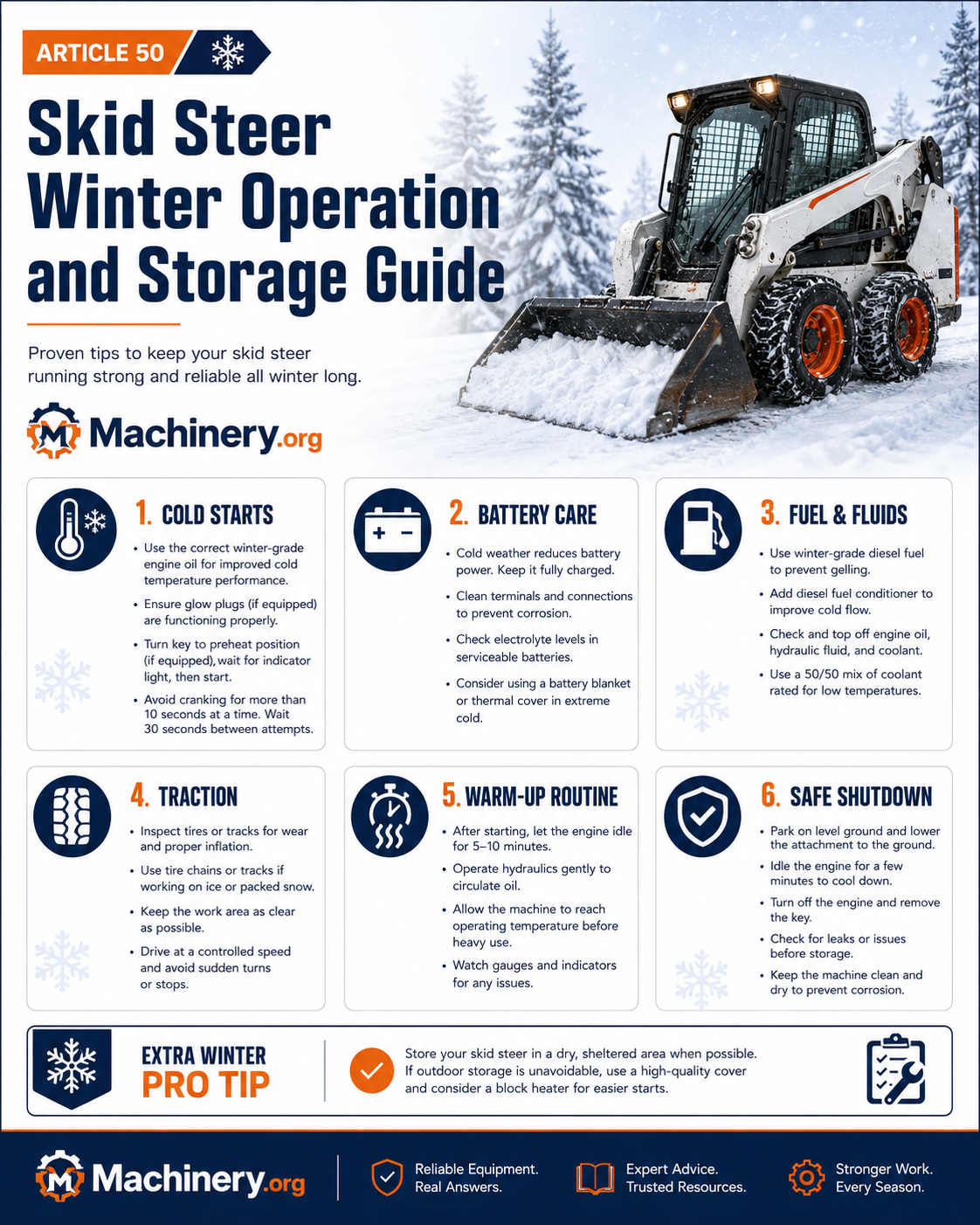
Figure 50.1. Machinery.org winter operation guide for cold starts, battery care, fuel and fluids, traction, warm-up, and safe shutdown.
Prepare before temperatures fall
Winter preparation should begin with a complete inspection. Check battery condition and charging output, clean terminals, test the starting system, inspect belts and hoses, confirm coolant protection, and service filters that are due. Verify the manufacturer-approved engine oil, hydraulic fluid, coolant, and fuel recommendations for expected temperatures. A fluid that is acceptable in warm weather may flow too slowly in severe cold.
Inspect cab heat, defrosting, wipers, washer fluid, lighting, mirrors, cameras, door seals, and emergency exits. Good visibility is essential during snow removal and short winter days. Check tires or tracks for wear and evaluate whether chains, winter tread, or another approved traction solution is appropriate for the surfaces and local rules.
Cold-start discipline
A weak battery loses additional cranking ability in cold weather, while the engine requires more energy to turn. Use approved block heaters, battery maintainers, glow plugs, intake heaters, or other starting aids exactly as described by the manufacturer. Do not use starting fluid unless the manual specifically permits it; starting fluid can damage engines and create a serious hazard on systems with intake heaters.
Avoid long continuous cranking. Follow the manual’s start-attempt and rest intervals so the starter and cables do not overheat. After the engine starts, monitor oil pressure, charging, warning lamps, sound, and exhaust behavior. If the machine does not respond normally, stop and diagnose the problem instead of repeatedly forcing a cold start.
Warm the machine correctly
Cold oil moves slowly. Allow the engine and hydraulic system to warm according to manufacturer guidance, then operate functions gently before applying heavy loads. Cycle the lift, tilt, steering, and attachment controls carefully so fluid begins moving through the system. Avoid immediately demanding full hydraulic flow from snow blowers, brooms, or other attachments.
Warm-up should be purposeful rather than excessively long. Unnecessary idling wastes fuel and may not warm every system effectively. A controlled transition into light work is often more useful, but the exact procedure depends on the machine. Observe gauges and response rather than relying only on a fixed number of minutes.
Maintain traction and stability
Snow and ice reduce braking and steering control. Travel slowly, keep the attachment low, avoid sudden turns, and increase distance from people, vehicles, buildings, drop-offs, and traffic. Carrying snow or material high reduces stability. Side slopes and hidden ice can create a tip-over risk even when the machine feels secure at first.
Tires, over-the-tire tracks, or dedicated track systems each behave differently in winter. Use only approved configurations and maintain correct pressure or tension. Remove packed snow, ice, and frozen debris from steps, couplers, undercarriages, pedals, and controls. Never reach into moving components to clear material.
Operate snow attachments safely
Buckets, pushers, plows, brooms, blowers, and spreaders have different visibility, hydraulic, and impact hazards. Mark curbs, drains, posts, landscaping, and other hidden obstacles before snowfall. Confirm attachment locking, hose routing, electrical controls, guards, and hydraulic requirements before each shift. Snow can hide rocks, chains, debris, and changes in surface elevation that cause sudden impact.
When working near roads or parking areas, use high-visibility procedures, lighting, spotters, and traffic controls appropriate to the site. Avoid pushing snow where it blocks sightlines, drainage, emergency access, or pedestrian routes. Salt and deicing products should be cleaned from the machine because they accelerate corrosion.
End-of-day winter routine
Park on firm, level ground and lower the attachment completely.
Allow the machine to cool down according to the operator manual.
Remove packed snow, ice, mud, and salt from the undercarriage and attachment.
Inspect for leaks, damaged hoses, loose hardware, frozen controls, and warning messages.
Refuel or charge according to the manufacturer’s cold-weather procedure.
Clean windows, lights, steps, handholds, cameras, and mirrors.
Store the machine in a dry sheltered area when possible and connect approved heaters or maintainers safely.
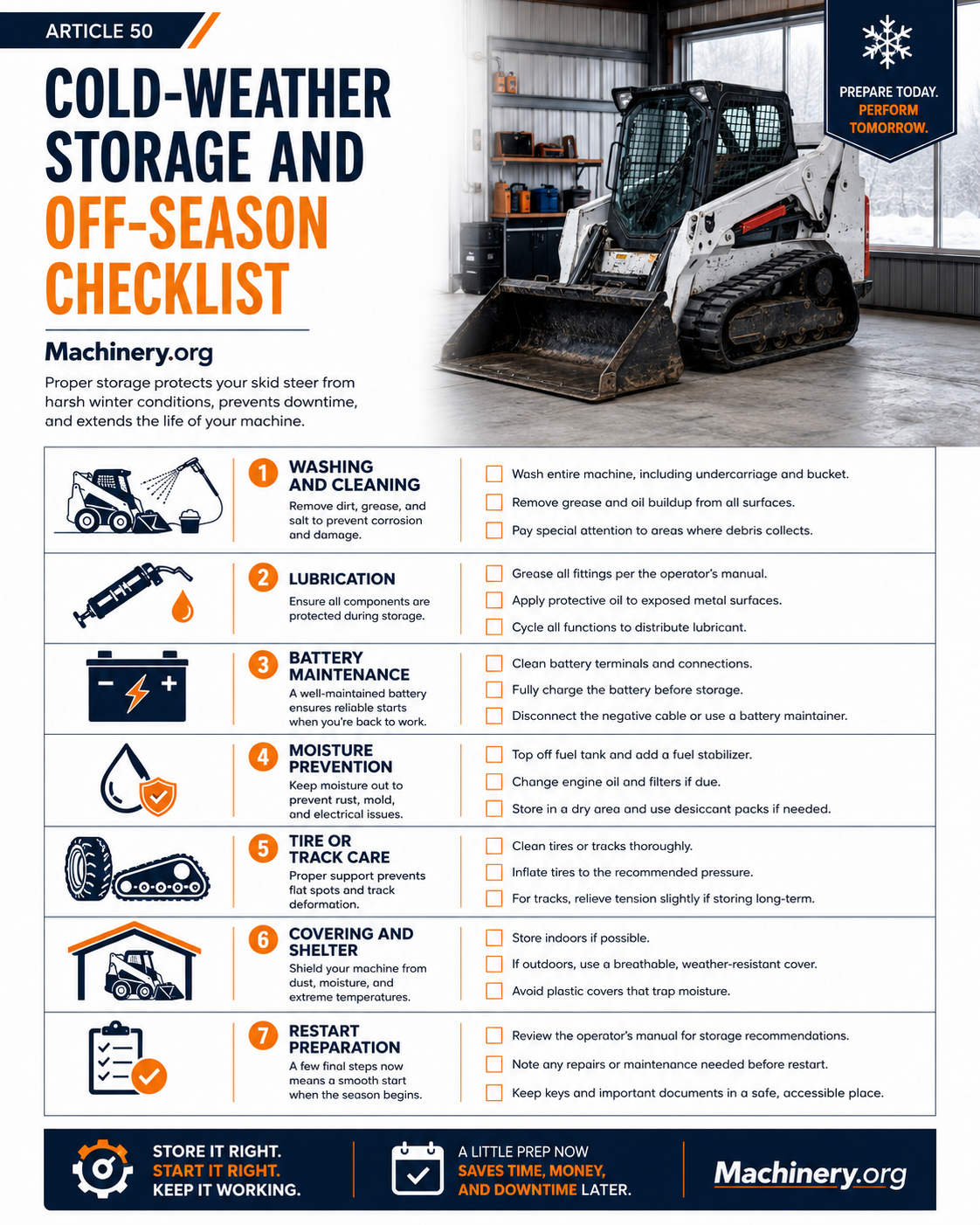
Figure 50.2. Machinery.org cold-weather and off-season storage checklist covering cleaning, lubrication, battery, moisture, tires or tracks, shelter, and restart preparation.
Prepare for off-season or long-term storage
Storage begins with cleaning. Wash soil, manure, salt, fertilizer, plant residue, grease buildup, and corrosive material from the machine, attachment, radiator screens, and undercarriage. Allow components to dry fully. Trapped moisture under a non-breathable cover can cause corrosion, electrical problems, and mold. Touch up damaged coatings and apply approved corrosion protection where recommended.
Complete due maintenance before storage so contaminants do not remain in fluids or filters. Grease all specified points and cycle functions to distribute lubricant. Follow manufacturer guidance for fuel level, fuel stabilizer, diesel treatment, hydraulic fluid, coolant, emissions systems, and engine oil. Procedures vary, particularly for modern diesel machines.
Battery, tires, tracks, and attachments
Fully charge the battery and use an approved maintainer if recommended. If disconnecting or removing the battery, follow the correct sequence and store it in a suitable location. Check tire pressure periodically during storage and prevent long-term flat spotting where possible. For tracks, clean the undercarriage and follow manufacturer guidance on tension during long storage.
Remove attachments when appropriate, place them on stable supports, protect hydraulic couplers from contamination, relieve stored pressure using approved procedures, and cap connections. Store forks, blades, buckets, and other tools so they cannot fall, roll, trap water, or create a hazard.
Restart after storage
Review storage records and complete any repairs noted before shutdown.
Inspect for nests, chewed wiring, leaks, corrosion, loose parts, and moisture damage.
Check battery, fluids, filters, belts, hoses, tires or tracks, and attachment locking.
Remove covers, plugs, maintainers, and storage devices before starting.
Start and warm the machine according to the manual, then test all functions slowly.
Confirm brakes, travel, steering, hydraulics, lights, alarms, heater, and defrosting before returning to work.
Winter concern
Preventive action
Warning sign
Battery
Load test, clean terminals, charge fully
Slow crank, dim lights, repeated no-start
Fuel
Use approved winter fuel practices and keep system clean
Gelling, power loss, restricted filter
Cooling
Verify freeze protection and clean airflow
Overheating, coolant loss, weak cab heat
Hydraulics
Use approved fluid and warm gently
Slow response, noise, hose leakage
Traction
Inspect tires or tracks and clear ice
Wheel spin, sliding, steering loss
Corrosion
Wash salt and moisture from machine
Rust, damaged connectors, seized hardware
Winter safety: Never use open flames to heat a machine, never bypass safety systems, and never use unapproved starting fluids or improvised heaters. Ensure adequate ventilation when running equipment indoors or near enclosed areas.
Frequently Asked Questions
How long should a skid steer warm up in winter?
Follow the machine manual and observe temperature, warning indicators, and hydraulic response. The correct procedure varies by model and temperature; avoid both immediate heavy loading and unnecessary extended idling.
Can I use starting fluid in cold weather?
Only if the manufacturer explicitly permits it. Starting fluid can be dangerous and may damage engines equipped with glow plugs or intake heaters.
Should the fuel tank be full during storage?
Storage guidance varies by fuel system, climate, and manufacturer. Follow the operator or service manual regarding fuel level, stabilizer, and water management.
Is an outdoor cover enough for winter storage?
A breathable, weather-resistant cover can help when indoor storage is unavailable, but it should not trap moisture. Indoor dry storage is generally preferable when practical.
What should be checked before the first job after storage?
Inspect fluids, battery, wiring, hoses, belts, tires or tracks, attachments, safety devices, lights, brakes, hydraulics, and any repairs noted before storage.
Key Takeaway
Machinery.org takeaway: Winter reliability is created before the coldest day. Use approved fluids and starting aids, warm and operate the machine carefully, maintain traction and visibility, clean corrosive material daily, and follow a documented storage and restart procedure.
Get More Expert Guides & Updates
Subscribe for Machinery.org guide updates and product learning content.