Introduction
Hydraulic flow is one of the most misunderstood specifications in the skid steer market, yet it influences attachment performance, productivity, and even operating cost. Buyers often compare horsepower, rated operating capacity, and lift path first, but the hydraulic package behind the couplers can determine whether a machine feels versatile or limiting in everyday use. When readers see the terms standard flow and high flow, they are looking at the machine’s ability to deliver oil volume and hydraulic power to attachments. That matters because one attachment may only need enough flow to run a bucket, auger, or simple broom, while another needs much more output to perform at its intended speed and torque.
Standard-flow skid steers are designed around the needs of general construction, small-scale property maintenance, landscaping, and common rental use. High-flow machines add more oil flow, and sometimes more pressure or electronic control, so they can run demanding tools such as forestry mulchers, cold planers, stump grinders, and some high-performance snow blowers. The practical question for Machinery.org readers is not whether high flow sounds better, but whether it is necessary for the work they actually plan to do. If it is, high flow can unlock productivity. If not, it can add cost without adding meaningful value.
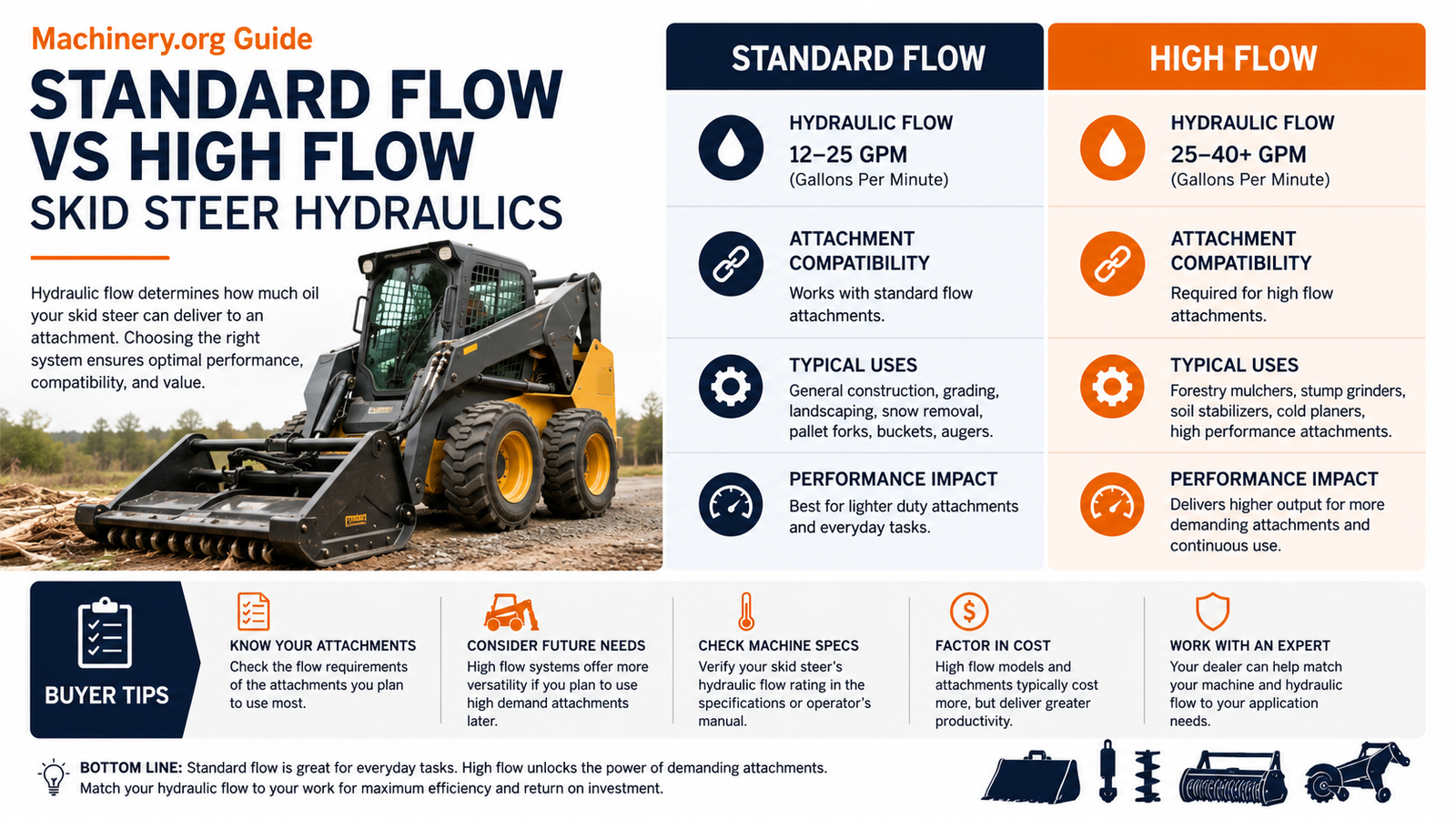
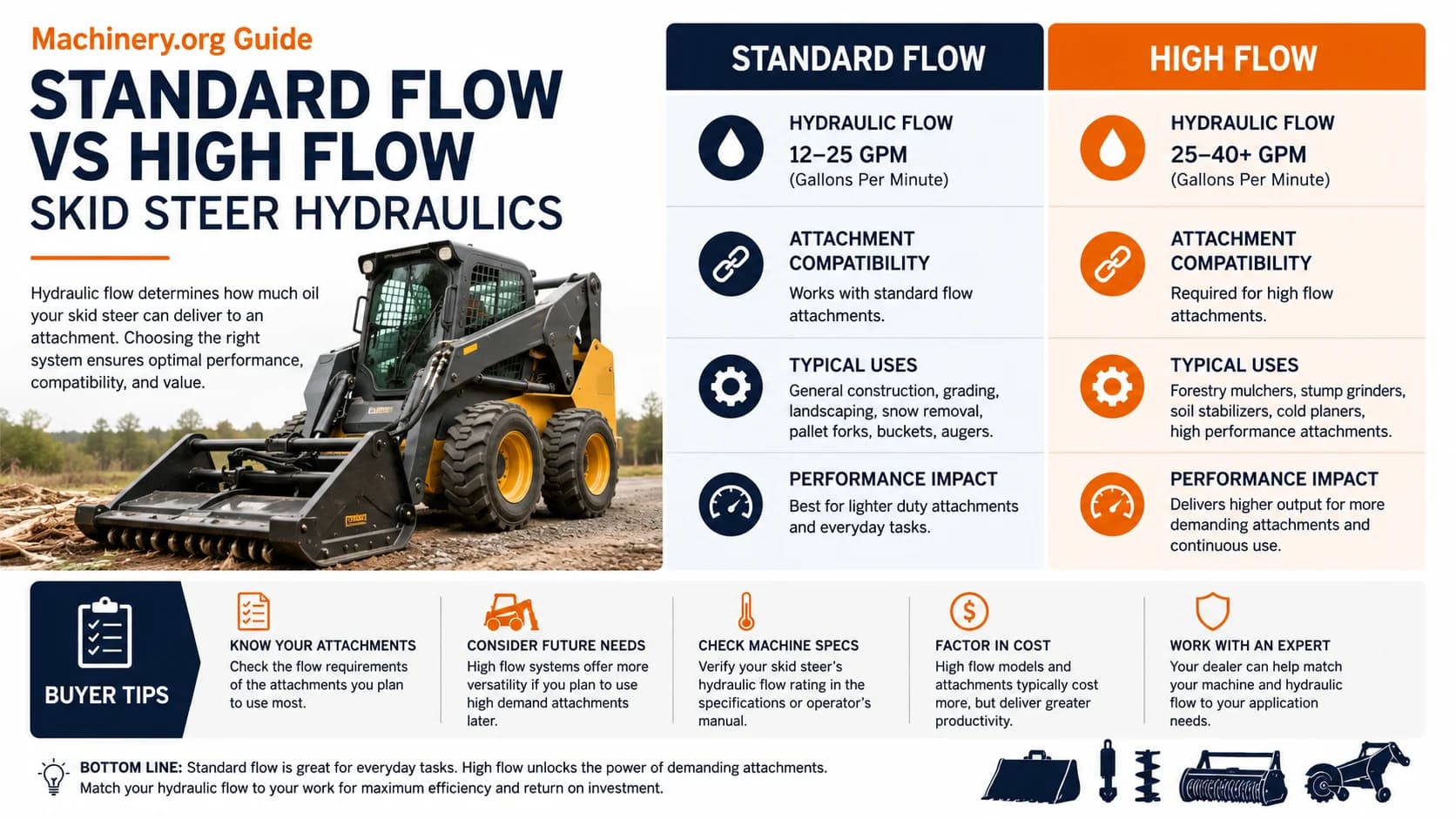
Figure 56.1 – Standard flow vs high flow hydraulic comparison guide.
Image Description: An infographic comparing standard-flow and high-flow skid steer hydraulics, including GPM ranges, attachment compatibility, and buyer tips.
What Standard Flow Means
A standard-flow machine usually provides enough hydraulic output for buckets, pallet forks, many augers, trenchers within a moderate operating range, grapples, light-duty brush cutters, and utility attachments that do not demand heavy, sustained hydraulic power. That makes standard flow the most common choice for owner-operators, farms, general contractors, and occasional users. It often costs less to buy, less to insure, and less to match with attachments. For many owners, that balance is exactly right because the machine covers the work that produces the most revenue.
Best fit for everyday attachments such as buckets, pallet forks, grapples, and many augers.
Lower machine purchase cost in many cases, with a simpler entry point for buyers.
Strong choice for rental fleets and mixed-use owners who prioritize versatility over specialized output.
Usually sufficient for grading, loading, cleanup, light snow work, and material movement.
When High Flow Becomes Valuable
High flow becomes valuable when attachments rely on sustained hydraulic power to do heavy work efficiently. A mulcher that is underfed with flow may spin too slowly, bog down, run hotter than expected, and wear faster. A cold planer or stump grinder may technically function on the wrong hydraulic package, but not at the speed or effectiveness the owner expects. In these cases, buying the correct hydraulic system is not a luxury. It is part of getting a tool package that performs correctly, protects itself, and makes the job profitable.
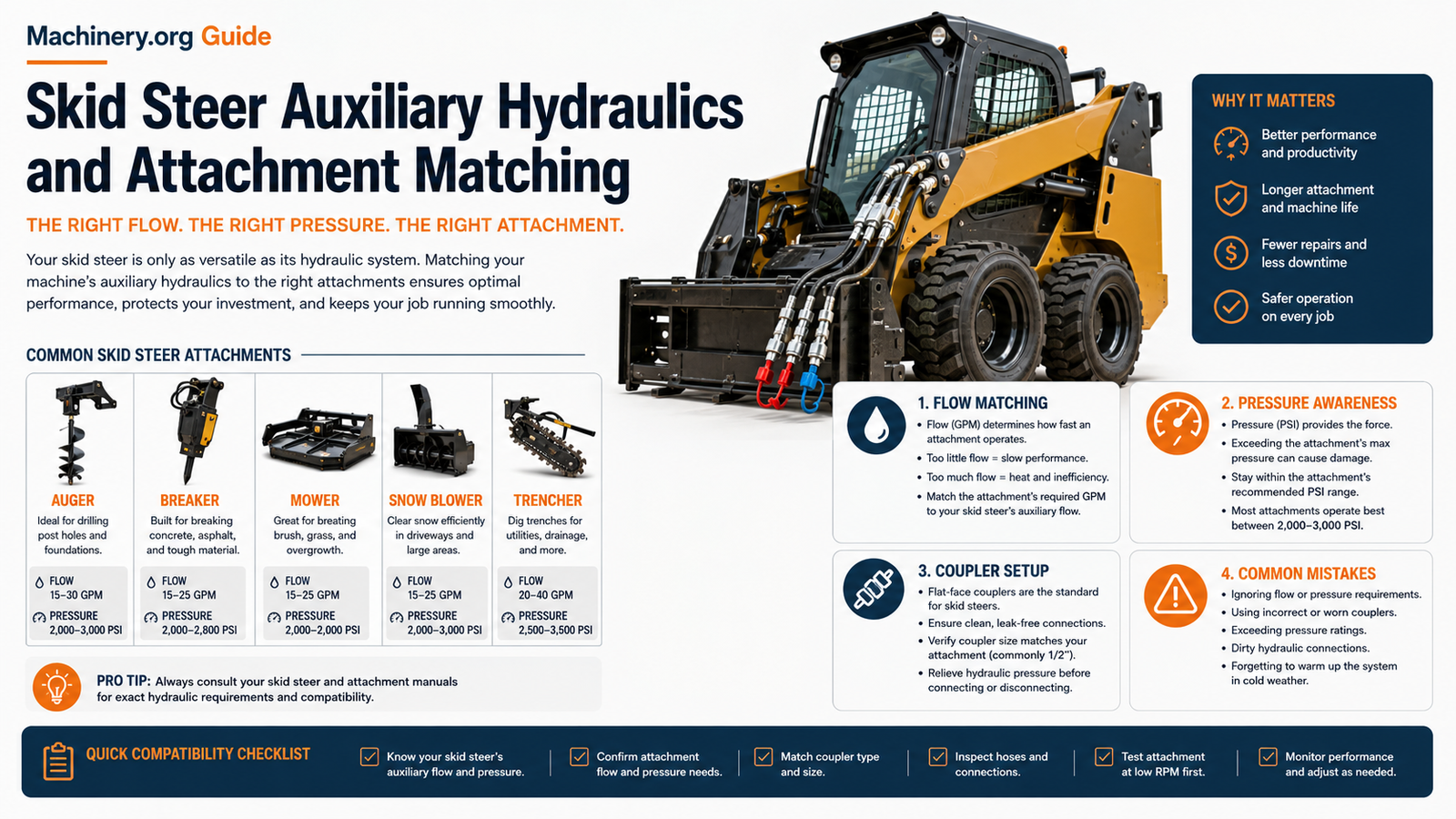
Figure 56.2 – Auxiliary hydraulics and attachment matching guide.
Image Description: A guide image showing a skid steer with visible hydraulic couplers and a compatibility chart for common attachments.
How to Match Flow to Attachments
The correct buying process starts with the attachments, not the machine brochure. Make a realistic list of the top three attachments you expect to use most often during the next two to three years. Then look at each attachment’s hydraulic requirements. Some owners make the mistake of thinking high flow automatically improves everything, but an attachment only benefits if it is designed to use the additional output. Too little flow reduces performance, yet too much flow can also create heat, inefficiency, or compatibility issues if the attachment is not meant for it. Matching matters more than maximum numbers on paper.
Cost, Productivity, and Future Planning
From a cost perspective, high-flow machines generally require a larger up-front investment, and the attachments built for them may also carry higher prices. However, a contractor who bills for specialized services can often recover that difference quickly. A land-clearing operator, for example, may justify high flow because a forestry attachment transforms the machine into a revenue generator. On the other hand, a farm owner who mainly handles pallets, feed, bedding, and occasional cleanup may never capture enough value from high flow to justify the added expense.
Future planning is important. If your current jobs only need standard flow but you know you will soon add snow blowing, stump grinding, heavy brush cutting, or road-milling services, a high-flow machine may be the smarter long-term choice. The goal is not to buy the most machine; it is to buy the right machine for both present work and realistic growth. Good ownership decisions happen where machine capability, attachment compatibility, and business planning overlap.
Practical Buyer Checklist
List the attachments you will actually use, not just the attachments you might want someday.
Check each attachment for required GPM, recommended pressure range, and coupler type.
Compare cost differences between standard-flow and high-flow versions of the same machine family.
Think about resale: a better-matched machine often sells more easily than an over- or under-specified one.
If you are unsure, ask the attachment dealer and the machine dealer to confirm compatibility in writing.
Frequently Asked Questions
Is high flow always better?
No. High flow is better only when the attachment and the job truly need it. For many common skid steer tasks, standard flow is the more economical and completely adequate choice.
Can I use a standard-flow attachment on a high-flow machine?
Sometimes, but only if the attachment is approved for that use and the machine’s hydraulic settings are compatible. Always follow the attachment manufacturer’s guidance.
What jobs most often justify high flow?
Forestry mulching, heavy brush cutting, cold planing, stump grinding, and other specialized attachments that rely on greater hydraulic output usually justify high flow most clearly.
Key Takeaway
Choose the hydraulic package that matches the attachments that will earn the most revenue or deliver the most value. Standard flow is ideal for many owners, while high flow becomes worthwhile when demanding hydraulic attachments are central to the job.
Get More Expert Guides & Updates
Subscribe for Machinery.org guide updates and product learning content.