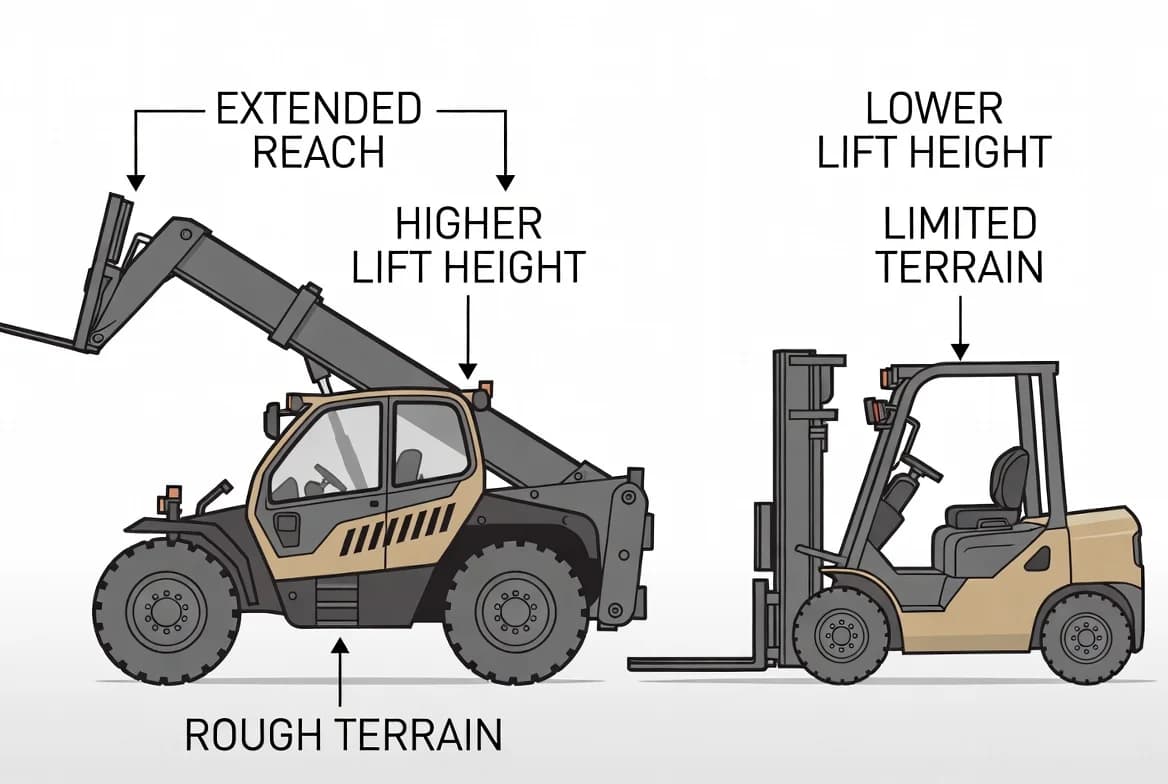
A telehandler (telescopic handler) and a traditional forklift both lift and move loads, but they serve different environments. A forklift is optimised for flat, hard surfaces such as warehouse floors and has a vertical mast. A telehandler has a telescopic boom that can extend forward and upward, giving it both lift height and forward reach. Telehandlers are designed for rough terrain with large flotation tyres, four-wheel drive and often four-wheel steer. They can place loads through windows, onto upper floors of buildings under construction, or over obstacles. Forklifts are faster and more manoeuvrable in tight indoor aisles and usually have higher residual capacity at full height. Choose a telehandler when the job involves uneven ground, the need to reach forward, or outdoor construction and agricultural work. Choose a forklift for pure indoor material handling on smooth floors.
Always consult the specific manufacturer operator manual and load charts for the model in use. Local regulations regarding personnel lifting, operator training and machine inspection must also be followed. Proper selection, correct use of the load chart, and disciplined daily checks form the foundation of safe and productive telehandler operation.
Get More Expert Guides & Updates
Subscribe for Machinery.org guide updates and product learning content.