Choosing the Right Undercarriage for the Job and the Terrain
Introduction
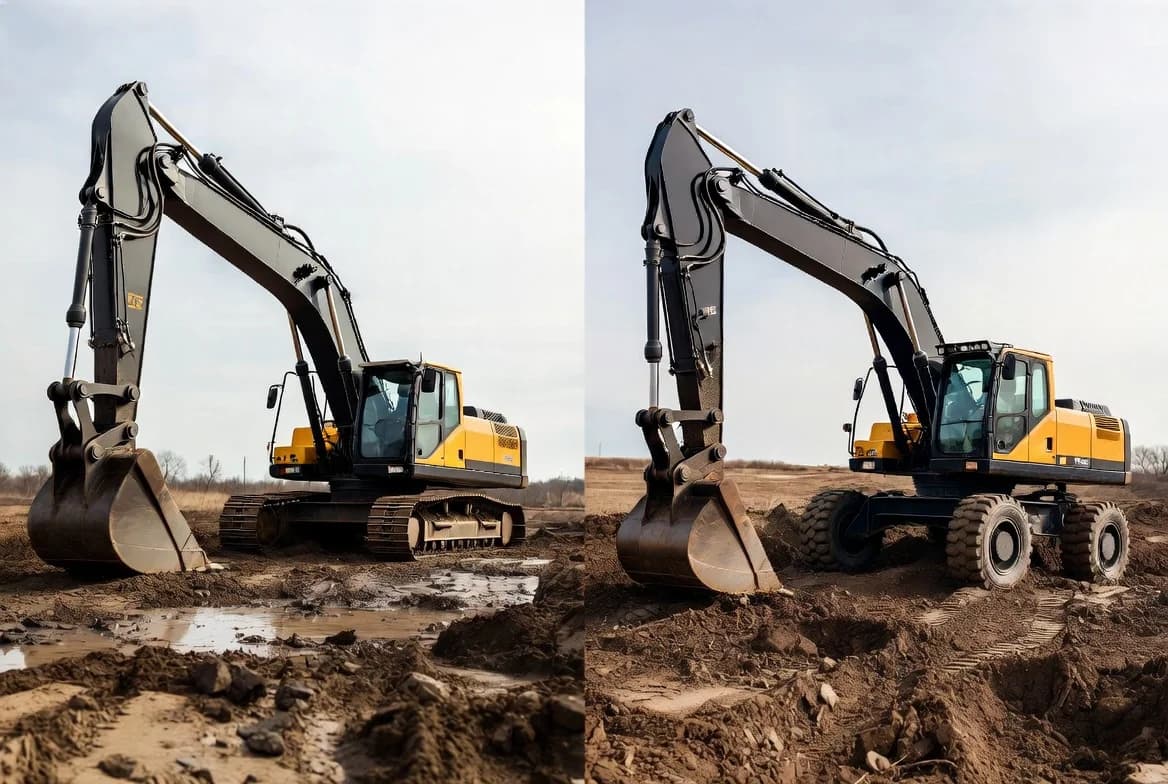
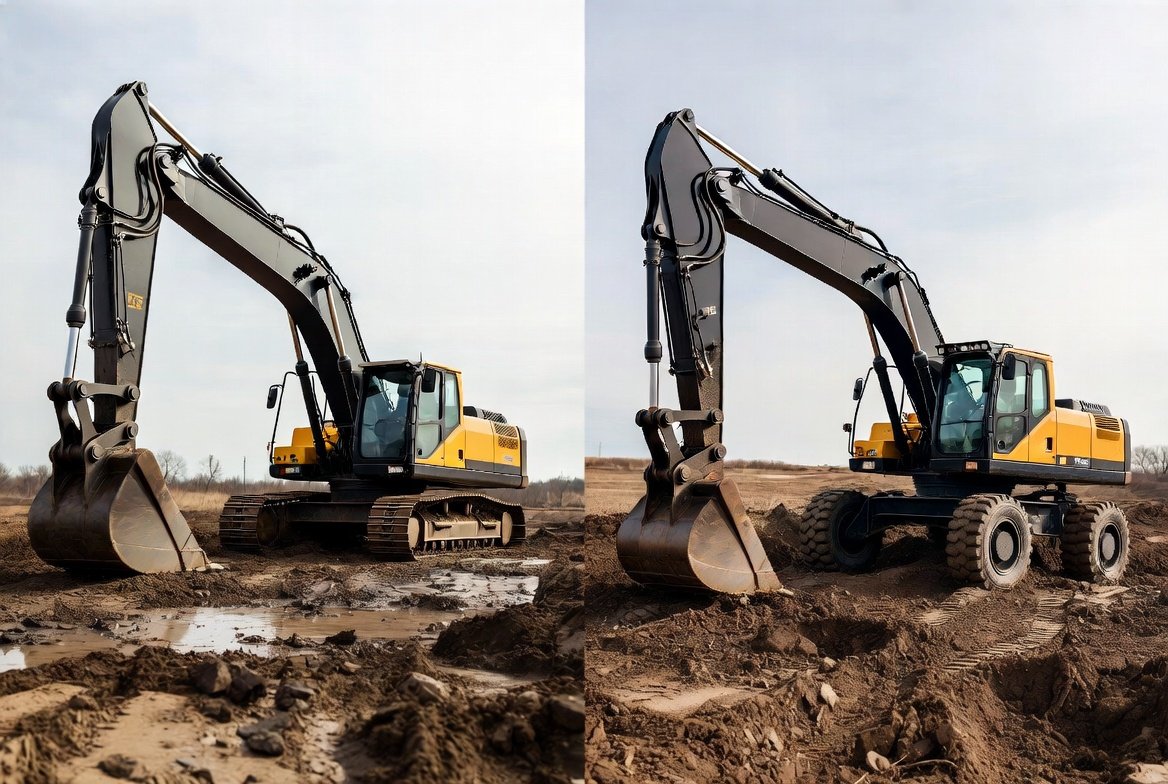
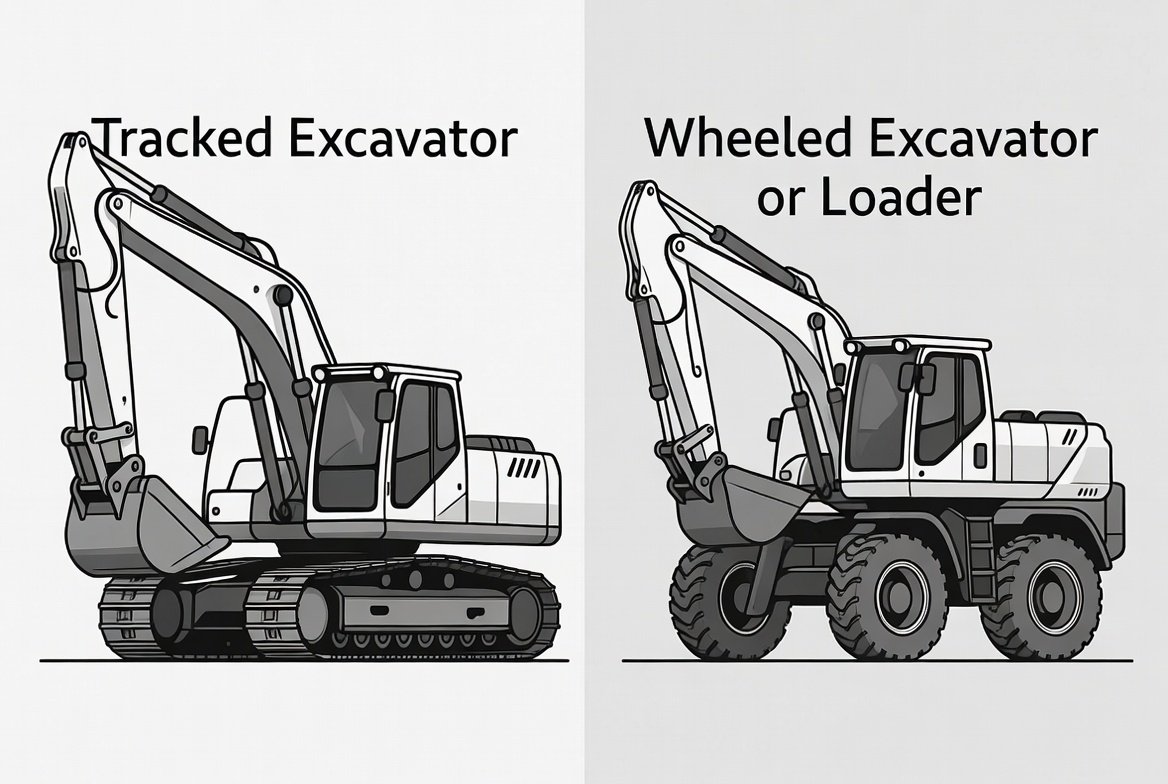
One of the most fundamental decisions when selecting construction equipment is whether the machine should run on tracks or on wheels. Tracks and wheels each have clear strengths and weaknesses. The right choice depends on the terrain, the type of work, the need for mobility between sites, and the importance of ground disturbance. This guide compares the two undercarriage types so you can make an informed decision.
Advantages of Tracks
Tracked undercarriages (crawler machines) distribute the machine’s weight over a much larger contact area. This produces several important benefits:
- Lower ground pressure – Ideal for soft, muddy, sandy, or sensitive surfaces. The machine is less likely to sink or create deep ruts.
- Superior traction – Tracks provide excellent grip on slopes, loose material, and uneven ground.
- Better stability – The long, wide stance improves side-hill stability and reduces the tendency to tip.
- Ability to work in rough terrain – Tracks handle rocks, stumps, and uneven surfaces more effectively than tires.
These advantages make tracks the preferred choice for most excavators, dozers, and many compact track loaders used in earthmoving, site preparation, and utility work.
Disadvantages of Tracks
- Slower travel speed – Tracked machines are generally limited to a few kilometers per hour.
- Higher undercarriage maintenance cost – Tracks, rollers, idlers, and sprockets wear and are expensive to replace.
- More damage to paved surfaces – Steel tracks can mark or crack asphalt and concrete unless rubber pads are fitted.
- Greater transport complexity – Tracked machines often need to be loaded on trailers for any significant distance.
Advantages of Wheels
Wheeled machines offer different strengths:
- Higher travel speed – Many wheeled excavators and loaders can travel at road speeds, reducing the need for trailers on short moves.
- Lower maintenance cost on hard surfaces – Tires are generally cheaper to replace than a full track system when working primarily on firm ground.
- Less damage to finished surfaces – Rubber tires are kinder to asphalt, concrete, and landscaping.
- Better mobility between jobs – Wheeled machines can often drive short distances on public roads (subject to local regulations).
Disadvantages of Wheels
- Higher ground pressure – More likely to sink in soft or wet conditions.
- Reduced traction on slopes and loose material.
- Less stability on uneven or side-sloping ground.
- Tires can be punctured or damaged by sharp rocks and debris.
When to Choose Tracks
Choose tracks when the majority of work will be on soft, muddy, uneven, or sloping ground; when maximum traction and stability are required; or when the machine will spend most of its time on one site rather than traveling frequently. Most pure earthmoving excavators and dozers are tracked for these reasons.
When to Choose Wheels
Choose wheels when the machine needs to move frequently between nearby sites, when work is primarily on firm or paved surfaces, or when minimizing damage to finished areas is important. Wheeled excavators and loaders are common in urban construction, road work, and material handling applications.
Hybrid and Special Options
Some machines offer rubber tracks (combining some benefits of both), or wheeled machines with outriggers for extra stability when digging. Compact track loaders provide a middle ground for smaller jobs that need both traction and relatively low ground pressure.
Key Takeaways
Tracks excel in traction, stability, and soft-ground performance but travel slowly and cost more to maintain. Wheels offer speed, lower surface damage, and easier mobility but have higher ground pressure and less grip on difficult terrain. Matching the undercarriage to the actual working conditions is one of the highest-impact decisions you can make when selecting or specifying construction equipment.
This article is part of the Heavy Machinery Learning Center – Machinery Basics series.
Get More Expert Guides & Updates
Subscribe for Machinery.org guide updates and product learning content.