
Introduction
Transporting a skid steer safely is a responsibility that extends beyond the machine itself. It involves the trailer, the tow vehicle, the loading process, the securement method, and legal compliance on the road. Many costly incidents happen not because the machine failed, but because securement was incomplete, the trailer was undersized, the load was unbalanced, or the final inspection was rushed. A disciplined transport routine protects people, prevents equipment damage, and reduces legal risk.
For Machinery.org readers, this is a topic where good habits matter more than shortcuts. Moving compact equipment may look routine, but every trip begins with several critical checks: Is the trailer rated properly? Are the ramps secure? Is the machine positioned for correct tongue weight? Are the tie-downs adequate for the load? Has the operator considered overall width, height, and road-readiness? These questions should be answered every time, even for short hauls.
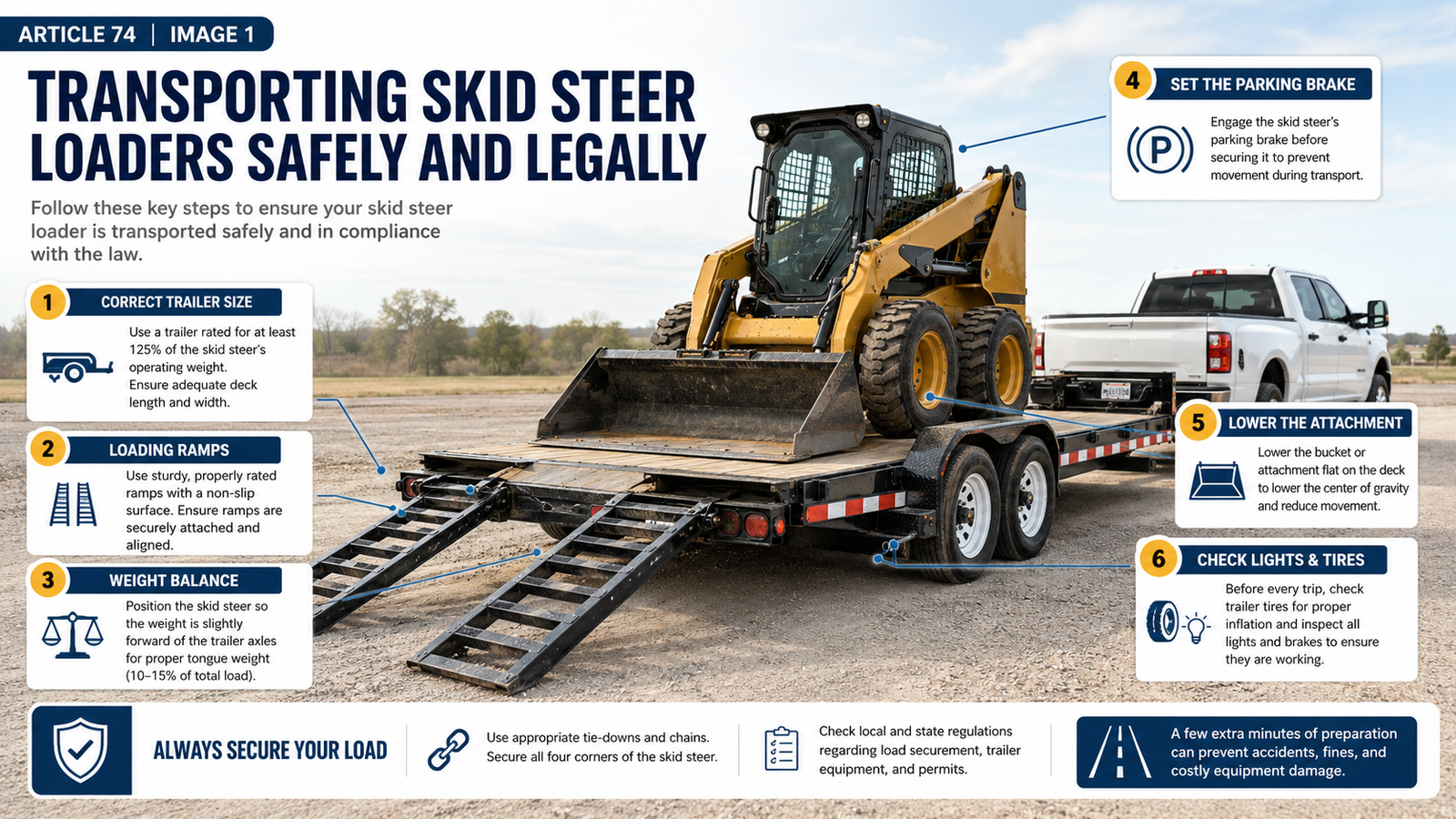
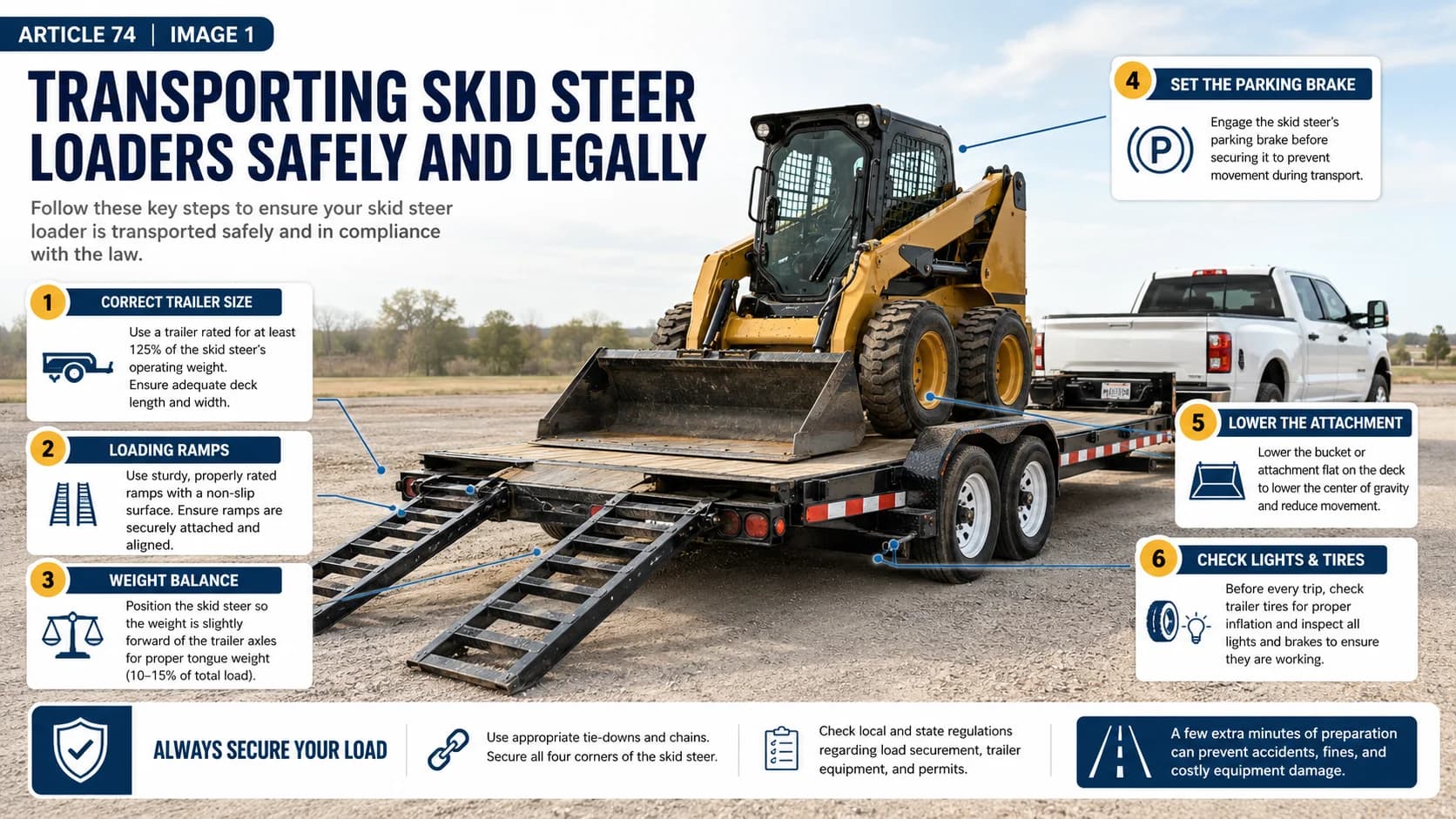
Figure 74.1 – Skid steer transport safety guide.
Image Description: A 16:9 infographic of a skid steer on a trailer with ramp, balance, brake, and pre-trip safety callouts.
Preparing the Trailer and the Load
Before loading, inspect the trailer tires, lights, deck condition, hitch connection, and ramp system. Confirm that the trailer capacity is sufficient for the skid steer, attachment, fuel, and any additional tools. Ramps should be aligned and properly attached, and the loading area should be firm and stable. Once the machine is on the trailer, its position should support proper balance and tongue weight rather than simply being parked wherever it fits.
Use a properly rated trailer and towing setup.
Inspect ramps, lights, brakes, and trailer tires before every trip.
Load on level, stable ground whenever possible.
Position the skid steer to create proper weight balance.
Lower the attachment and set the parking brake before securement.
Tie-Down Strategy and Securement
Proper securement usually means using transport-grade chains or straps with adequate working load limits and placing them at approved tie-down points. The goal is four-point securement that resists forward, rearward, and side movement. The operator should lower the attachment, set the parking brake, and shut down the machine if the procedure requires it. Securement hardware should be inspected for wear or damage before use, and binders should be tightened and locked correctly.
Just as important is the final walk-around. Check every tie-down, look for slack, confirm that nothing can contact tires or moving parts, and ensure the attachment is low and stable. If local regulations require additional compliance items such as breakaway systems, lighting standards, or permit considerations, those should be reviewed before departure.
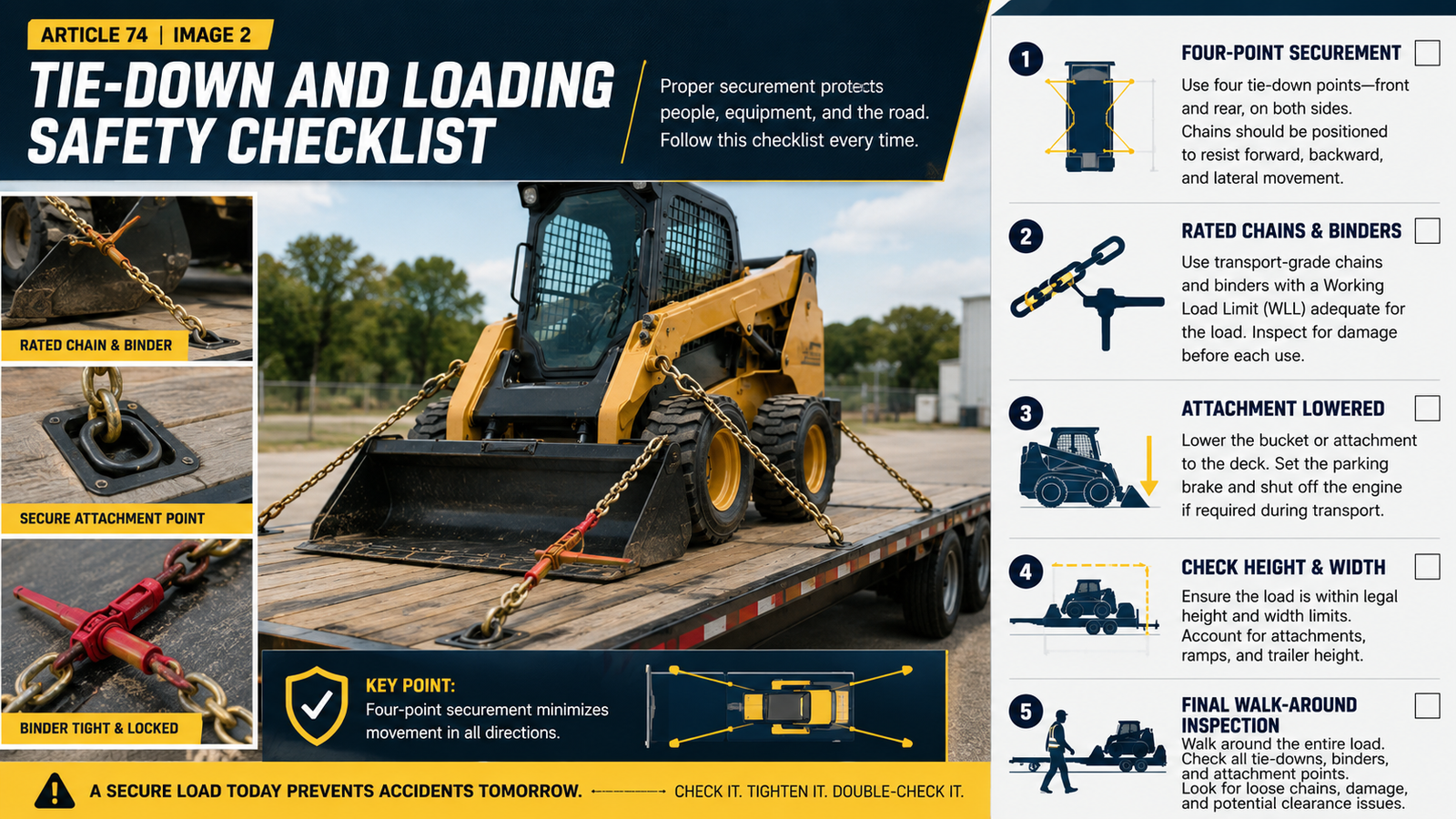
Figure 74.2 – Tie-down and loading safety checklist.
Image Description: A securement checklist image showing four-point tie-down strategy, chain and binder use, attachment position, height/width checks, and final inspection reminders.
Legal and Practical Safety Considerations
Transport safety includes more than chain tension. Operators must consider road speed, trailer behavior, load height, attachment protrusion, and visibility. Some loads are legally acceptable only if they remain within size and weight limits, and some machines require a closer look at state or local rules. Even where the regulations vary, the principle remains the same: do not assume the trailer is ready just because the machine is on it.
A safe hauling routine also includes checking the load shortly after departure and retightening if needed. Chain and strap tension can settle once the vehicle begins moving. Taking time for this second confirmation reduces the chance of movement later in the trip.
Transport Checklist Essentials
Verify trailer and tow ratings before loading.
Use four-point securement and inspect all chains, straps, and binders.
Lower the bucket or attachment to reduce center of gravity.
Confirm road-legal height, width, and lighting compliance.
Perform a final walk-around and a post-departure recheck.
Frequently Asked Questions
What is the biggest transport mistake operators make?
One of the biggest mistakes is incomplete securement—using inadequate tie-downs or failing to verify that the load cannot shift in any direction.
Why should the attachment be lowered during transport?
Lowering the attachment helps reduce the center of gravity and decreases movement risk while the machine is secured on the trailer.
Do I need to recheck tie-downs after I start driving?
Yes. A short recheck after departure is a smart practice because tie-downs can settle once the load begins moving with the trailer.
Key Takeaway
Safe transport is a system, not a single step. When trailer readiness, machine placement, securement, and final inspection are all handled correctly, operators reduce both legal exposure and the risk of preventable transport accidents.
Get More Expert Guides & Updates
Subscribe for Machinery.org guide updates and product learning content.