
Digging depth is one of the most frequently cited and most frequently misunderstood specifications of an excavator. Manufacturers publish a figure called “maximum digging depth” or “maximum dig depth,” yet the real-world ability of a machine to excavate to a required elevation depends on far more than that single number. A thorough understanding of how dig depth is measured, what factors reduce it in practice, and how to select the correct boom and stick combination is essential for productive and safe operation.
How Manufacturers Measure Maximum Digging Depth
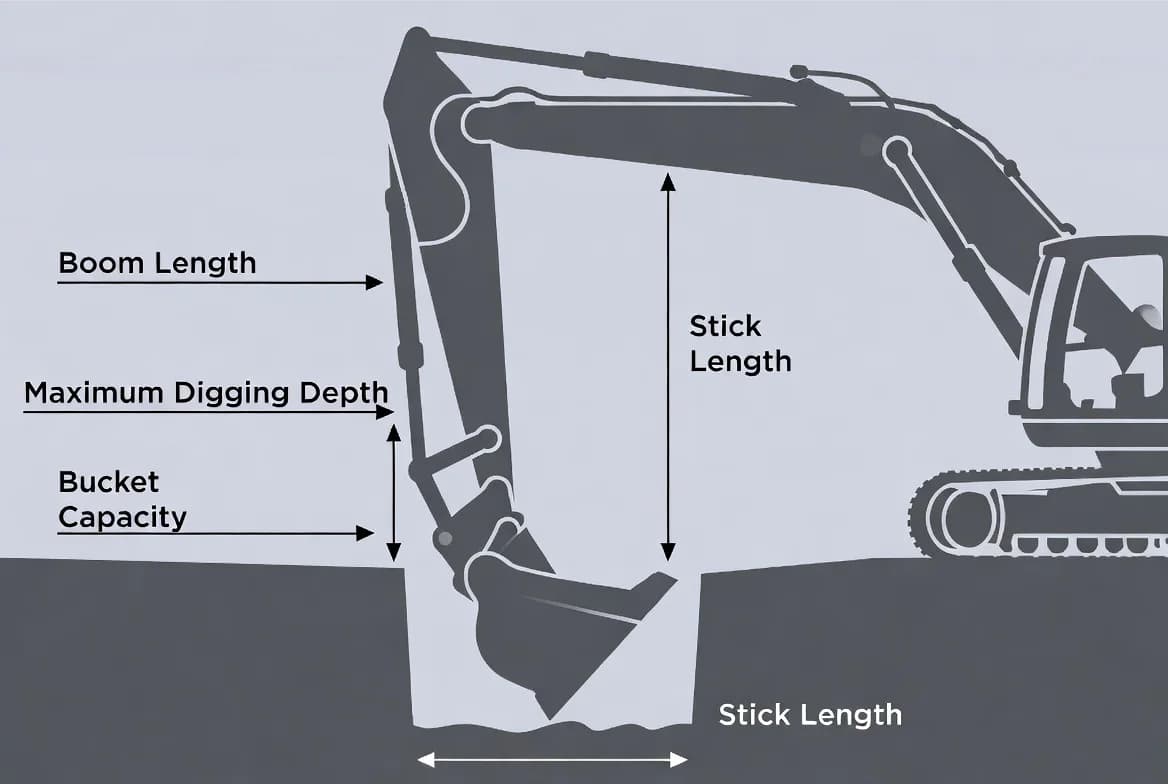
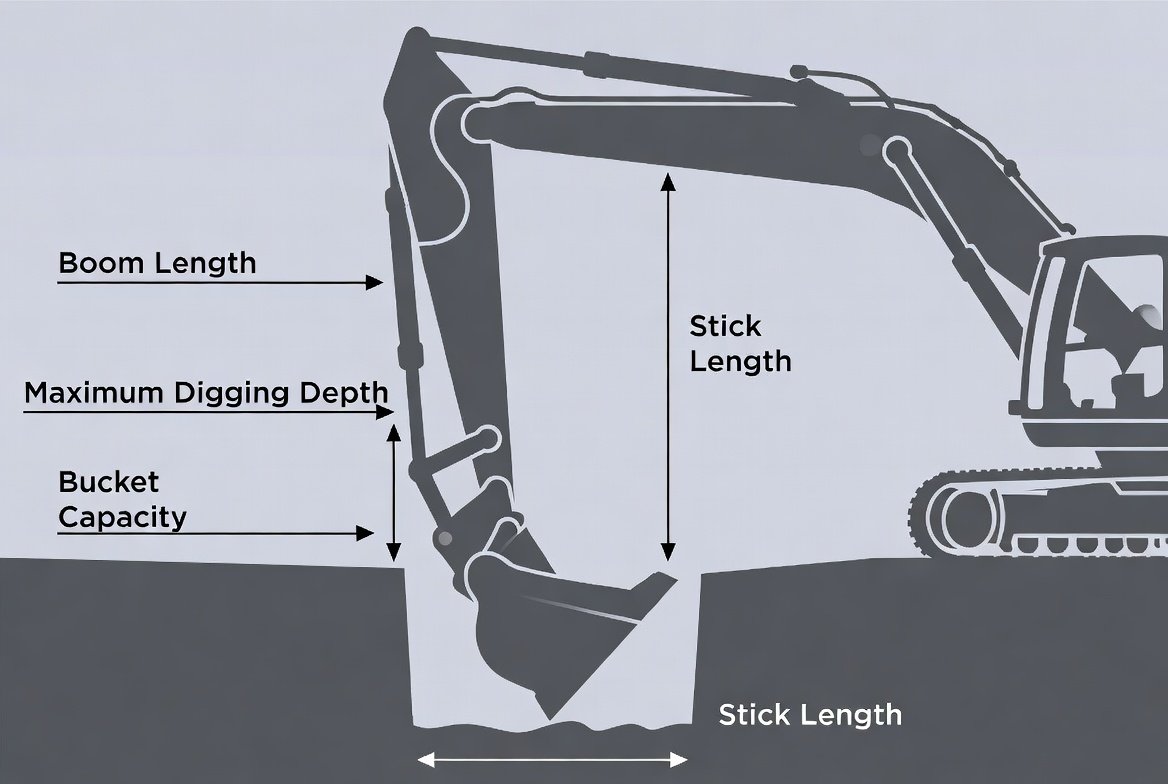
The published maximum digging depth is measured with the machine on firm, level ground, the boom and stick fully extended downward, and the bucket teeth at their lowest possible point. The measurement is taken from the ground surface to the tip of the teeth (or to the cutting edge if the bucket has no teeth). This is a static, geometric measurement that does not account for the thickness of the bucket floor, the need to keep the tracks on solid ground, or the practical requirement to maintain a working face that allows the bucket to fill efficiently.
In addition to maximum dig depth, manufacturers usually publish related figures: maximum reach at ground level, maximum dump height, and maximum vertical wall depth (the deepest vertical face that can be cut while keeping the boom and stick within a certain angular range). These additional numbers help define the working envelope of the machine.
Factors That Reduce Effective Digging Depth
Several real-world conditions reduce the usable dig depth below the published maximum. First, the operator must leave the tracks on stable ground. When digging a deep trench or basement, the machine is usually positioned so that the edge of the excavation is a safe distance from the tracks—often 1 to 2 metres or more depending on soil type and the presence of shoring. This setback immediately reduces the effective depth that can be reached.
Second, the bucket itself occupies space. When the bucket is curled to dig, the floor of the bucket and the thickness of the teeth mean that the actual excavation surface is higher than the theoretical tooth-tip depth. For precise grade work this difference must be accounted for.
Third, hydraulic limitations and the geometry of the linkage mean that breakout force and crowd force decrease as the stick approaches full extension. In hard material the operator may be unable to dig effectively at the extreme end of the published dig-depth range. Many operators therefore prefer a slightly shorter stick that provides higher force at the expense of a modest reduction in maximum depth.
Fourth, the presence of underground utilities, rock ledges, or groundwater can force the operator to stop short of the theoretical maximum. Safety regulations and common sense dictate that the machine must never be positioned where a cave-in could undermine the tracks.
Boom and Stick Configurations
Most excavators offer a choice of stick lengths, and some offer alternative boom lengths or two-piece adjustable booms. A longer stick increases dig depth and reach but reduces breakout force and the ability to lift heavy loads close to the machine. A shorter stick does the opposite. Manufacturers provide dig-depth charts or software tools that show the effect of different stick lengths on the working envelope.
Two-piece (or articulated) booms allow the operator to change the geometry of the boom itself, providing greater flexibility for working close to the machine or for reaching over obstacles. These systems are more common on larger machines but are increasingly available on mid-size and even some mini excavators.
Calculating Required Dig Depth for a Project
When planning a job, the required dig depth is determined by the finished elevation of the excavation plus any additional depth needed for bedding material, drainage layers, or working clearance. For a foundation, the dig depth must reach the design footing elevation, often plus a small over-excavation allowance. For a utility trench, the dig depth must accommodate the pipe invert elevation, bedding, and the thickness of the pipe itself.
It is good practice to select a machine whose published maximum dig depth exceeds the required depth by a comfortable margin—typically 15–25 %—to allow for setback, bucket geometry, and hard digging conditions. If the margin is small, the operator will spend excessive time repositioning the machine or will be forced to use inefficient digging techniques.
Specialised Deep-Digging Techniques
When the required depth exceeds the reach of a single machine, several techniques can be employed. The most common is to dig in stages: excavate to an intermediate level, then reposition the machine on a lower bench. Another approach is to use a long-reach excavator specifically configured with an extended boom and stick. In extreme cases, a second machine may be used to dig a ramp or access so that a standard machine can work from a lower elevation.
In confined urban sites, contractors sometimes use a combination of mini excavators and hand labour or vacuum excavation for the final stages of deep utility work. Understanding the practical limits of each machine prevents costly delays and unsafe improvisation.
In summary, published dig-depth figures are useful starting points but must be interpreted in light of site geometry, soil conditions, bucket selection, and safety setbacks. A careful analysis of the working envelope, combined with appropriate stick selection and realistic allowances, ensures that the chosen excavator can complete the excavation efficiently and safely.
Get More Expert Guides & Updates
Subscribe for Machinery.org guide updates and product learning content.