
The Numbers That Tell You How Much Work a Machine Can Actually Do
Introduction
When comparing construction equipment or reading a specification sheet, two of the most important numbers you will see are horsepower (or kilowatts) and torque. These figures describe different aspects of an engine’s ability to do work. Understanding what they mean, how they relate to each other, and why both matter will help you choose the right machine for the job and operate it more effectively.
This guide explains the concepts in practical terms, shows how they are measured and converted, and highlights what operators and buyers should look for when evaluating equipment.
What is Torque?
Torque is a measure of rotational force. In simple terms, it is the twisting force the engine can apply to the crankshaft. On construction equipment, high torque is what allows a machine to dig hard ground, push heavy material, or climb a steep grade without the engine stalling or the tracks spinning.
Torque is usually measured in Newton-metres (Nm) or pound-feet (lb-ft). Diesel engines used in heavy equipment produce their peak torque at relatively low engine speeds (often between 1,200 and 1,800 rpm). This is one of the main reasons diesel engines are preferred for construction work – they deliver strong pulling power exactly where it is needed.
What is Horsepower (and Kilowatts)?
Horsepower (hp) and kilowatts (kW) are measures of power – the rate at which work is done. Power is calculated from torque and engine speed. The basic relationship is:
Power (hp) ≈ (Torque in lb-ft × RPM) / 5,252
or in metric units:
Power (kW) ≈ (Torque in Nm × RPM) / 9,549
Because power depends on both torque and speed, an engine can produce the same horsepower with high torque at low RPM or lower torque at higher RPM. For construction equipment, the combination of high torque at low RPM is almost always preferable.
Horsepower vs Kilowatts – Conversion
In many parts of the world, engine power is quoted in kilowatts rather than horsepower. The conversion is straightforward:
- 1 horsepower (mechanical) ≈ 0.746 kW
- 1 kW ≈ 1.341 horsepower
When comparing machines from different manufacturers or regions, always convert to the same unit so you are comparing like with like. Also note that some manufacturers quote “gross” horsepower (engine only) while others quote “net” horsepower (after subtracting power used by cooling fans, alternators, etc.). Net figures are more realistic for real-world performance.
Why Both Numbers Matter on the Job
High torque at low RPM gives a machine the ability to start moving heavy loads and to keep working when the load increases (for example when the bucket hits hard material). High horsepower allows the machine to perform that work more quickly – higher travel speeds, faster cycle times, or the ability to run hydraulic pumps at higher flow rates.
A machine with high horsepower but low torque may feel “gutless” under load even though the peak power number looks impressive. Conversely, a machine with excellent low-end torque but limited peak power may feel strong but slow. The best construction engines combine strong low-RPM torque with sufficient peak power for the intended applications.
Practical Tips for Equipment Selection
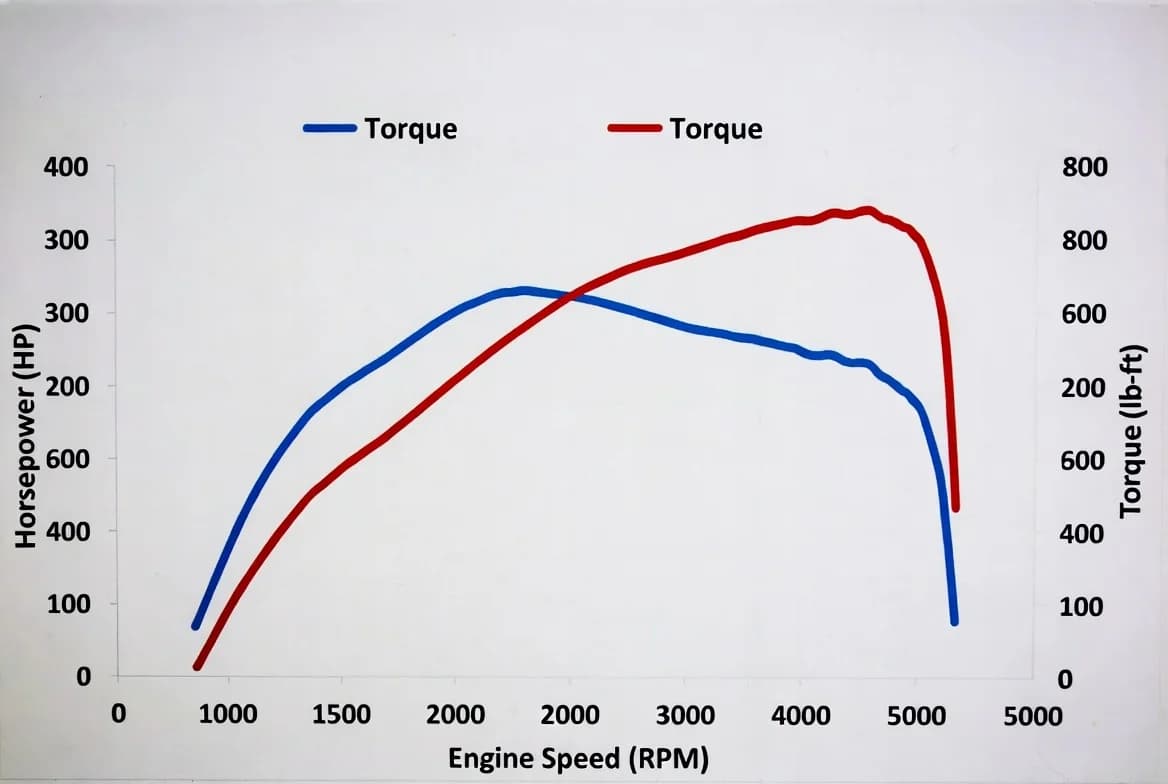
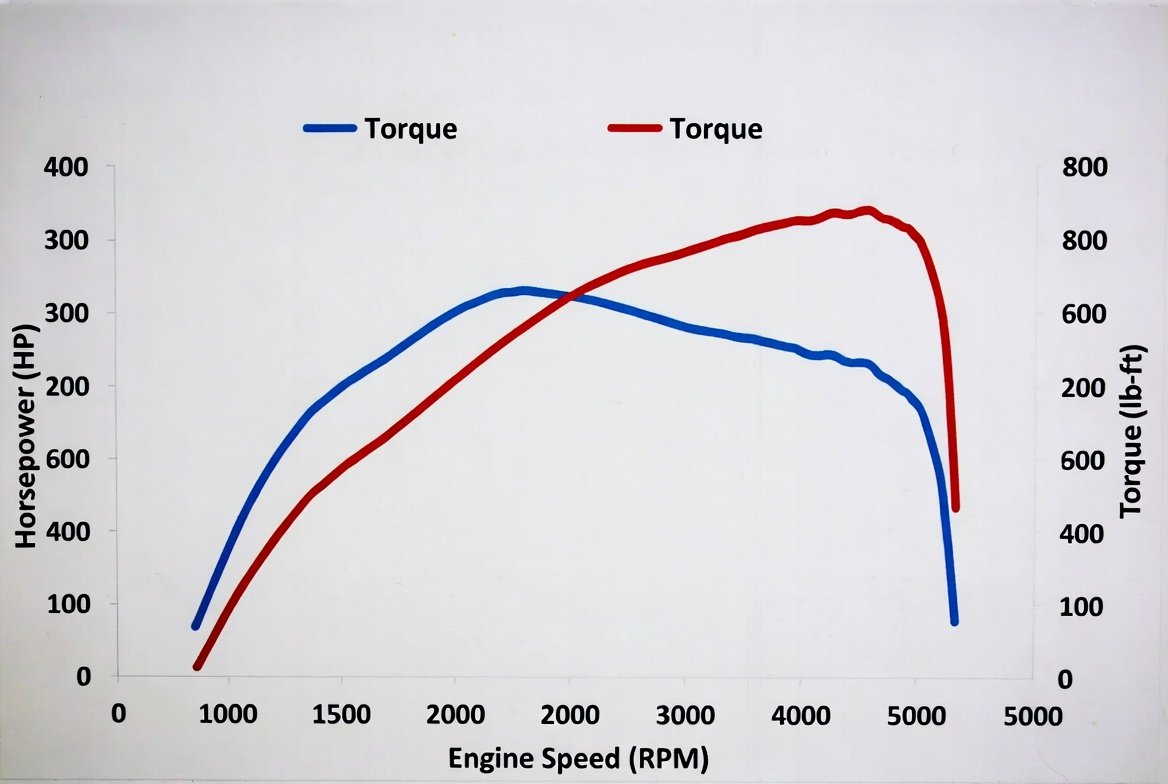
- Look at the torque curve, not just the peak horsepower number. Peak torque occurring at a low RPM is generally more useful for digging and pushing.
- Compare net horsepower figures when possible.
- Consider the entire powertrain – transmission, final drives, and hydraulic pumps all affect how engine power is delivered to the ground or to the working tools.
- For hydraulic machines, also look at hydraulic flow and pressure ratings; engine power must be sufficient to drive the pumps under full load.
Key Takeaways
Torque is the twisting force that lets a machine dig, push, and climb. Horsepower (or kilowatts) is the rate at which that work can be done. Both numbers are important, but for most construction applications the shape of the torque curve – strong torque at low engine speeds – is more critical than a high peak horsepower figure alone. When evaluating equipment, convert units consistently, prefer net power ratings, and consider how the engine’s characteristics match the work the machine will actually perform.
This article is part of the Heavy Machinery Learning Center – Machinery Basics series.
Get More Expert Guides & Updates
Subscribe for Machinery.org guide updates and product learning content.