
Why Machine Weight Matters for Stability, Transport, and Ground Pressure
Introduction
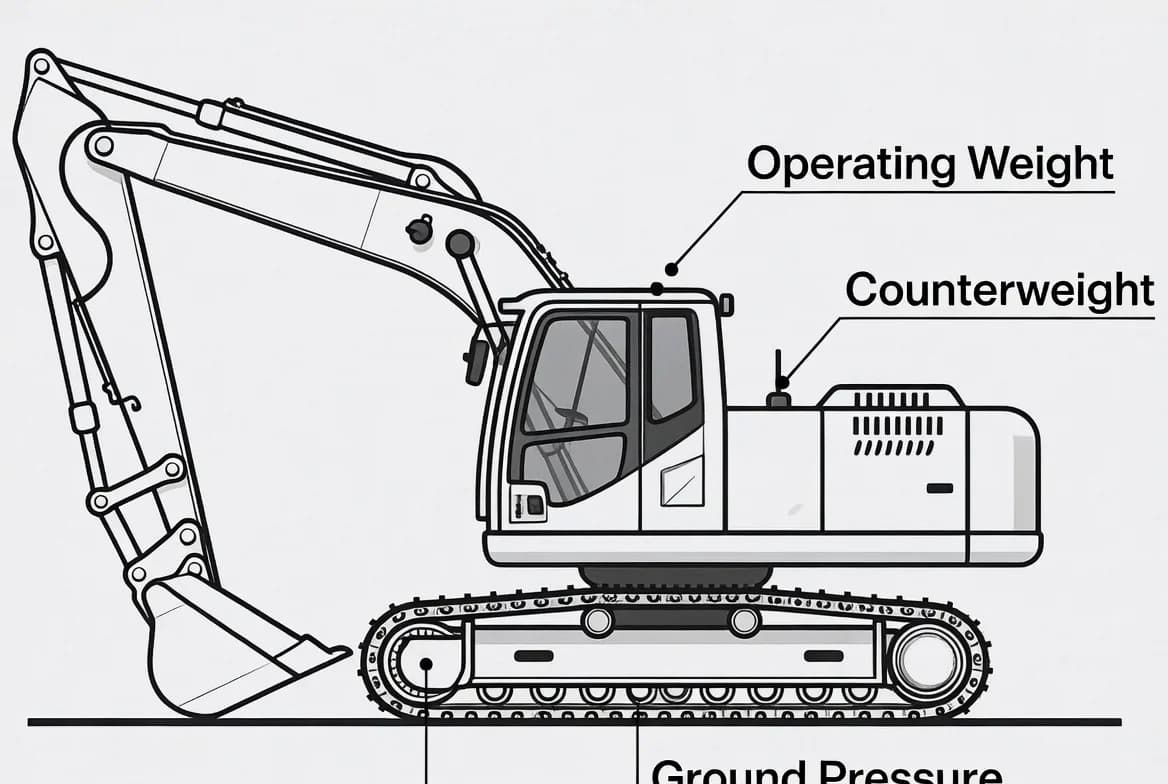
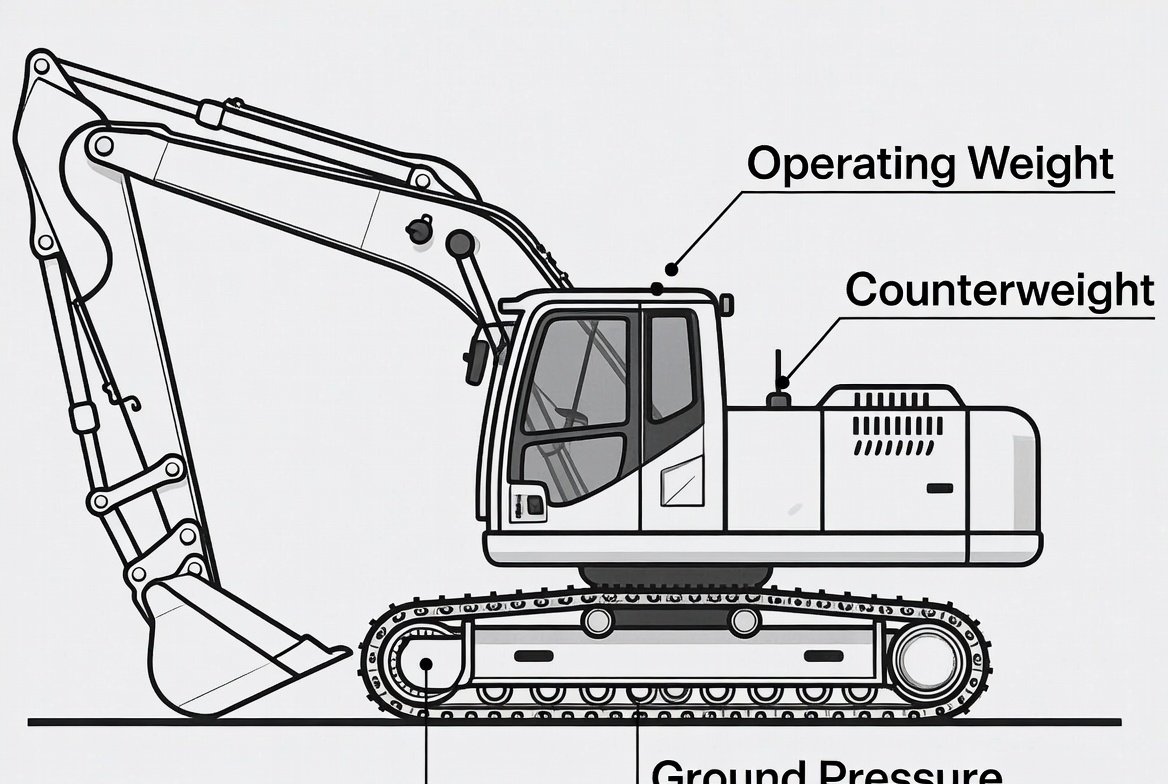
Operating weight is one of the most frequently quoted specifications for construction equipment, yet it is often misunderstood. It is far more than a simple number on a data sheet. Operating weight affects machine stability, lifting capacity, ground pressure, transport requirements, and even the size of the trailer or truck needed to move the machine between job sites. Understanding what operating weight includes and how it influences performance helps buyers, operators, and project managers make better decisions.
What is Operating Weight?
Operating weight is the total weight of the machine in a ready-to-work condition. For most excavators and loaders this typically includes:
- The base machine structure and undercarriage
- A full fuel tank
- Full hydraulic oil and engine oil
- A standard counterweight
- A standard bucket or other common attachment
- The operator (usually assumed as 75–80 kg / 165–175 lb)
Manufacturers may publish slightly different definitions, so it is always wise to check the exact configuration used for the published figure. Shipping weight (or transport weight) is usually lower because it excludes fuel, some fluids, and sometimes the bucket or counterweight.
Why Operating Weight Matters
1. Stability and Lifting Capacity
Heavier machines are generally more stable. On excavators the counterweight is carefully sized relative to the operating weight so the machine does not tip when lifting or digging at full reach. Rated lifting capacities published by manufacturers are directly related to operating weight and the position of the load relative to the machine’s center of gravity. Adding a heavier attachment or removing the counterweight changes both the operating weight and the safe working loads.
2. Ground Pressure
Ground pressure is calculated by dividing the operating weight by the total contact area of the tracks or tires. Lower ground pressure allows a machine to work on soft or sensitive surfaces without sinking or causing excessive damage. This is why many machines offer optional wider tracks or low-ground-pressure undercarriages. On soft ground, a lighter machine with wide tracks can often outperform a heavier machine with narrow tracks.
3. Transport and Logistics
Operating weight (or the closely related shipping weight) determines whether a machine can be moved on a standard trailer, requires a low-bed or multi-axle trailer, or needs special permits. Weight limits on roads and bridges vary by region. Knowing the accurate weight is essential for planning transport costs and legal compliance.
4. Traction and Digging Performance
Heavier machines generally develop more traction and can apply higher digging forces without the undercarriage spinning or the machine walking backward. However, excessive weight can also increase fuel consumption and wear on undercarriage components.
Operating Weight vs Other Weight Figures
It is useful to distinguish between several related terms:
- Operating weight – ready-to-work weight as defined by the manufacturer
- Shipping / transport weight – weight for transport, often without full fluids or certain attachments
- Gross vehicle weight – total weight including any load being carried (more common on trucks and loaders)
- Ballasted weight – operating weight plus additional ballast added for stability or traction
Practical Advice
When comparing machines, always confirm what is included in the published operating weight. Adding a heavy hydraulic breaker, a large bucket, or extra counterweight will increase the actual working weight and may affect transport and ground pressure. On soft ground, prioritize low ground pressure over maximum operating weight. For lifting applications, pay close attention to the relationship between operating weight, counterweight, and the published load charts.
Key Takeaways
Operating weight is a fundamental specification that influences stability, lifting capacity, ground pressure, and transport logistics. It is not just a measure of how heavy the machine is – it is a key indicator of how the machine will behave on the job. Understanding what the number includes and how it interacts with undercarriage design and counterweight allows better equipment selection and safer operation.
This article is part of the Heavy Machinery Learning Center – Machinery Basics series.
Get More Expert Guides & Updates
Subscribe for Machinery.org guide updates and product learning content.