
Introduction
Lift path is one of the most important design differences in skid steer loaders, yet many first-time buyers overlook it until they begin comparing actual jobs. The two main lift path types are vertical lift and radial lift. Both can be productive, both can be durable, and both appear in successful machine lineups. However, they feel different on the job because they are optimized for different motions and working priorities. The smartest buying decision is not choosing the style that sounds more advanced. It is choosing the one that matches the work you perform most often.
Vertical-lift machines are generally favored for higher lift height, better truck loading, and keeping the load path more controlled as the boom rises. Radial-lift machines are often favored for digging, grading, and ground-level reach, especially where strong breakout characteristics and simpler front-end work matter most. Readers researching skid steer specifications should understand that lift path affects productivity, stability feel, and which attachments or job types seem most natural on a given machine.
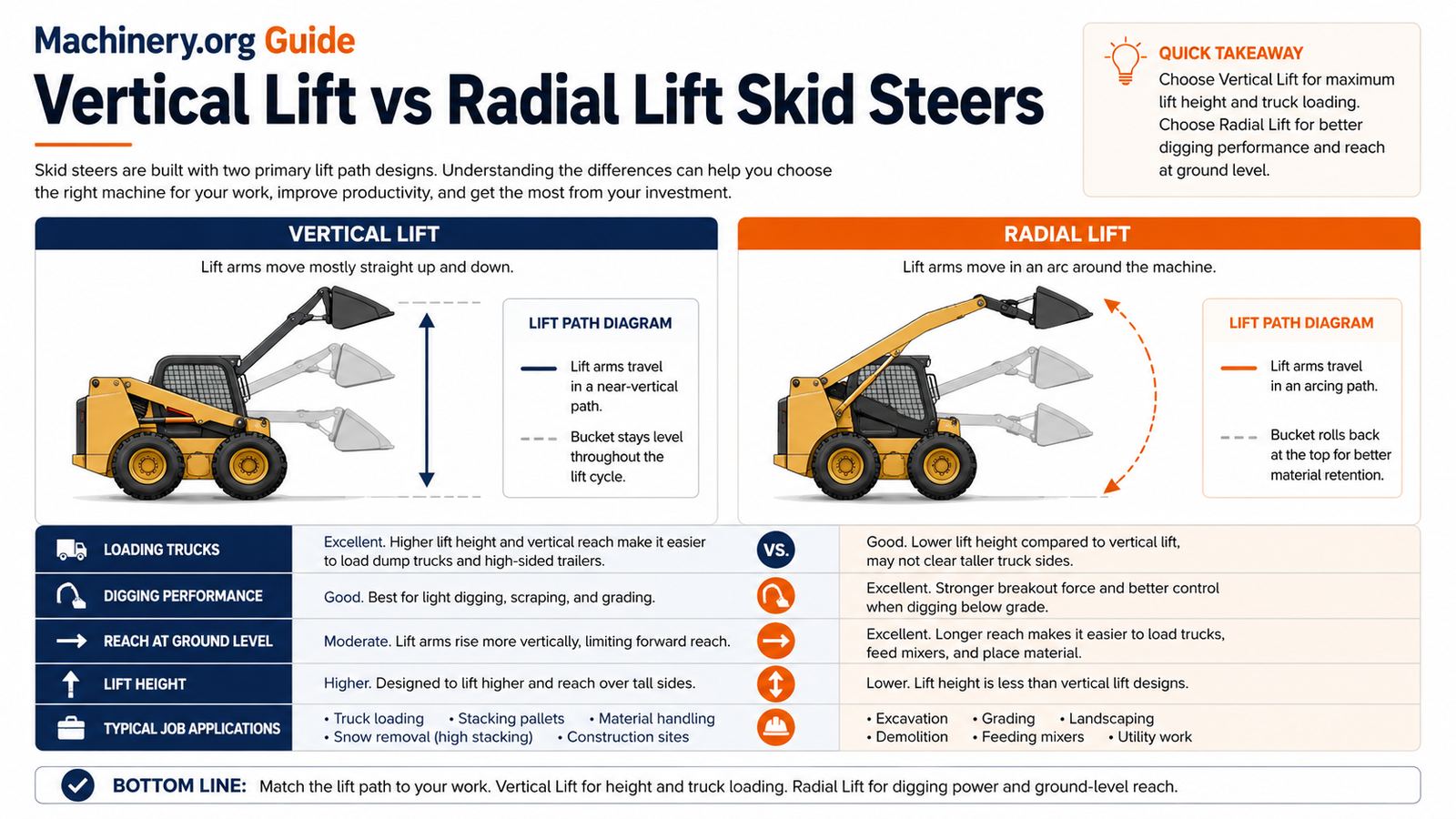
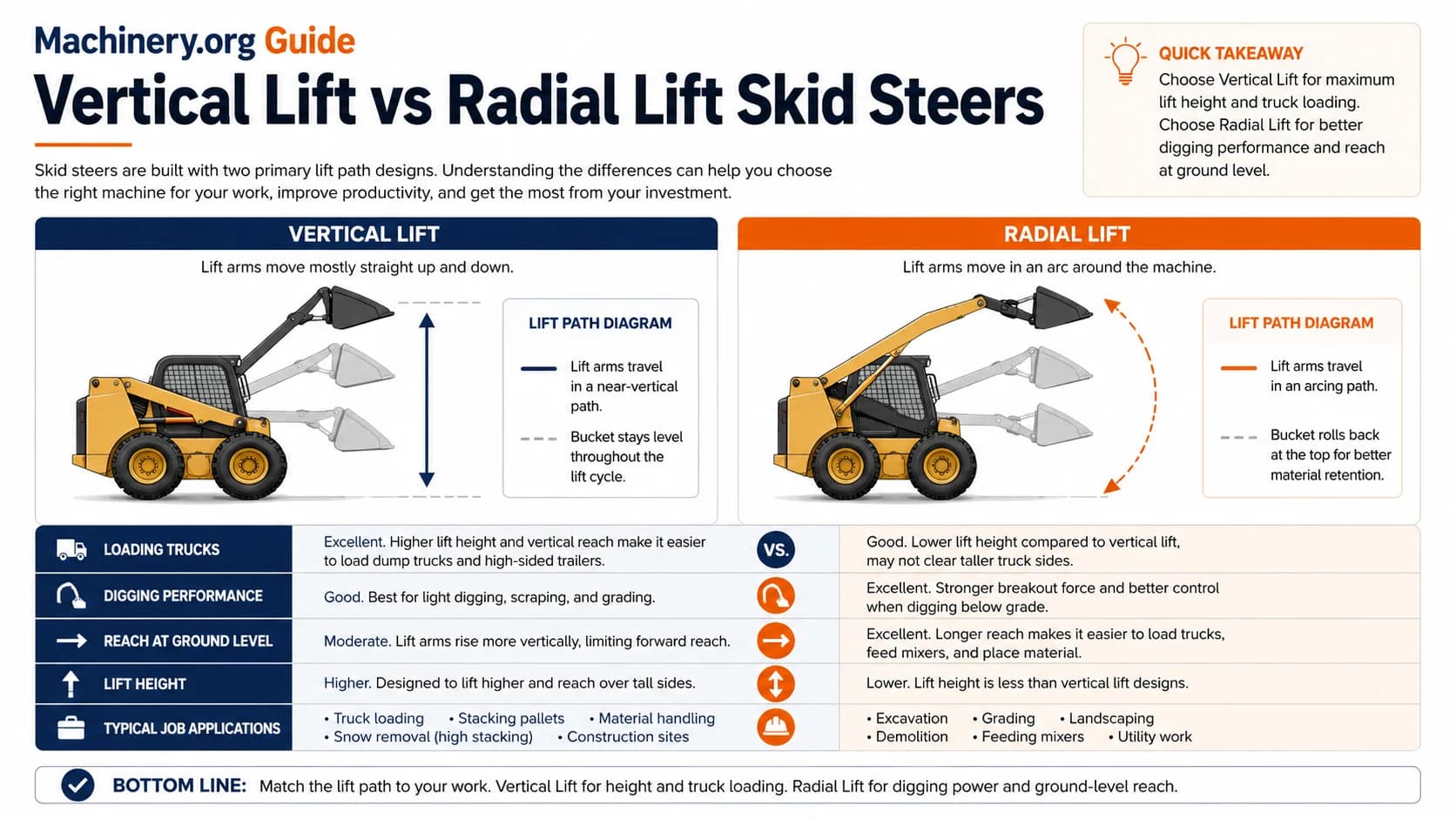
Figure 57.1 – Vertical lift vs radial lift skid steer overview.
Image Description: An infographic explaining the differences between vertical-lift and radial-lift skid steers with path diagrams and application comparisons.
Understanding Vertical Lift
A vertical-lift loader is designed so the attachment rises in a more vertical path. In practical terms, this often gives the machine an advantage when loading material into taller trucks, stacking pallets, handling bagged materials, or lifting loads that benefit from greater height and controlled placement. This is why many material-handling users, supply yards, and contractors who frequently load trailers or trucks prefer vertical lift. It can also inspire more confidence when the task depends on lift height and reach at the upper end of the cycle.
Often the better choice for loading high-sided trucks or trailers.
Useful for pallet handling, stacking, and warehouse-yard style work.
A strong option when maximum lift height matters more than digging emphasis.
Commonly associated with machine roles focused on material movement and loading cycles.
Understanding Radial Lift
A radial-lift machine follows a more arcing boom path. This often produces advantages at mid-height and near-ground work, which can make the machine feel natural during digging, grading, backdragging, and other applications where the operator spends much of the day working low and forward. The reach pattern can be useful when placing materials outward rather than simply upward. Many earthwork crews, landscapers, and owner-operators who spend their time pushing, scraping, grading, and shaping material appreciate how radial-lift machines behave.
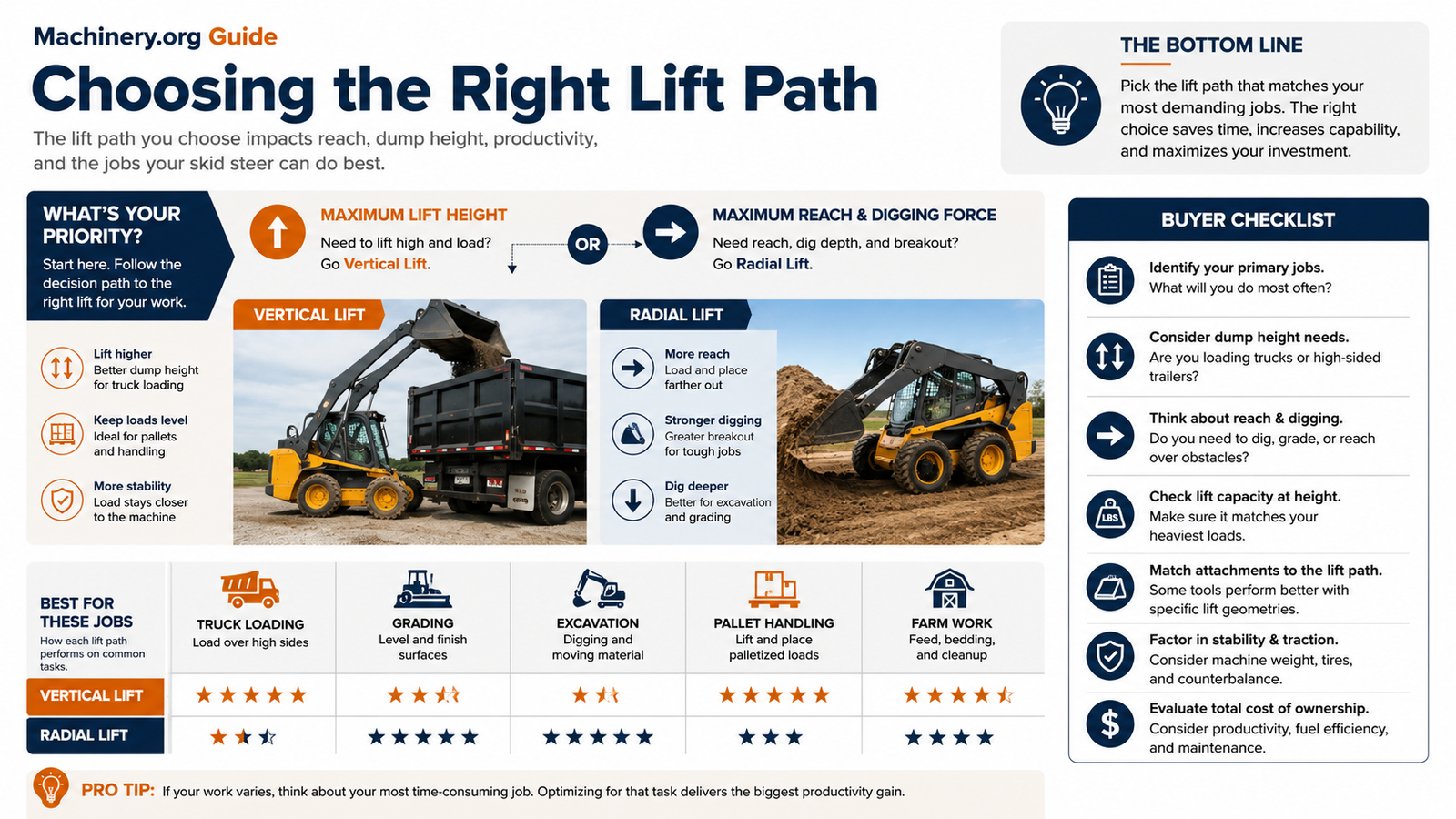
Figure 57.2 – Lift path decision guide for skid steer buyers.
Image Description: A decision-style graphic showing when buyers should prefer vertical lift or radial lift based on work priorities and common jobs.
Choosing Based on Job Type
The easiest way to choose is to identify your most frequent task, not your occasional task. If most of your working hours go into truck loading, pallet work, snow stacking, or high placement, vertical lift may serve you better. If your routine centers on excavation support, site prep, grading, backdragging, and lower-level material work, radial lift may be the better fit. There is no universal winner because the best answer depends on how the machine earns its keep.
Operators should also think about attachments and machine size. A compact radial-lift machine may feel excellent for property maintenance and grading work, while a larger vertical-lift machine may become the preferred choice on busy commercial sites. Attachment choice, traction, hydraulic package, and operator visibility all still matter. Lift path is a major decision, but it works best when evaluated as part of the complete machine package rather than in isolation.
Questions to Ask Before Buying
Will you spend more time loading trucks or more time shaping material at ground level?
Do your core jobs require maximum lift height, or stronger emphasis on grading and digging behavior?
How often will you handle pallets, building materials, or feed and fertilizer loads?
Which tasks consume the largest number of hours in a normal month?
Have you test-driven both lift path types with a familiar attachment?
Final Buyer Perspective
The best lift path decision usually comes from real job analysis rather than spec-sheet comparison alone. A buyer who loads materials daily will notice the value of vertical lift quickly. A buyer who digs, grades, and shapes surfaces every day may feel more at home with radial lift. Both choices can be correct. What matters is whether the machine complements your highest-value work. On Machinery.org, the most practical recommendation is simple: optimize for the job you do most, not the rare job you do once in a while.
Frequently Asked Questions
Which lift path is better for truck loading?
Vertical lift is generally preferred for truck loading because it usually offers better lift height and a more favorable upper lift path for loading over tall sides.
Which lift path is better for grading?
Radial lift is often preferred for grading and digging-oriented work because its geometry tends to feel more natural for low-level operation and forward work.
Do bigger machines always use vertical lift?
No. Both lift path types exist across multiple size classes. The design choice depends on the intended role of the machine family, not simply on machine size.
Key Takeaway
If most of your work depends on height and loading, vertical lift is often the better match. If your work is centered on digging, grading, and ground-level reach, radial lift often feels more natural and productive.
Get More Expert Guides & Updates
Subscribe for Machinery.org guide updates and product learning content.