
Liebherr Delivers First Mining Excavators to Gold Fields in Western Australia
Liebherr-Australia has begun a new partnership with Gold Fields by delivering two R 9600 excavators and one R 9400 to the Gruyere Gold Mine in Western Australia.
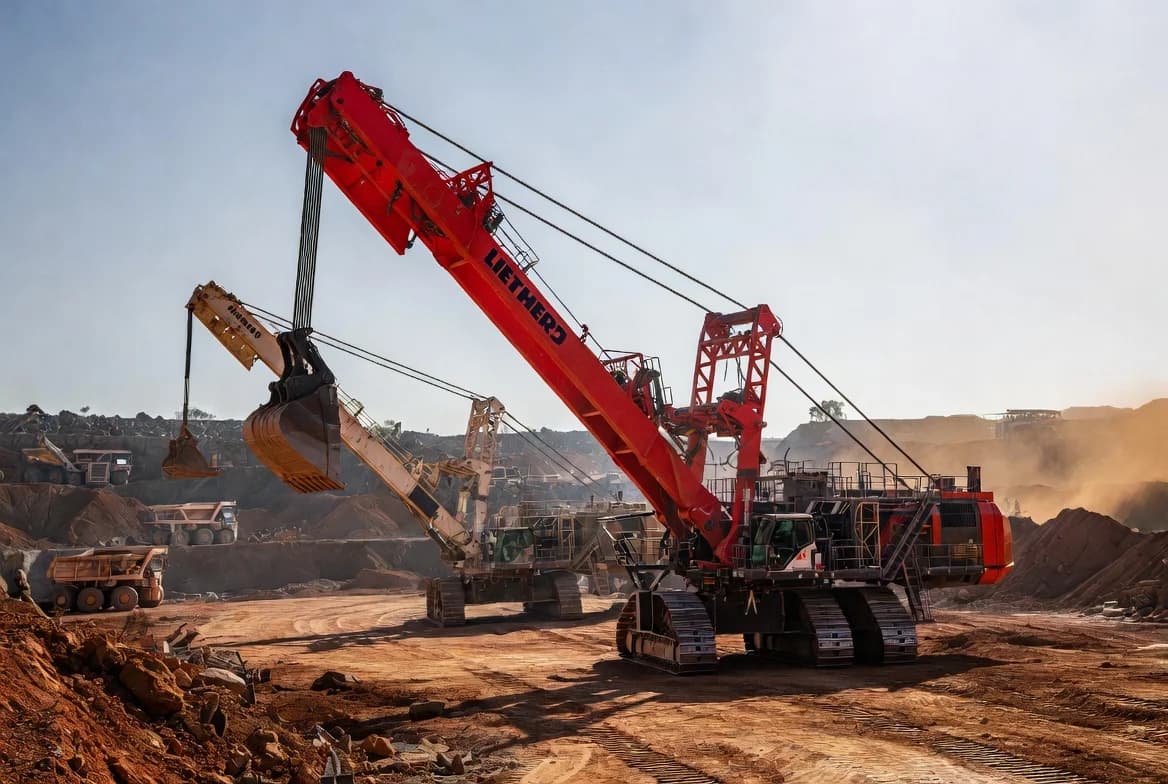
Liebherr R 9600 and R 9400 mining excavators delivered to Gold Fields in Western Australia
What happened
Liebherr-Australia announced the delivery of three large mining excavators to Gold Fields at the Gruyere Gold Mine in Western Australia. An R 9600 and an R 9400 arrived in May, followed by a second R 9600 in June. The delivery marks the start of a new customer relationship between Liebherr-Australia and Gold Fields.
Why the machine mix matters
Large mining excavators are selected around the mine plan, required production, bench geometry, truck fleet and material characteristics. Using two R 9600 machines with an R 9400 may allow the operation to assign different excavator sizes to production areas, fleet matches or material conditions. The best result depends on matching bucket payload and cycle time with the receiving trucks.
Production and reliability
Liebherr says the machines are designed for high material movement, fuel efficiency and simplified maintenance. At a large gold operation, excavator availability can influence the performance of the entire loading and hauling system. If a primary loading unit is unavailable, multiple trucks may be left waiting or reassigned, so planned maintenance and rapid repair capability are critical.
Support in Western Australia
The announcement emphasizes service coverage, parts availability and technical expertise. Western Australian mines can be remote and operate continuously, making local support a major part of equipment selection. The commercial value of a machine includes component supply, field technicians, workshop capacity, training and the ability to plan major maintenance around production.
Fuel and lifecycle considerations
Fuel use is a significant cost for large hydraulic excavators. Buyers should evaluate fuel per tonne, not only hourly consumption, because production rate and truck matching affect the result. Maintenance access and component life also influence lifecycle cost. Simplified service tasks can reduce planned downtime, but major components still require long-term rebuild and replacement planning.
The importance of fleet integration
A new excavator must integrate with trucks, dispatch systems, maintenance planning and site standards. Bucket size, loading height, swing angle and truck spotting all affect cycle efficiency. Operator training is equally important: even a well-matched machine may underperform if loading technique, bench preparation or truck positioning is inconsistent.
Why the partnership matters
For Liebherr, the delivery expands its position in Western Australia’s gold sector. For Gold Fields, it adds large excavators backed by Liebherr’s regional support organization. The relationship will ultimately be judged by availability, production and cost over the machines’ service life rather than by the handover itself.
What to watch next
Useful follow-up information would include achieved payload, cycle time, availability, fuel per tonne and component performance. It will also be worth watching whether Gold Fields expands the Liebherr fleet and how the machines perform alongside existing loading and haulage equipment at Gruyere.
Source and publication note
Primary source: Liebherr-Australia, “First Liebherr excavators delivered to Gold Fields in Western Australia.” Open official source
Previous Article
TYPHON Machinery Introduces the New STOMP V900 Mini Track Loader
Next Article
Komatsu Reopens Redding Branch to Expand Construction and Forestry Equipment Support in Northern California
Corrections and reader feedback
Found an error or have source material we should review? Send a correction report and an administrator can review it.
Report a correction