
Verified guide word count: 3,432 words
Introduction
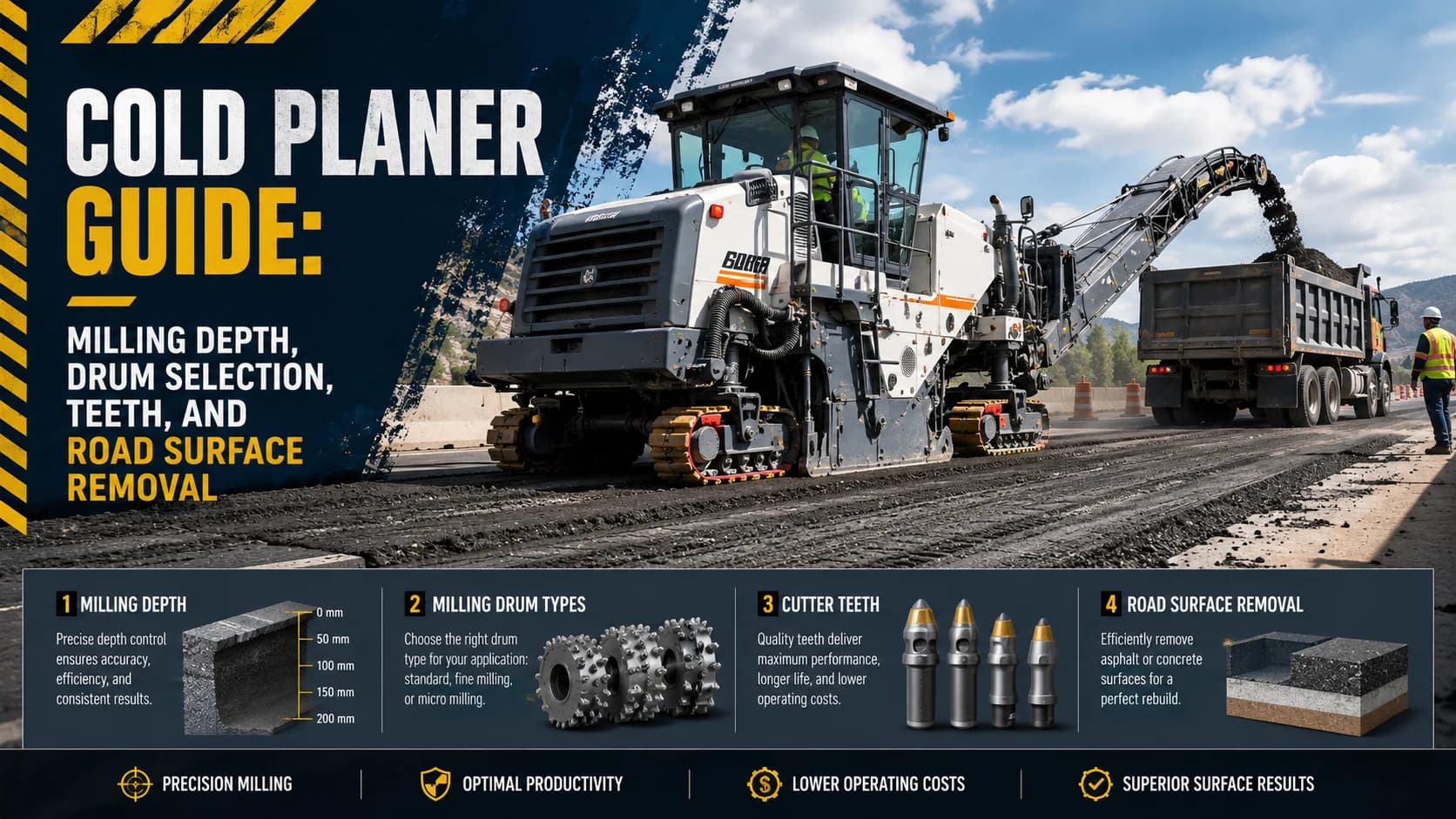
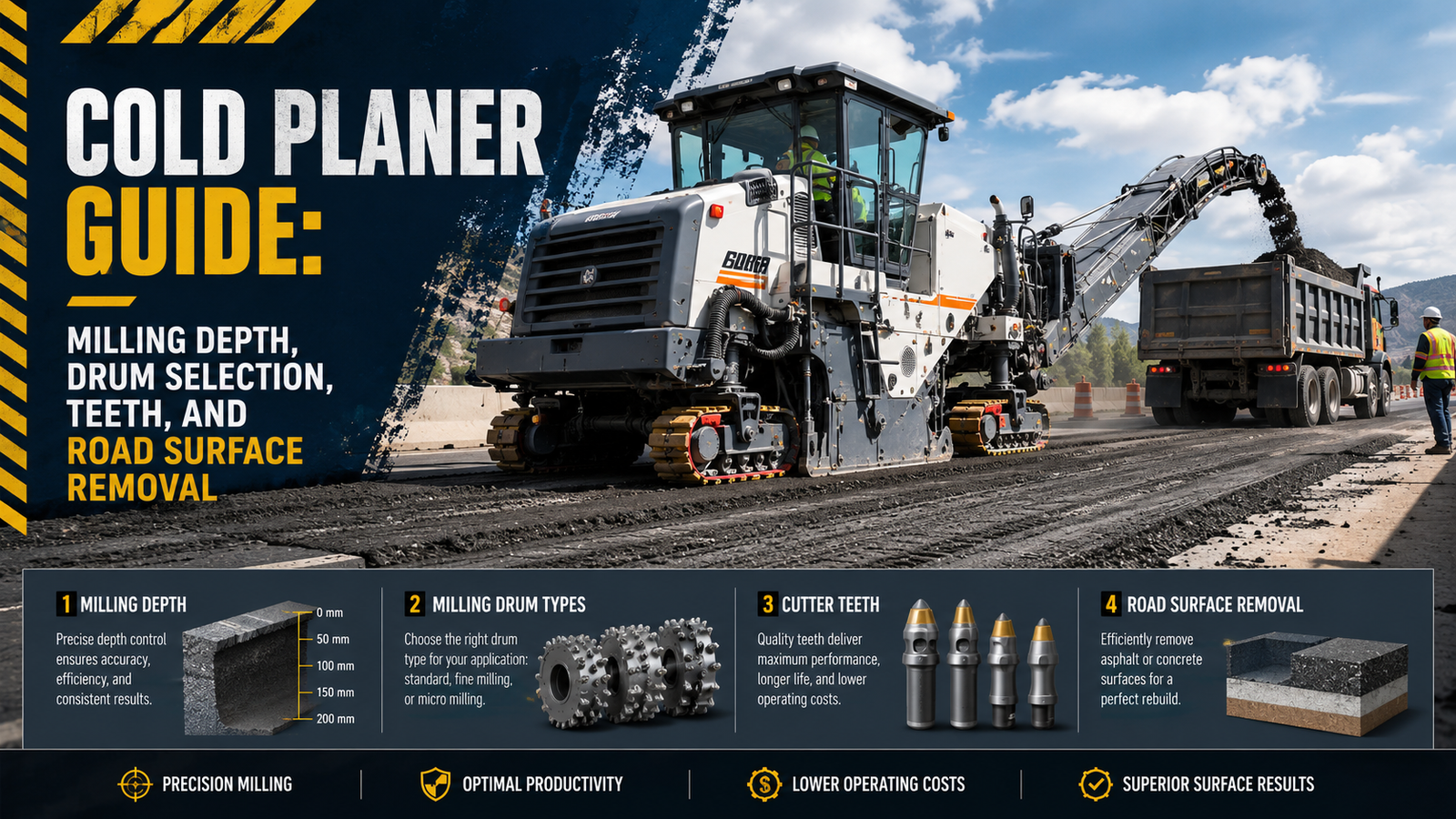
A cold planer removes asphalt or concrete with a rotating cutting drum fitted with many wear tools, allowing road crews to correct profile, remove failed pavement, create a textured bond surface, or prepare a lane for reconstruction.
The machine combines an aggressive cutting process with precise depth and grade control, conveyors, water systems, and truck-loading equipment.
Good milling is measured not only by the volume removed but also by whether the surface is left at the correct depth, slope, texture, and cleanliness for the next construction stage.
This guide explains how milling depth, drum type, cutter teeth, travel speed, water, controls, and truck logistics influence road-surface removal.
How a Cold Planer Works
The cutting drum rotates so its tools strike the pavement, fracture material, and carry reclaimed pieces into a cutting chamber and onto a primary conveyor. In practice, crews should verify this condition under the actual job environment rather than relying only on a display or a previous setting. Small changes in material, temperature, wear, or machine position can change the result, so measured checks and consistent observation are important.
A secondary conveyor transfers the milled material into a truck or another receiving system while the machine continues moving. This point also affects productivity because the machine works best when the surrounding process is stable. When the condition begins to drift, the operator should identify the source, make one logical correction, and allow enough operating time to judge whether the correction worked.
Tracks or wheels support the machine while leg-height controls and grade sensors determine cutting depth and cross slope. From a quality-control perspective, the result should be checked repeatedly at planned intervals instead of only after a visible defect appears. A sequence of measurements reveals trends early and gives supervisors time to correct the process before a long section or a large volume of material is affected.
Water sprays cool the cutting tools, control dust, and help manage fine material inside the cutting chamber. Maintenance and operation are connected here. Wear, looseness, buildup, damaged sensors, or restricted flow can force the operator to compensate with controls, but compensation rarely produces the same consistency as restoring the component to proper condition.
The operator must understand the entire material path because a blocked conveyor, weak water system, or wrong sensor reference can stop production even when the cutting drum itself is capable. The safest and most efficient approach is to include this item in the pre-shift plan and to define who is responsible for checking it during production. Clear communication between the main machine operator, ground crew, trucks, quality personnel, and support equipment reduces delays and prevents conflicting adjustments.
For a cold planer crew, the practical objective in this area is repeatability. Record the starting condition, observe how the machine and material respond, and use measured results to decide whether another adjustment is necessary. This disciplined method reduces rework, makes troubleshooting faster, and produces a process that can be repeated by the next shift.
Choosing Milling Depth
Shallow milling can remove surface oxidation, improve texture, eliminate minor rutting, or create a uniform surface for a thin overlay. Experienced crews treat this as one variable in a larger system rather than an isolated setting. If performance changes, they compare material condition, machine speed, mechanical condition, and downstream capacity before assuming that one control must be adjusted.
Intermediate depth milling can remove failed wearing courses, patches, or multiple asphalt lifts while preserving sound lower layers. In practice, crews should verify this condition under the actual job environment rather than relying only on a display or a previous setting. Small changes in material, temperature, wear, or machine position can change the result, so measured checks and consistent observation are important.
Deep milling can expose base material or remove most of a pavement structure, but it dramatically increases material volume, truck demand, cutter load, and risk to buried features. This point also affects productivity because the machine works best when the surrounding process is stable. When the condition begins to drift, the operator should identify the source, make one logical correction, and allow enough operating time to judge whether the correction worked.
The first production cut should be physically measured at several locations because a display value alone does not confirm actual depth across the full drum. From a quality-control perspective, the result should be checked repeatedly at planned intervals instead of only after a visible defect appears. A sequence of measurements reveals trends early and gives supervisors time to correct the process before a long section or a large volume of material is affected.
Operators should identify manholes, bridge joints, embedded loops, utility covers, curbs, and other obstacles before cutting so the selected depth does not damage them. Maintenance and operation are connected here. Wear, looseness, buildup, damaged sensors, or restricted flow can force the operator to compensate with controls, but compensation rarely produces the same consistency as restoring the component to proper condition.
For a cold planer crew, the practical objective in this area is repeatability. Record the starting condition, observe how the machine and material respond, and use measured results to decide whether another adjustment is necessary. This disciplined method reduces rework, makes troubleshooting faster, and produces a process that can be repeated by the next shift.
Standard, Fine, and Micro-Milling Drums
Standard milling drums use wider tool spacing and are efficient for general pavement removal where a relatively coarse texture is acceptable. The safest and most efficient approach is to include this item in the pre-shift plan and to define who is responsible for checking it during production. Clear communication between the main machine operator, ground crew, trucks, quality personnel, and support equipment reduces delays and prevents conflicting adjustments.
Fine-milling drums use closer tooth spacing and more cutting contacts to create a finer surface that can be useful for profile correction or specialized overlay preparation. Experienced crews treat this as one variable in a larger system rather than an isolated setting. If performance changes, they compare material condition, machine speed, mechanical condition, and downstream capacity before assuming that one control must be adjusted.
Micro-milling drums use very close spacing to create an even finer texture, but they contain many more tools and require careful inspection and maintenance. In practice, crews should verify this condition under the actual job environment rather than relying only on a display or a previous setting. Small changes in material, temperature, wear, or machine position can change the result, so measured checks and consistent observation are important.
Drum choice should start with the required final surface and production target rather than simply using the drum already installed in the machine. This point also affects productivity because the machine works best when the surrounding process is stable. When the condition begins to drift, the operator should identify the source, make one logical correction, and allow enough operating time to judge whether the correction worked.
Cutting width should also match lane geometry so unnecessary overlap is minimized and the truck-loading cycle remains efficient. From a quality-control perspective, the result should be checked repeatedly at planned intervals instead of only after a visible defect appears. A sequence of measurements reveals trends early and gives supervisors time to correct the process before a long section or a large volume of material is affected.
For a cold planer crew, the practical objective in this area is repeatability. Record the starting condition, observe how the machine and material respond, and use measured results to decide whether another adjustment is necessary. This disciplined method reduces rework, makes troubleshooting faster, and produces a process that can be repeated by the next shift.
Cutting Teeth and Tool Holders
Each cutting tool normally uses a hard carbide tip and a steel body designed to rotate in its holder so wear is distributed around the tool. Maintenance and operation are connected here. Wear, looseness, buildup, damaged sensors, or restricted flow can force the operator to compensate with controls, but compensation rarely produces the same consistency as restoring the component to proper condition.
A seized tool can wear flat, damage the holder, and leave a visible ridge or uncut line in the milled surface. The safest and most efficient approach is to include this item in the pre-shift plan and to define who is responsible for checking it during production. Clear communication between the main machine operator, ground crew, trucks, quality personnel, and support equipment reduces delays and prevents conflicting adjustments.
Missing or broken teeth force neighboring tools to carry additional load and can quickly create a repeated defect pattern across the drum. Experienced crews treat this as one variable in a larger system rather than an isolated setting. If performance changes, they compare material condition, machine speed, mechanical condition, and downstream capacity before assuming that one control must be adjusted.
Worn holders change the attack angle of the cutting tool and may cause new teeth to fail rapidly even after they are replaced. In practice, crews should verify this condition under the actual job environment rather than relying only on a display or a previous setting. Small changes in material, temperature, wear, or machine position can change the result, so measured checks and consistent observation are important.
Tool inspection should follow safe lockout and access procedures, and replacement decisions should be based on tool condition, surface quality, and wear cost rather than waiting for complete failure. This point also affects productivity because the machine works best when the surrounding process is stable. When the condition begins to drift, the operator should identify the source, make one logical correction, and allow enough operating time to judge whether the correction worked.
For a cold planer crew, the practical objective in this area is repeatability. Record the starting condition, observe how the machine and material respond, and use measured results to decide whether another adjustment is necessary. This disciplined method reduces rework, makes troubleshooting faster, and produces a process that can be repeated by the next shift.
Travel Speed, Drum Speed, and Texture
Travel speed controls how many cutter impacts occur along each meter of pavement and therefore influences texture, production, engine load, and tool wear. From a quality-control perspective, the result should be checked repeatedly at planned intervals instead of only after a visible defect appears. A sequence of measurements reveals trends early and gives supervisors time to correct the process before a long section or a large volume of material is affected.
Moving too quickly in hard material or deep cuts can overload the drum, create a coarse irregular texture, and increase machine vibration. Maintenance and operation are connected here. Wear, looseness, buildup, damaged sensors, or restricted flow can force the operator to compensate with controls, but compensation rarely produces the same consistency as restoring the component to proper condition.
Slower travel increases cutting contacts and can improve texture, but production falls and tool contact per unit area increases. The safest and most efficient approach is to include this item in the pre-shift plan and to define who is responsible for checking it during production. Clear communication between the main machine operator, ground crew, trucks, quality personnel, and support equipment reduces delays and prevents conflicting adjustments.
Where drum speed is adjustable, it should be matched with travel speed so the machine delivers the required texture without unnecessary energy use. Experienced crews treat this as one variable in a larger system rather than an isolated setting. If performance changes, they compare material condition, machine speed, mechanical condition, and downstream capacity before assuming that one control must be adjusted.
The best setting is a balance among surface requirement, machine load, cutter life, conveyor capacity, and truck availability. In practice, crews should verify this condition under the actual job environment rather than relying only on a display or a previous setting. Small changes in material, temperature, wear, or machine position can change the result, so measured checks and consistent observation are important.
For a cold planer crew, the practical objective in this area is repeatability. Record the starting condition, observe how the machine and material respond, and use measured results to decide whether another adjustment is necessary. This disciplined method reduces rework, makes troubleshooting faster, and produces a process that can be repeated by the next shift.
Grade, Slope, and Profile Control
Grade-control sensors can reference the adjacent pavement, a stringline, a long averaging ski, or another datum to maintain depth or create a corrected profile. This point also affects productivity because the machine works best when the surrounding process is stable. When the condition begins to drift, the operator should identify the source, make one logical correction, and allow enough operating time to judge whether the correction worked.
Slope control maintains a specified transverse relationship between the two sides of the machine and should be verified against survey or physical measurements. From a quality-control perspective, the result should be checked repeatedly at planned intervals instead of only after a visible defect appears. A sequence of measurements reveals trends early and gives supervisors time to correct the process before a long section or a large volume of material is affected.
A sensor riding on loose millings, a broken shoulder, or an irregular joint can command an incorrect cut even when the electronics are functioning perfectly. Maintenance and operation are connected here. Wear, looseness, buildup, damaged sensors, or restricted flow can force the operator to compensate with controls, but compensation rarely produces the same consistency as restoring the component to proper condition.
Profile milling may intentionally vary depth along the lane, so operators need to understand the design intent before overriding a system that appears to be cutting deeper in one area. The safest and most efficient approach is to include this item in the pre-shift plan and to define who is responsible for checking it during production. Clear communication between the main machine operator, ground crew, trucks, quality personnel, and support equipment reduces delays and prevents conflicting adjustments.
Automation should be treated as a precision tool that still requires calibration, physical verification, and a reliable reference. Experienced crews treat this as one variable in a larger system rather than an isolated setting. If performance changes, they compare material condition, machine speed, mechanical condition, and downstream capacity before assuming that one control must be adjusted.
For a cold planer crew, the practical objective in this area is repeatability. Record the starting condition, observe how the machine and material respond, and use measured results to decide whether another adjustment is necessary. This disciplined method reduces rework, makes troubleshooting faster, and produces a process that can be repeated by the next shift.
Water, Dust, and Conveyor Management
Water nozzles should provide enough coverage to cool tools and control dust without flooding the cutting chamber or creating unnecessary runoff. In practice, crews should verify this condition under the actual job environment rather than relying only on a display or a previous setting. Small changes in material, temperature, wear, or machine position can change the result, so measured checks and consistent observation are important.
Blocked filters or nozzles can create localized hot areas, increase dust, and accelerate tool wear. This point also affects productivity because the machine works best when the surrounding process is stable. When the condition begins to drift, the operator should identify the source, make one logical correction, and allow enough operating time to judge whether the correction worked.
Vacuum dust systems, where fitted, depend on clean airflow paths and should be maintained so fine material does not reduce visibility or contaminate machine components. From a quality-control perspective, the result should be checked repeatedly at planned intervals instead of only after a visible defect appears. A sequence of measurements reveals trends early and gives supervisors time to correct the process before a long section or a large volume of material is affected.
Conveyor speed should match the cutting rate so material is carried away without building up in the machine or being thrown beyond the truck body. Maintenance and operation are connected here. Wear, looseness, buildup, damaged sensors, or restricted flow can force the operator to compensate with controls, but compensation rarely produces the same consistency as restoring the component to proper condition.
Truck drivers and planer operators need clear communication because the truck often moves close to the discharge conveyor while both vehicles are in motion. The safest and most efficient approach is to include this item in the pre-shift plan and to define who is responsible for checking it during production. Clear communication between the main machine operator, ground crew, trucks, quality personnel, and support equipment reduces delays and prevents conflicting adjustments.
For a cold planer crew, the practical objective in this area is repeatability. Record the starting condition, observe how the machine and material respond, and use measured results to decide whether another adjustment is necessary. This disciplined method reduces rework, makes troubleshooting faster, and produces a process that can be repeated by the next shift.
Milling Defects, Maintenance, and Daily Practice
Ridges and uncut lines frequently point to missing, broken, or nonrotating tools, while washboard texture can indicate speed, bounce, drum condition, or grade-control issues. Experienced crews treat this as one variable in a larger system rather than an isolated setting. If performance changes, they compare material condition, machine speed, mechanical condition, and downstream capacity before assuming that one control must be adjusted.
One side cutting deeper than the other should prompt checks of sensors, leg calibration, slope control, track support, and physical depth measurements. In practice, crews should verify this condition under the actual job environment rather than relying only on a display or a previous setting. Small changes in material, temperature, wear, or machine position can change the result, so measured checks and consistent observation are important.
Excessive tool breakage can result from hard inclusions, wrong tool selection, insufficient cooling, damaged holders, or an operating rate that overloads the drum. This point also affects productivity because the machine works best when the surrounding process is stable. When the condition begins to drift, the operator should identify the source, make one logical correction, and allow enough operating time to judge whether the correction worked.
Pre-shift checks should include the drum, tools, water system, conveyors, side plates, tracks, grade sensors, lights, cameras, guards, fluids, and visible hydraulic components. From a quality-control perspective, the result should be checked repeatedly at planned intervals instead of only after a visible defect appears. A sequence of measurements reveals trends early and gives supervisors time to correct the process before a long section or a large volume of material is affected.
A strong milling crew evaluates the surface it leaves behind because a clean, accurate milled profile reduces leveling asphalt, sweeping time, and paving corrections downstream. Maintenance and operation are connected here. Wear, looseness, buildup, damaged sensors, or restricted flow can force the operator to compensate with controls, but compensation rarely produces the same consistency as restoring the component to proper condition.
For a cold planer crew, the practical objective in this area is repeatability. Record the starting condition, observe how the machine and material respond, and use measured results to decide whether another adjustment is necessary. This disciplined method reduces rework, makes troubleshooting faster, and produces a process that can be repeated by the next shift.
Field Operating Checklist
Before work begins, review the job objective, material condition, planned production rate, machine configuration, inspection requirements, traffic or site movement, and the conditions that require the cold planer to stop. Confirm that high-wear components, sensors, guards, warning systems, fluid levels, and support equipment are ready. During production, watch for changes in sound, vibration, material flow, machine load, surface condition, and the distance between the main machine and support equipment. Measure quality early enough to identify trends. Record major setting changes, delays, unusual material, weather changes, and maintenance issues. At the end of the shift, clean and inspect the machine according to the manufacturer’s procedure, report defects while they are fresh in memory, and compare planned production with actual production. A short end-of-shift review helps the next crew begin from known conditions rather than repeating the same troubleshooting process.
Conclusion
The cold planer performs best when operators understand the physical process rather than treating the controls as isolated switches. Good production comes from correct setup, stable material flow, reasonable machine speed, mechanical condition, frequent measurement, and coordinated support equipment. The machine should be operated within the manufacturer’s requirements and the project specification, with changes made deliberately and verified from the result. When these habits become routine, quality becomes more consistent, wear is easier to manage, and the crew spends less time correcting preventable defects.
Get More Expert Guides & Updates
Subscribe for Machinery.org guide updates and product learning content.