
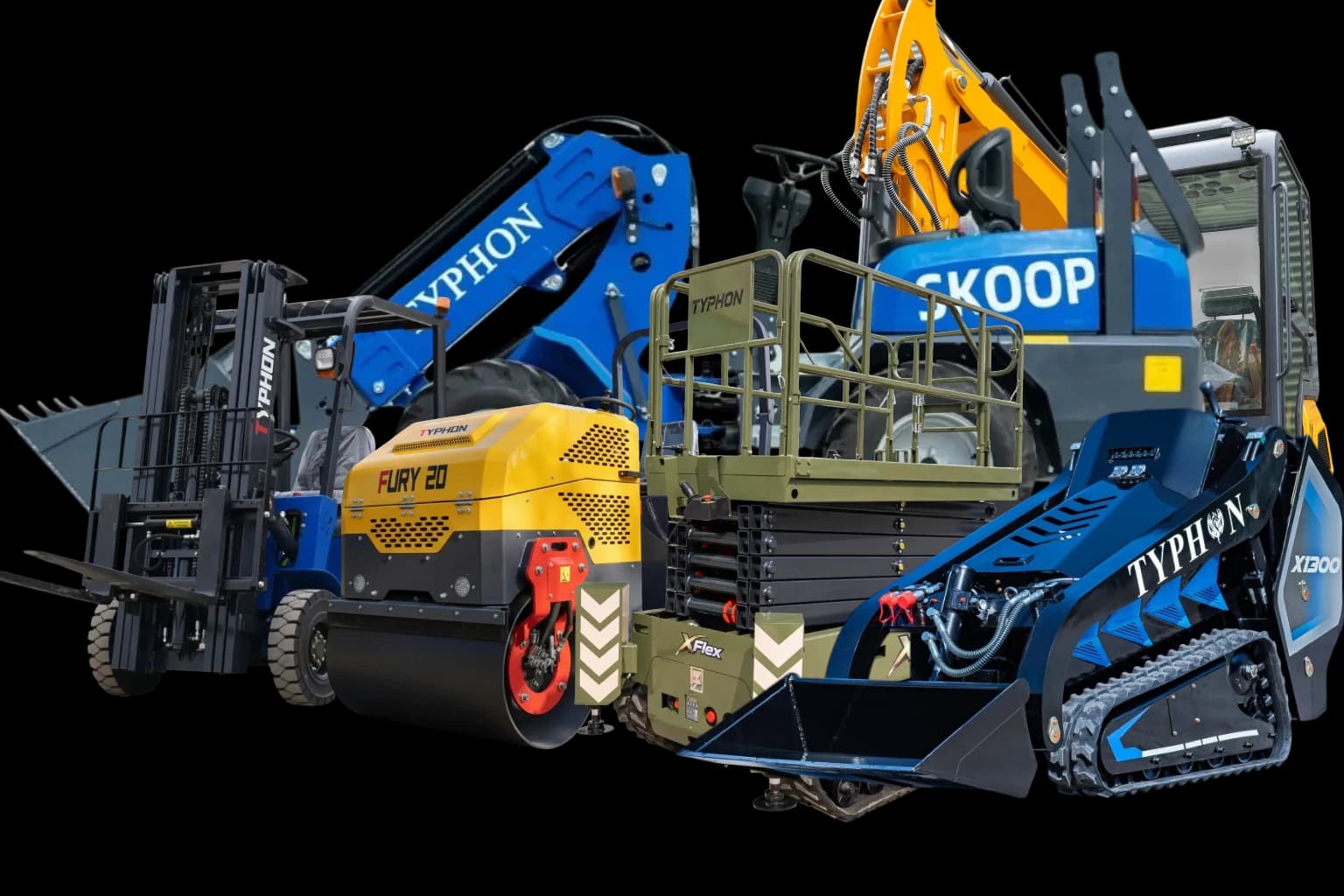
A Practical Overview of the Machines That Build Our World
Introduction
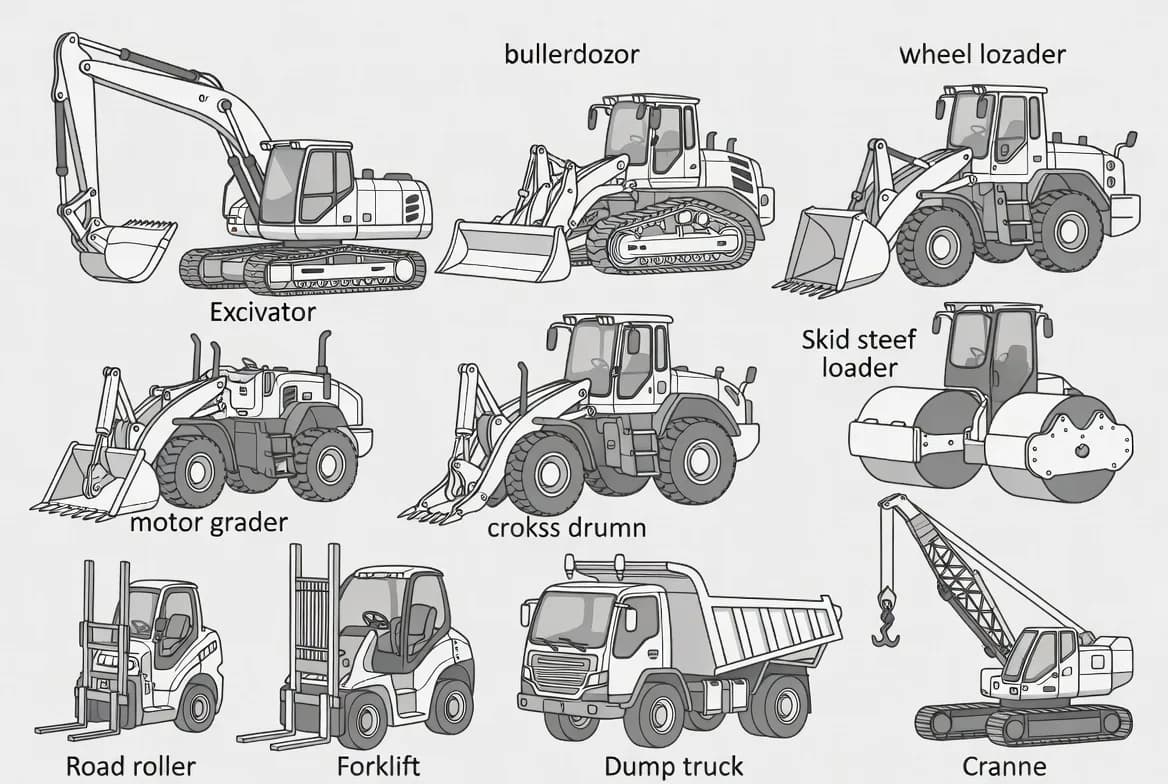
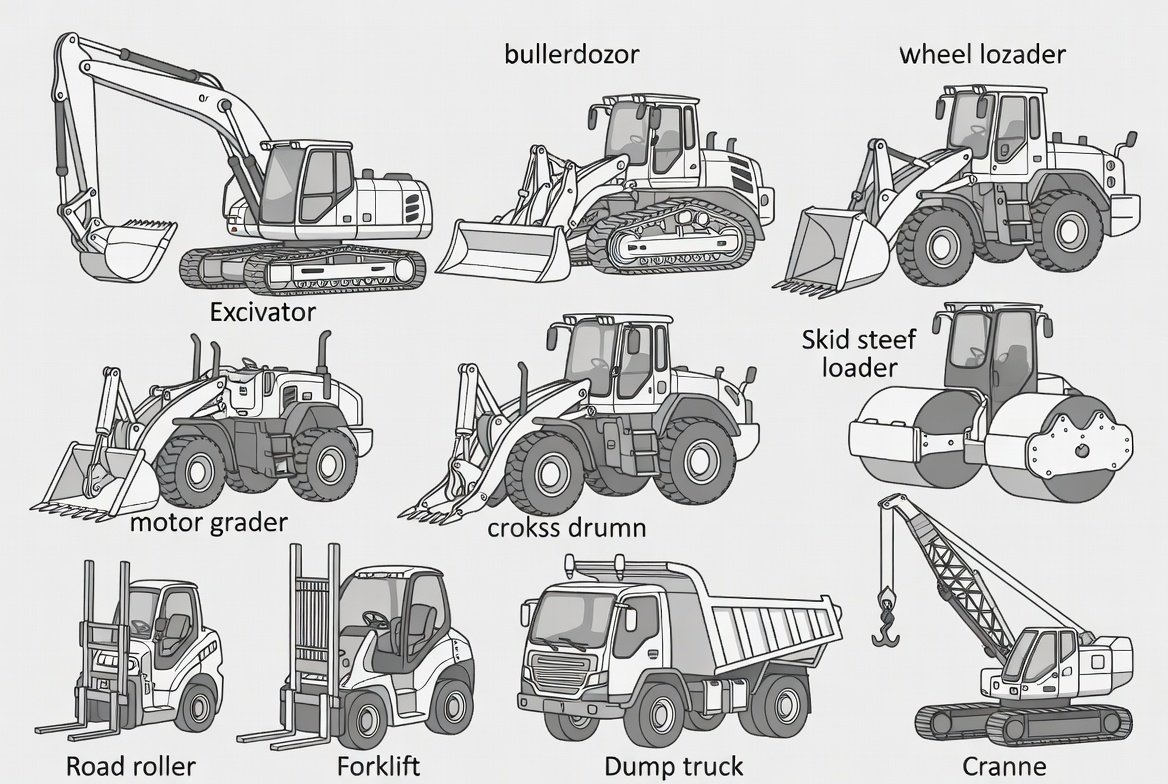
Construction sites are filled with specialized machines, each designed for a particular set of tasks. While an excavator can dig and a loader can carry material, using the wrong machine for the job wastes time, fuel, and money, and can create safety risks. This guide explains the main categories of construction equipment, what each type is best at, and how they typically work together on a project.
By the end of this article you will be able to identify the major machine families, understand their primary functions, and make smarter decisions when selecting or scheduling equipment.
1. Excavators
Excavators are the most versatile earthmoving machines on most job sites. They consist of a rotating upper structure (house) mounted on a tracked or wheeled undercarriage, a boom, stick (arm), and a bucket or other attachment. The operator sits in a cab that can rotate 360 degrees, allowing the machine to dig, lift, and dump without repositioning the undercarriage.
Primary uses: trenching, foundation excavation, loading trucks, demolition, material handling with grapples or thumbs, and many specialized tasks with hydraulic attachments such as breakers, augers, and compactors.
Sizes range from mini excavators under 2 tons to massive mining excavators over 800 tons. Most construction work uses machines between 5 and 40 tons.
2. Bulldozers (Dozers)
Bulldozers are tracked machines equipped with a large front-mounted blade. They excel at pushing large volumes of soil, rock, or debris over short distances. The low center of gravity and continuous tracks give them excellent traction and the ability to work on steep grades or soft ground.
Primary uses: site stripping, rough grading, pushing material into piles, backfilling, and creating access roads. Some models also carry a rear ripper for breaking hard ground.
Dozers are classified by size (small, medium, large) and by blade type (straight, universal, angle, semi-U). Larger machines are used in mining and major earthworks; smaller ones are common on commercial and residential sites.
3. Wheel Loaders and Track Loaders
Wheel loaders (also called front-end loaders) use a large bucket mounted on the front to scoop, lift, and transport loose material. They travel on rubber tires, which allows higher travel speeds than tracked machines. Compact track loaders and skid steers are smaller cousins that offer greater maneuverability.
Primary uses: loading trucks, stockpiling aggregate, backfilling, feeding hoppers, and general material handling. With the right attachment they can also sweep, plow snow, or handle pallets.
Key specifications include bucket capacity, rated operating capacity (for compact machines), and breakout force. Larger wheel loaders dominate quarry and large earthmoving work; skid steers and compact track loaders dominate landscaping, utility, and small-site work.
4. Motor Graders
Motor graders are long machines with a centrally mounted blade that can be precisely angled, tilted, and shifted. They are the primary tool for creating fine, accurate grades for roads, building pads, and drainage.
Primary uses: finish grading, road maintenance, ditching, and spreading material to exact elevations. Modern graders often include GPS or laser grade-control systems for high precision.
Because the blade sits between the front and rear axles, the operator has excellent visibility and control. Graders are less common on pure building sites but essential on road and civil projects.
5. Compaction Equipment (Road Rollers)
Compactors densify soil, aggregate, or asphalt so that it will support loads without settling. The most common types are smooth-drum and padfoot vibratory rollers, as well as pneumatic (rubber-tired) rollers.
Primary uses: compacting subgrade, base courses, and asphalt layers on roads, parking lots, and building pads. Proper compaction is critical for long-term pavement and foundation performance.
Selection depends on the material being compacted (soil vs asphalt), the required density, and the width of the area. Vibratory rollers use internal eccentric weights to generate dynamic force in addition to static weight.
6. Material Handling – Forklifts, Telehandlers, and Cranes
These machines lift and place materials rather than dig or push them. Forklifts handle palletized loads on firm, level surfaces. Telehandlers (telescopic handlers) combine the reach of a crane with the versatility of a forklift and are widely used on construction sites. Mobile and crawler cranes handle the heaviest lifts and the tallest placements.
Understanding load charts, load centers, and stability is essential for safe operation of any lifting machine.
7. Dump Trucks and Haulers
Dump trucks and articulated haulers move large volumes of material from the excavation or loading point to the dump or processing area. On highway projects and large earthworks, the efficiency of the loading-and-hauling cycle often determines overall project productivity.
How These Machines Work Together
On a typical site the sequence might look like this: dozers strip topsoil and rough-grade; excavators dig foundations and trenches; loaders or excavators load dump trucks; trucks haul material away or bring aggregate in; graders create final surfaces; rollers compact the material; and telehandlers or forklifts place building materials. Understanding this workflow helps project managers sequence equipment efficiently and avoid bottlenecks.
Key Takeaways
No single machine can do every job well. Matching the right equipment type and size to the task is one of the highest-leverage decisions on a construction project. The categories above cover the majority of machines you will encounter. In later guides we will examine each major type in greater detail, including sizing, key specifications, and selection criteria.
This article is part of the Heavy Machinery Learning Center – Machinery Basics series.
Get More Expert Guides & Updates
Subscribe for Machinery.org guide updates and product learning content.