
Machinery Basics Guides & Checklists
Comprehensive technical guides, operating manuals, and maintenance tutorials for Machinery Basics.
200
ArticlesPublished Guides & Manuals
24
TopicsEquipment & Maintenance Categories
100%
VerifiedCurated Technical Standards
Published guides
Machinery Basics guides
Showing page 1 of 5 (26 guides in Machinery Basics).
 GUIDE
GUIDEMachinery Basics
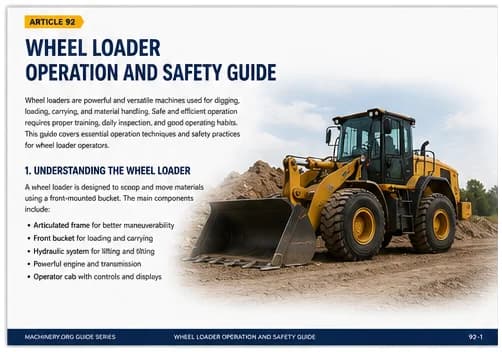
Wheel Loader Operation and Safety Guide
Figure 92.1 - Wheel loader operation and safety overview.
 GUIDE
GUIDEMachinery Basics
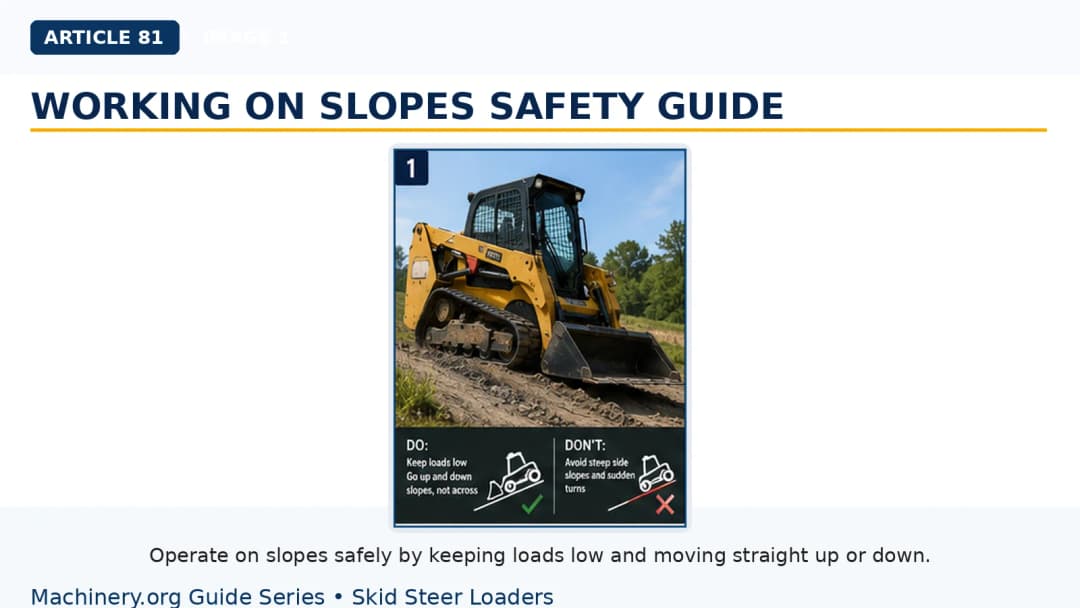
Working on Slopes and Uneven Terrain Safely
Operating a skid steer on sloped or uneven ground requires more judgment than flat-ground work. The machine may feel compact and powerful, but its short wheelbase, high breakout force, and changing center of gravity mean that mistakes can develop quickly into a rollover hazard. For that reason, slope work should never be treated as routine. Operators need a clear understanding of how the machine behaves when the terrain changes beneath it.
 GUIDE
GUIDEMachinery Basics
Noise, Vibration, and Operator Comfort
Productivity is not only about horsepower and hydraulic flow. It is also about how well the operator can stay alert, comfortable, and precise over a full shift. Noise, vibration, poor seat support, awkward control position, and inadequate climate control all contribute to fatigue. Fatigue reduces attention and accuracy, which in turn raises the risk of accidents and machine abuse.
 GUIDE
GUIDEMachinery Basics
Understanding Operating Costs and Budgeting
A skid steer may look profitable if owners focus only on the purchase price, but the real cost of ownership appears over time. Fuel, maintenance, repairs, wear parts, transportation, insurance, attachments, and downtime all contribute to the actual operating cost. That is why budgeting should be treated as part of machine management rather than an accounting task left until the end of the year.
 GUIDE
GUIDEMachinery Basics
Resale Value and Keeping Records
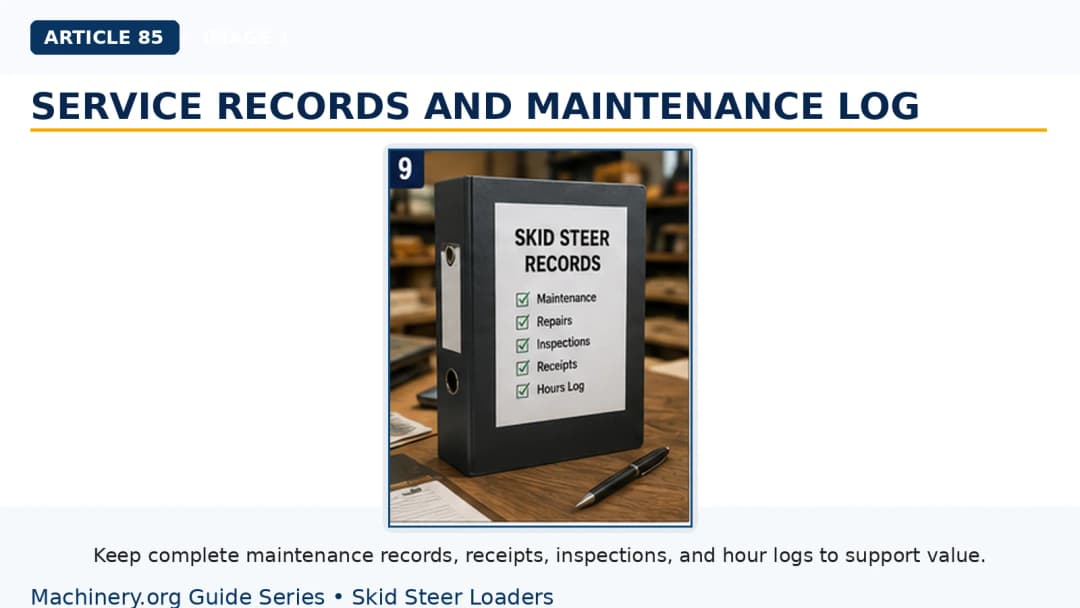
Many skid steer owners think about resale only when they are ready to sell, but resale value is built throughout the entire ownership period. Every service decision, repair habit, cleaning routine, and recordkeeping choice shapes how future buyers will view the machine. A well-maintained machine with clear documentation inspires confidence and usually commands a better price than an uncertain one.
 GUIDE
GUIDEMachinery Basics
Air Filter, Dust Control, and Cooling System Cleaning Guide
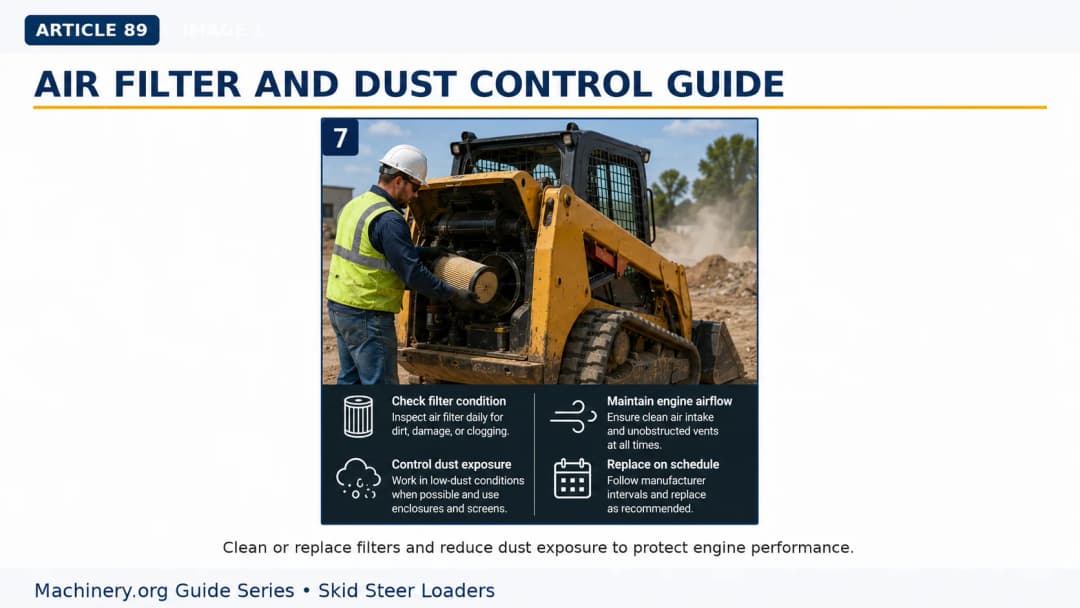
Dust and heat are two of the most common enemies of skid steer reliability. A machine working in demolition debris, dry soil, gravel yards, agriculture, or land clearing can inhale dust and collect debris around the cooling package very quickly. If air flow is restricted, the engine may lose performance, fuel efficiency may fall, and overheating risk can increase. These problems often develop gradually until a warning light or shutdown interrupts the job.