

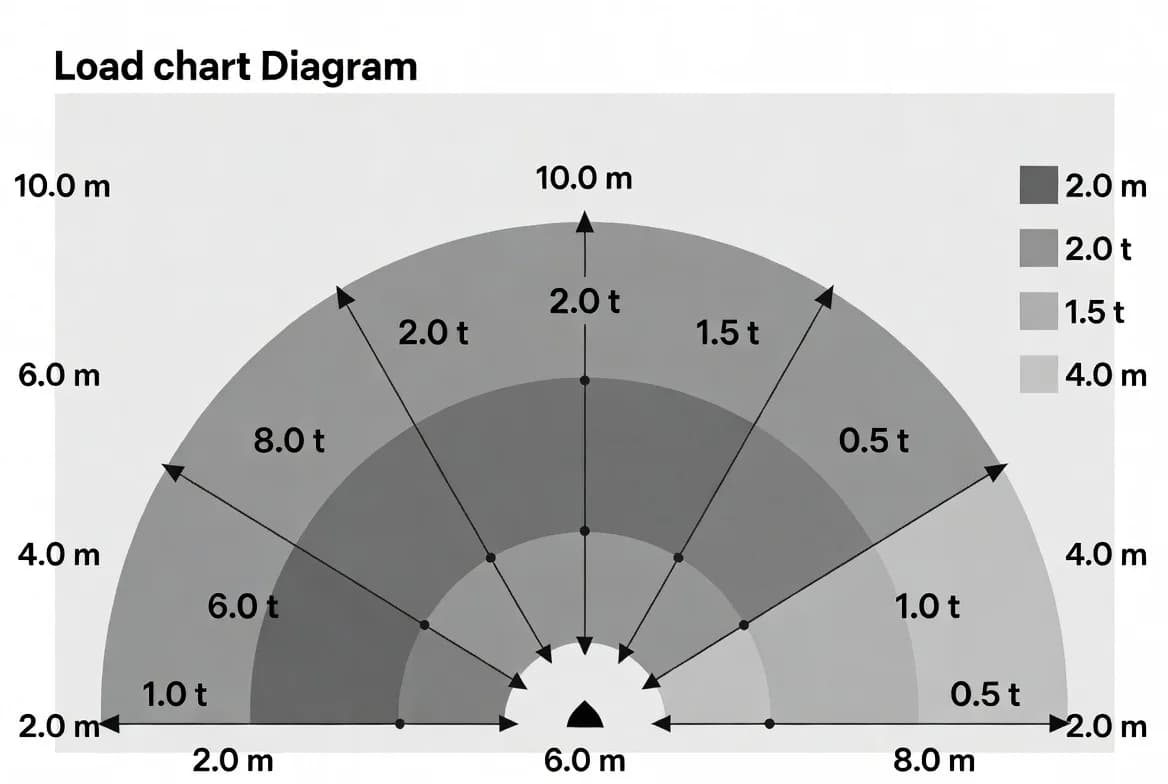

The load chart is the most important safety document on a telehandler. It shows the maximum allowable load at every combination of boom angle and boom extension (radius). Capacity falls rapidly as the boom is extended or the load is moved forward of the front axle. Never exceed the chart values. Charts are different for stabilisers up or down, and for different attachments. Operators must be trained to read the chart that matches the current configuration. Modern machines often display the current rated capacity on a screen, but the physical chart remains the legal reference. Always reduce capacity further for soft ground, slopes, or wind.
Always consult the specific manufacturer operator manual and load charts for the model in use. Local regulations regarding personnel lifting, operator training and machine inspection must also be followed. Proper selection, correct use of the load chart, and disciplined daily checks form the foundation of safe and productive telehandler operation.
Get More Expert Guides & Updates
Subscribe for Machinery.org guide updates and product learning content.