
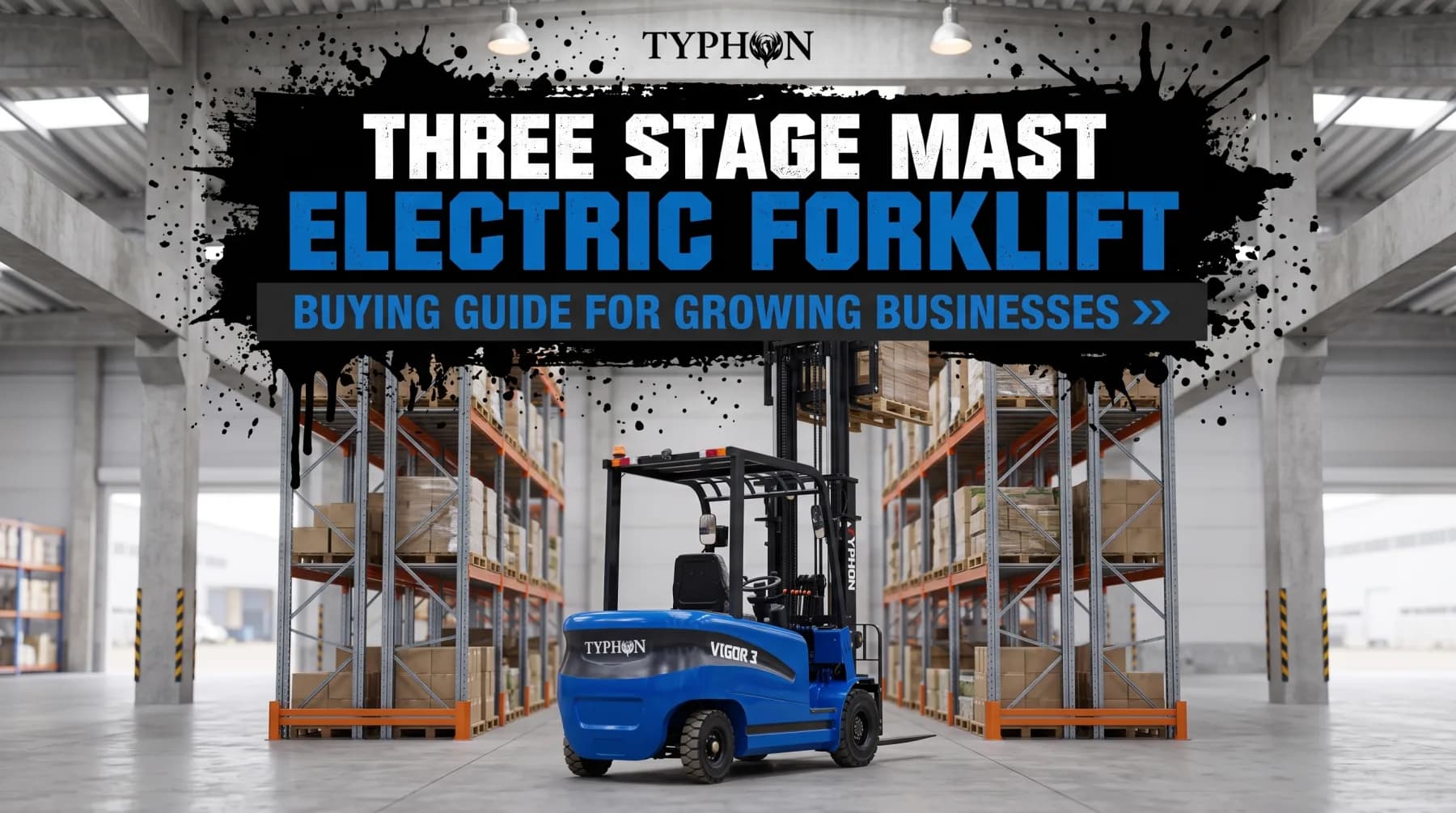
Three Stage Mast Electric Forklift Buying Guide for Growing Businesses
A small distributor outgrows its old two-stage forklift the week it adds a third rack level to fit rising inventory.
Representative machinery image from the Machinery.org media library.
A small distributor outgrows its old two-stage forklift the week it adds a third rack level to fit rising inventory. The truck lifts high enough for the old shelves but stalls a full pallet short of the new top beam, forcing the crew to double-handle stock and slow every put-away. Within a month, that one gap in lift height is costing hours a week in wasted trips, restaging, and frustrated operators. That's the kind of friction a growing business can't afford, and it almost always starts not with a failed machine but with a machine that simply wasn't chosen to grow with the operation.
Picking the right forklift means buying for where your business is heading, not just where it stands today. A three stage mast electric forklift solves exactly that problem, reaching tall rack beams in the same tight aisles while running clean and quiet on battery power. This guide walks through what a three stage mast actually is and why it matters, the lift-height advantages that unlock vertical storage, the load capacity and indoor considerations to weigh, the key buying criteria that separate a smart purchase from a costly one, and the return a scaling operation can realistically expect. Here is how to choose the right machine the first time and avoid buying it twice.
As businesses expand, warehouse space becomes more valuable, and using vertical storage effectively can make a major difference. A forklift with the right mast configuration helps companies maximize available space without constantly relocating inventory or redesigning the facility. By combining higher lift capability, efficient electric operation, and precise handling in confined areas, a three stage mast electric forklift gives growing operations the flexibility they need to keep up with increasing demands.
What a Three Stage Mast Is and Why It Matters
Every forklift lifts on a mast, the vertical steel assembly the carriage rides up and down. A single-stage mast raises a load to a modest, fixed height before it tops out. Add a second nested rail and you get a two-stage mast with more reach, which covers most standard warehouse racking. A three stage mast adds a third telescoping section on top of that, letting the carriage climb far higher while the entire assembly stays compact when collapsed.
That collapsed profile is the detail most buyers overlook until they try to drive the truck into a trailer or through a low doorway and the mast won't clear. Because the three rails nest tightly together, the collapsed mast stays short enough to pass through standard overhead doors, clear the header of a loading dock trailer, and travel through low-ceiling sections of a building without stopping. Once the truck reaches the rack, the mast extends fully and the forks climb to heights a two-stage machine simply can't reach.
Think of it as a machine that folds up small and reaches tall. For a growing business squeezing more storage into the same square footage, that combination of compact travel height and generous lift height is exactly the right profile. A single truck handles the narrow aisles, the low entry points, and the top rack beams, all without you needing to reconfigure the building to make it work.
Lift Height Advantages as Your Business Grows
Growth almost always means stacking higher before it means finding a bigger building. Adding a third or fourth rack level costs far less than leasing new square footage, and a three stage mast is what makes that vertical investment usable. Where a two-stage machine tops out partway up the new racking and leaves the top beams empty or forces awkward workarounds, the third stage carries pallets all the way to the beam without a second handling step.
Consider what that means on a busy afternoon. An operator on a two-stage machine reaches the upper limit of its lift, sets a pallet short of the beam, and has to stage the load somewhere else until a taller truck or a second move gets it to the right level. On a three stage truck, that pallet goes straight to the top beam on the first pass, and the operator moves on to the next task. Multiply that by dozens of put-aways a day and the time savings become impossible to ignore.
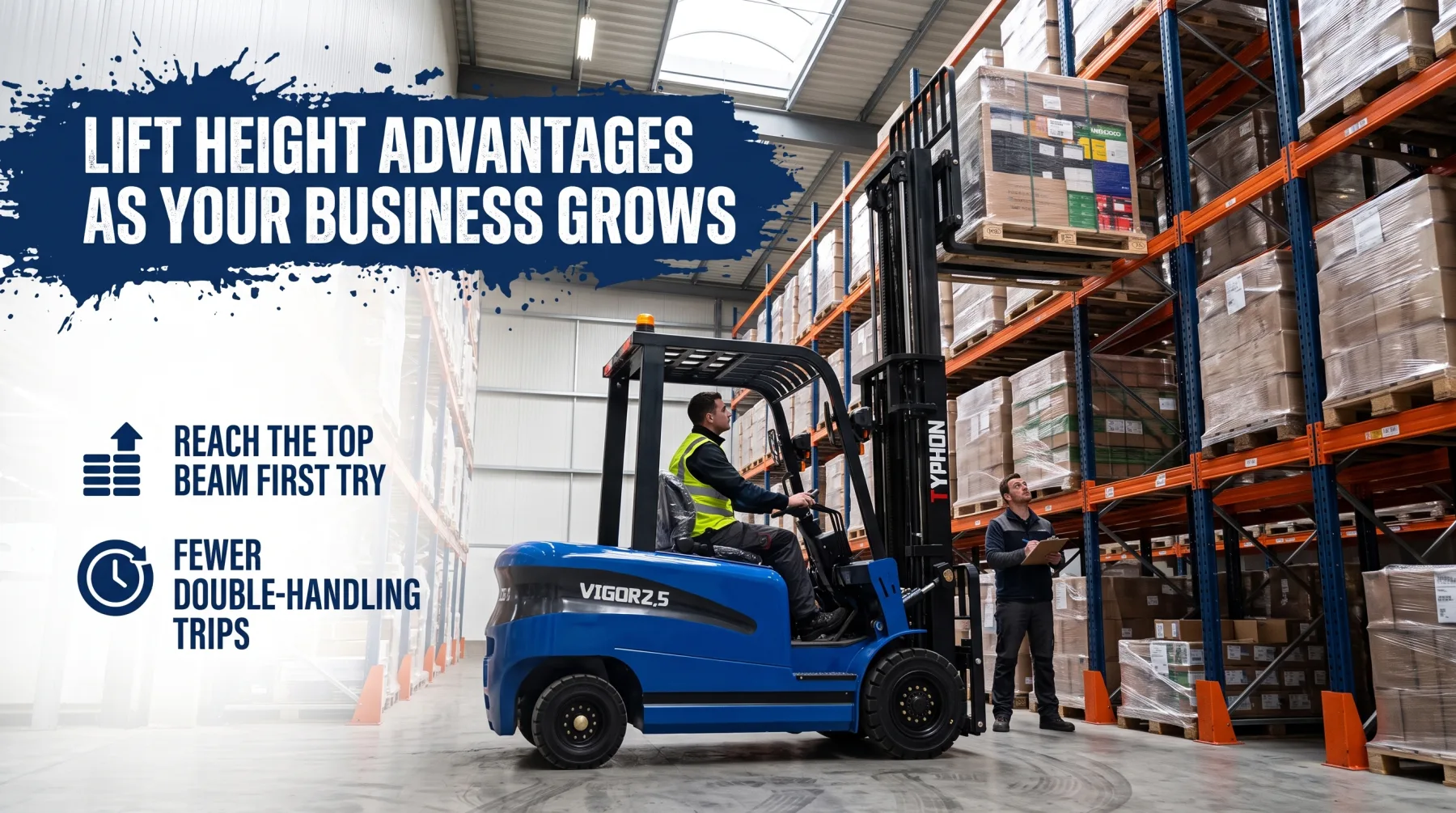
Full-height storage also changes how a warehouse breathes. Denser stacking per aisle means fewer aisles for the same volume, which frees floor space for staging, packing, or additional product lines. However, maximizing vertical storage also requires protecting the warehouse environment below. Choosing the right forklift size, maintaining proper load handling practices, and using equipment suited for your flooring type can help reduce damage from excessive weight, hard braking, and repeated traffic patterns. A well-matched forklift not only improves storage efficiency but also helps preserve concrete floors and lower long-term repair costs. For a distributor adding SKUs and growing order volume month over month, that extra vertical reach turns a building you thought you were outgrowing into one that holds significantly more than it did before. Match the machine's maximum lift height to the top beam you plan to install over the next two or three years, not just the one you have right now, and you buy room to grow into.
Load Capacity and Indoor Use Considerations
Height gets the attention, but capacity decides what you can safely do with it. Every forklift publishes a rated load capacity, but that number describes the truck at its base operating conditions, usually with the mast fully lowered and the load close to the carriage. As the mast extends and the load moves higher, that capacity rating drops, sometimes significantly. Placing a heavy pallet at the top beam of tall racking is where that reduction hits hardest.
Before you buy, pull the load chart for any truck you're considering and check the rated capacity at your actual working height against the actual weight of your heaviest pallet. A machine rated for a strong capacity at ground level may carry less at full extension than your stock actually weighs, and discovering that after delivery is an expensive problem. Size the capacity to the heaviest load you move, at the tallest height you need, and leave a sensible margin rather than planning to operate right at the rated edge.
Indoor operation is where an electric machine makes the clearest case for itself. Running on battery power, a three stage mast electric forklift produces no exhaust at the point of use, which keeps enclosed warehouses, cold storage, and food-handling spaces safe without demanding heavy ventilation or constant air monitoring. Quieter operation than a combustion truck also makes a busy floor easier to work through a full shift, reducing the fatigue and communication problems that a noisy engine creates across eight or ten hours. Before delivery, confirm that your aisle widths, ceiling clearance, floor surface, and doorway heights all match the machine's dimensions, and follow safe load-handling and stacking practices at every level to keep the crew protected.
Key Buying Criteria to Compare
Several specifications decide whether a three stage mast electric forklift truly fits your operation, and the mistake most buyers make is chasing a single number, usually lift height or sticker price, while overlooking the specs that constrain their actual building. Weighing the following criteria together against your real workload keeps the purchase grounded.
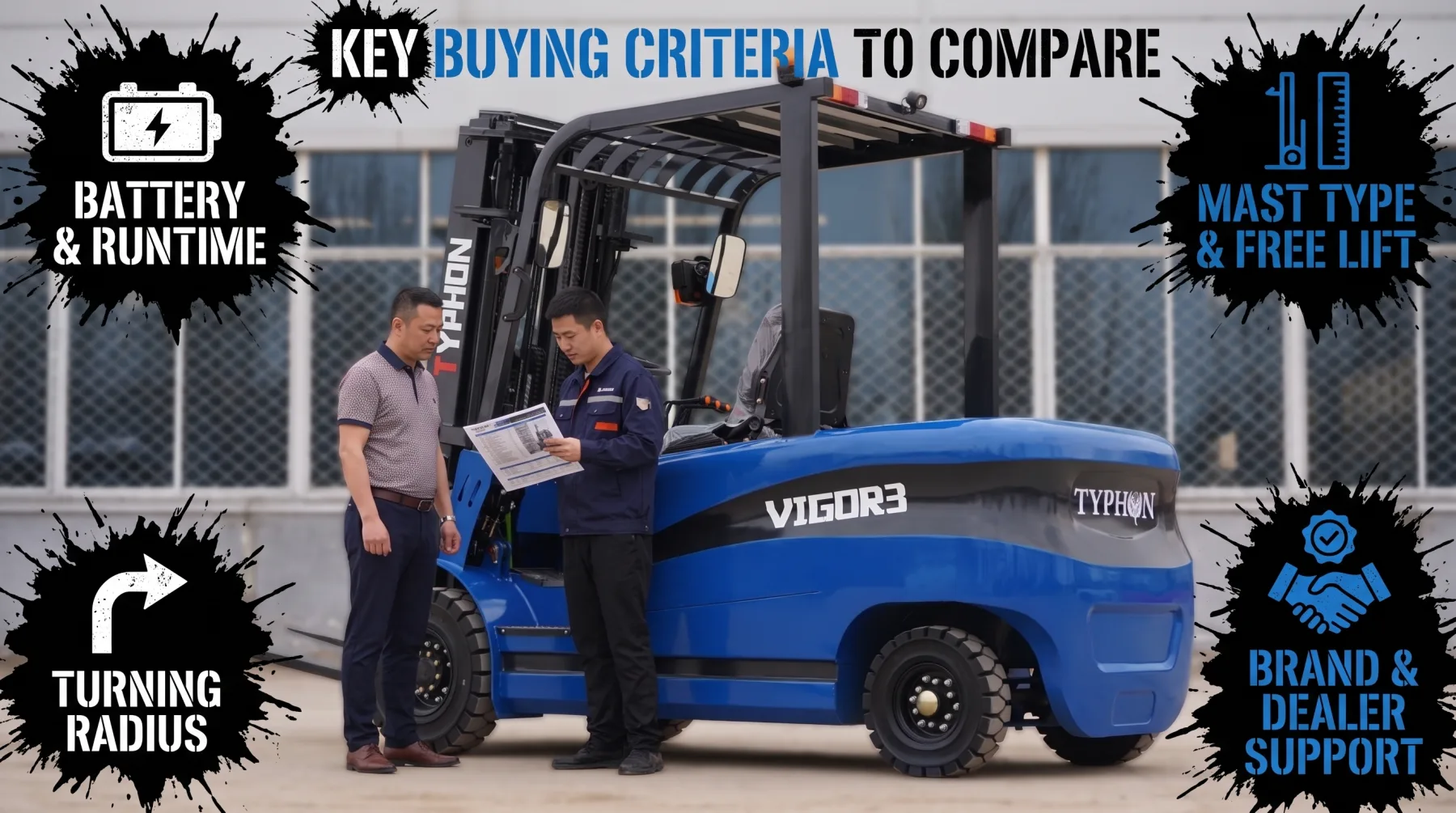
Battery and runtime deserve the first look after lift height and capacity. A single-shift operation running predictable hours may do fine on a single charge per shift, with overnight charging between cycles. Multi-shift operations need a battery that either fast-charges during breaks or swaps out so the truck stays productive without sitting idle for hours waiting to power up. Lithium-ion batteries charge faster and hold their capacity longer than older lead-acid options, though they carry a higher upfront cost. Match the battery type and size to your actual shift pattern before you decide.
Mast type and free lift matter more than most buyers realize until they try to double-stack trailers or work in a low-ceiling zone. Free lift describes how high the forks rise before the mast itself starts to extend upward, and a truck with generous free lift can raise a pallet several feet without changing the mast's overall height. That's exactly what you need to lift a load inside a trailer without the top of the mast hitting the trailer roof. Confirm the machine's free lift against your tightest loading scenario.
Turning radius shapes which machines physically fit your aisles. Measure your narrowest aisle before you shop, and reject any truck that can't complete a turn without bumping a rack or requiring you to rebuild your layout. A compact machine that operates cleanly in your existing space beats a slightly more capable one that forces a costly re-rack.
Brand and dealer support protect uptime in a way that the spec sheet never quite captures. A machine that's hard to service or sourced from a distributor with slow parts availability gets expensive fast, since downtime in a warehouse doesn't just pause the machine, it slows every operation downstream of it. Weigh dealer responsiveness, parts availability, and warranty terms alongside the purchase price, and treat strong support as a core specification rather than a nice-to-have.
Rank these four criteria by what constrains your building and your workflow most. A business fighting for aisle space in a multi-level building will prioritize turning radius and mast profile. A multi-shift distribution center with tight throughput targets will lean hardest on battery and support. Matching the machine to your actual constraints keeps every spec tied to a real requirement instead of a number on a brochure.
ROI and Value for a Scaling Business
Cost is always the first objection, and for a three stage mast electric forklift it's a fair one. These machines cost more upfront than a basic two-stage truck or a comparable internal combustion unit, and that premium has to earn its keep somewhere specific. For a growing business, that somewhere is the storage capacity you unlock and the labor hours you stop wasting.
Reaching full rack height lets you hold more inventory in your existing building, which delays or avoids the far larger cost of signing a new lease or building an addition. One additional rack level across a warehouse can add substantial pallet positions without a square foot of new construction. Compare that gain against the annualized cost of the forklift and the math often tilts decisively in the machine's favor, especially when you account for how long it takes a growing business to outgrow a taller rack versus to outgrow the floor space it already occupies.
Operating savings compound on top of that. Electric power costs less per hour than diesel or propane, an electric drivetrain carries fewer components to service and replace, and faster, cleaner stacking at full height cuts the labor hours spent on double-handling and restaging stock. A crew that places pallets correctly on the first pass, every time, finishes more work in the same shift than one constantly compensating for a machine that can't quite reach. Those gains repeat every week as volume grows, so the payoff from getting the right machine scales right alongside the business.
Whether buying makes more sense than renting depends on how consistently you run the machine. Operations with steady, predictable daily use see the fastest return on ownership, while businesses whose peak demand is seasonal or unpredictable sometimes find short-term rental covers the busy stretches without tying up capital. Either way, a steady maintenance routine protects the investment, and training every operator on safe stacking and load-handling practices protects the crew on every shift.
Conclusion
A three stage mast electric forklift earns its place in a growing business by lifting higher in the same tight building, running clean and quiet on battery power, and scaling with the operation as inventory climbs. Start with the maximum lift height matched to the top beam you plan to install over the next few years, not just today's racking, then confirm the load chart supports your heaviest pallet at that full height. Check the collapsed mast profile and free lift against your lowest entry points and loading scenarios, measure your aisles before you select a turning radius, and weigh dealer support as carefully as the sticker. Value follows the storage capacity you unlock and the labor hours you recover, so operations stacking higher and running steady shifts recoup the investment faster than the numbers first suggest. Measure your building before you shop, compare every spec against your real workload, and when you're ready to put a dependable three stage mast electric forklift to work, reach out to a trusted equipment specialist who can pair a reliable machine with the results your business depends on.
Frequently Asked Questions
What is a three stage mast on an electric forklift?
It's a mast with three telescoping rail sections that lets the forks rise much higher than a two-stage design, while the mast itself stays low enough when collapsed to clear standard doorways, trailer roofs, and low-ceiling areas inside a building.
Why choose a three stage mast electric forklift for a growing business?
It lets you use the full vertical height of your existing building by reaching tall rack beams on the first pass, adding storage capacity without new square footage, while running clean and quiet indoors on battery power as your volume scales up.
How do I know what lift height and capacity I need?
Match the maximum lift height to the top beam you plan to install over the next two to three years, not just your current racks, then check the load chart to confirm the truck safely carries your heaviest pallet at that full working height before you commit to a purchase.
Previous Article
How Engine Displacement Affects Mini Excavator Performance
Next Article
How Wind Affects High Scissor Lift Stability
Reader feedback
Have any comments, corrections, or suggestions for this blog post? Reach out to our support team.
Report feedback