
How Wind Affects High Scissor Lift Stability
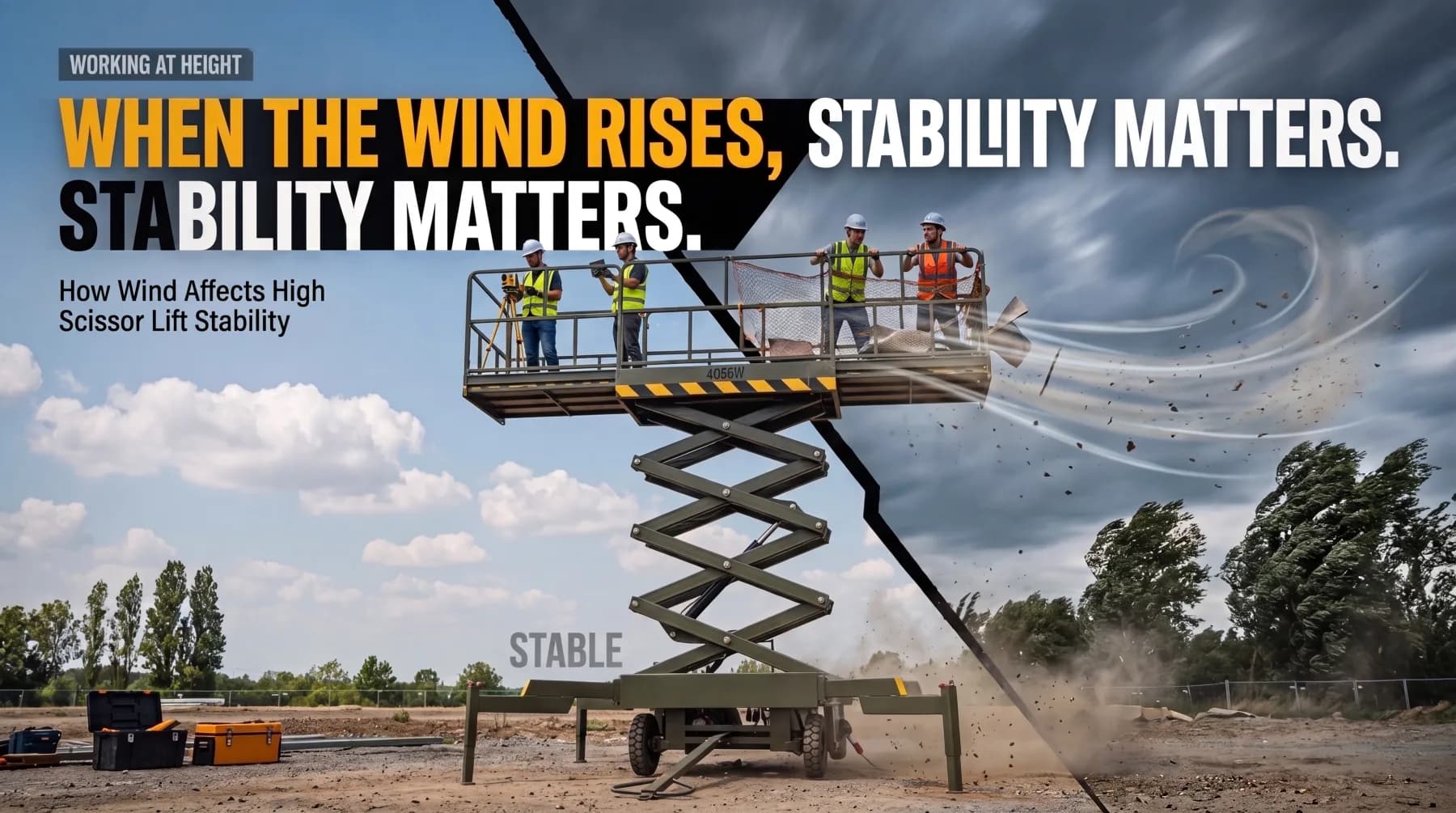
Working at height is demanding enough without adding wind into the equation, yet wind is one of the most underestimated threats a scissor lift operator faces.
Representative machinery image from the Machinery.org media library.
Working at height is demanding enough without adding wind into the equation, yet wind is one of the most underestimated threats a scissor lift operator faces. As the platform rises, the machine becomes more exposed and more vulnerable, and conditions that feel manageable at ground level can turn dangerous forty feet up. Knowing how wind behaves, respecting the limits your manufacturer sets, and recognizing when to stop are the differences between a safe shift and a serious accident. This guide walks you through how wind affects stability, what wind ratings mean, the best practices for windy conditions, the distinction between indoor and outdoor lifts, and the clear signs that it is time to lower the platform and wait.
How Wind Affects High Scissor Lift Stability
Wind exerts far more force on a scissor lift than most operators realize, and that force grows dramatically as the platform climbs. At ground level, a raised guardrail, a stack of materials, or even the operator's own body barely registers against a light breeze. Elevate that same platform, and the machine turns into a tall, narrow structure catching wind like a sail. The higher you go, the longer the lever arm becomes between the base and the platform, which multiplies the tipping force that even a moderate gust can generate.
This matters because a scissor lift depends on a relatively small footprint to stay upright. The taller the platform, the higher the center of gravity, and the less it takes to upset the machine's balance. Wind pressure pushing against the platform, the guardrails, and everything on board translates into a sideways force that the base must resist. When that force exceeds the machine's stability limit, the lift tips, often with little warning and devastating consequences.
Several factors make wind especially dangerous at height:
- Increased surface area: Occupants, tools, and materials all catch wind and add to the load pushing against the machine.
- Higher center of gravity: Full extension leaves the lift far less able to resist a lateral push.
- Gust unpredictability: Sudden strong gusts strike without warning, giving the operator no time to react.
Understanding this relationship between height and wind force is the foundation of safe elevated work. Treat every increase in platform height as an increase in your exposure to wind, and plan accordingly.
Understanding Wind Ratings and Safety Limits
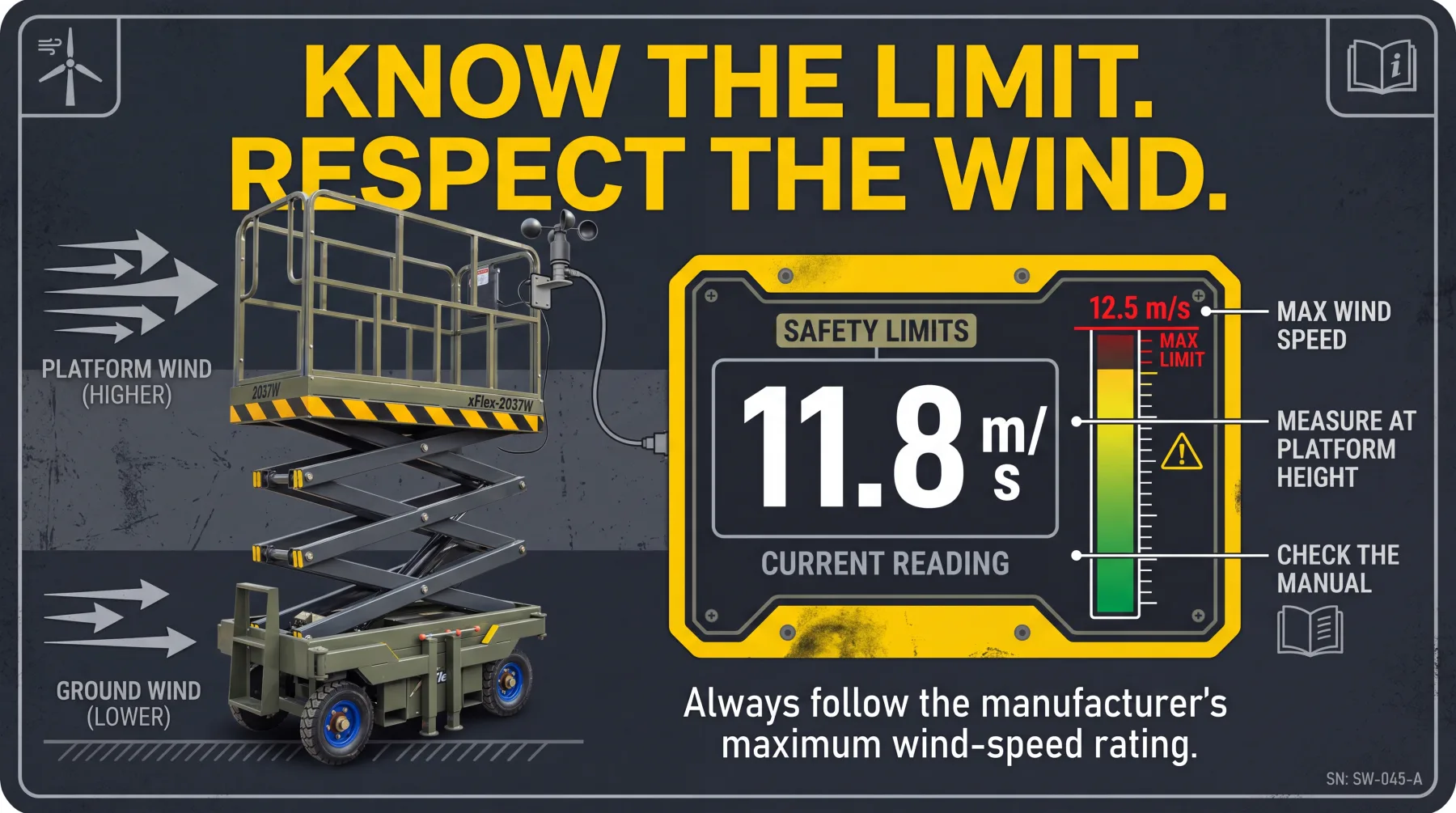
Every scissor lift carries a maximum allowable wind speed set by the manufacturer, and this number is not a suggestion. It is a carefully calculated limit based on the machine's design, weight distribution, footprint, and maximum working height. Engineers determine the point beyond which the lift can no longer safely resist wind force, then set the rating with a margin for safety. Operating within that limit keeps the machine inside the conditions it was built to handle, while exceeding it pushes the lift into territory where stability can no longer be guaranteed.
You will typically find the wind rating listed in the operator's manual and often on a decal near the platform controls. Many ratings fall in the range of 28 miles per hour, though the exact figure varies by model, so you should always check the specification for the specific machine you are using. Relying on a rating from a different lift, or on a rough guess about the wind, invites exactly the kind of miscalculation these limits exist to prevent.
Following the manufacturer's wind limit protects both people and equipment in clear, practical ways:
- Operator safety: Staying within the rating keeps the lift stable and dramatically reduces tip-over risk.
- Equipment protection: Operating within design limits prevents structural strain and damage to the machine.
- Regulatory compliance: Respecting the rating helps you meet workplace safety requirements and avoid liability.
To use these limits well, carry a handheld anemometer and measure wind speed at working height rather than at ground level, where readings are usually lower. Wind almost always blows stronger the higher you go. When the measured speed approaches the rated limit, treat that as your signal to stop, not as a threshold to push against.
Best Practices for Operating in Windy Conditions
Safe operation in breezy conditions begins before the platform ever rises. Start by inspecting the work area and checking the forecast for the full duration of your task, since conditions can shift quickly over the course of a shift. Look at the surroundings for anything that could channel or intensify wind, such as gaps between buildings that create wind tunnels or open spaces with no shelter. Measuring wind speed at height with an anemometer gives you an accurate reading of what the platform will actually face, rather than the calmer conditions felt on the ground.
Preparation continues with managing everything on and around the lift. Secure loose materials, tools, and debris so they cannot be caught by gusts and turned into hazards or added wind load. Once elevated, operate smoothly and deliberately. Sudden platform movements combined with a gust can compound the forces acting on the machine, so raise, lower, and reposition gradually. Keep loads low and balanced whenever possible, and avoid carrying large, flat objects like sheets of plywood that act as sails and catch the wind.
Keep these core practices in mind whenever wind is a factor:
- Inspect the work area and forecast before starting, checking for wind tunnels and exposed conditions.
- Secure loose materials and tools to prevent them from becoming airborne hazards.
- Avoid sudden movements and operate the platform smoothly and deliberately.
- Lower the platform immediately if wind conditions become unsafe or approach the rated limit.
Sound planning does more to reduce weather-related hazards than any single precaution taken in the moment. When you assess conditions honestly, prepare the site thoughtfully, and operate with care, you keep both yourself and everyone below in a far safer position throughout the job.
When You Should Stop Using a Scissor Lift
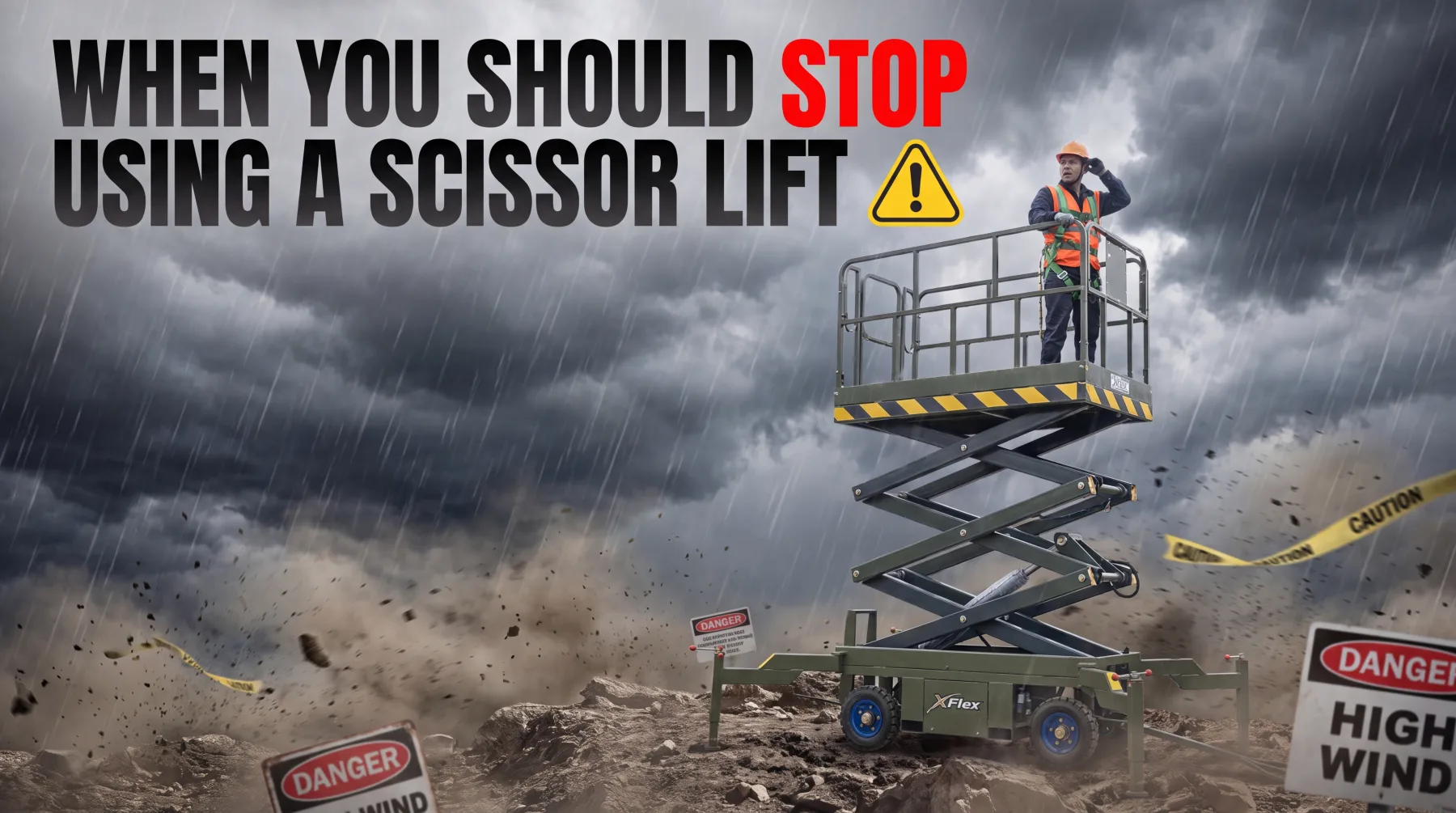
Knowing when to stop is one of the most important skills an elevated worker can develop, because no task is worth an accident. Strong gusts are the clearest signal to suspend work. When wind speed approaches or reaches the manufacturer's rated limit, or when you feel the platform beginning to sway or shudder, that is your cue to lower the lift and wait for conditions to improve. Wind rarely holds steady, so a period of manageable breeze can give way to dangerous gusts in minutes. Judging by the strongest gusts, not the calmest lulls, keeps you on the safe side.
Severe weather demands the same immediate response. Approaching storms, rain, lightning, and rapidly changing skies all create hazards beyond wind alone, including slippery surfaces and the serious danger of electrocution near power lines. Unstable ground is another decisive warning sign. Soft soil, uneven surfaces, hidden holes, or slopes can undermine the lift's footing, and combined with wind, they raise the tip-over risk sharply.
Recognize these clear signs to stop elevated work:
- Strong or increasing gusts that approach the machine's rated wind limit.
- Severe weather such as storms, rain, or lightning moving into the area.
- Unstable ground including soft, uneven, or sloped surfaces beneath the machine.
- Platform movement like swaying, shuddering, or any sense of instability at height.
There is no shame in stopping, and pressure to finish should never override sound judgment. Lower the platform, secure the machine, and resume only when conditions are genuinely safe again. Knowing when to stop prevents accidents, protects your equipment, and keeps every worker on site out of harm's way. That discipline is the mark of a skilled, responsible operator.
Understand the Type of Scissor Lift
Not every scissor lift is built to face the wind, and matching the machine to the environment is just as important as watching the weather. Indoor electric scissor lifts are designed for sheltered settings like warehouses, retail spaces, and manufacturing facilities. They run cleanly and quietly, produce no emissions, and are engineered for smooth, level floors. Because they operate in protected spaces, many carry lower wind ratings and are not intended for exposed outdoor work where gusts can strike unpredictably. Using an indoor lift outdoors, especially on a breezy day, places it in conditions it was never built to handle.
Outdoor rough-terrain scissor lifts tell a different story. These machines are built with wider bases, heavier frames, and stronger traction to work on uneven ground and to withstand moderate wind. Their sturdier construction gives them higher stability and, in many cases, higher wind ratings than their indoor counterparts, making them the appropriate choice for open job sites. Even so, "rough-terrain" does not mean immune to wind, and every outdoor lift still carries a maximum wind speed that must be respected.
Choosing the right lift comes down to honestly assessing where and how you will work:
- Indoor electric lifts: Best for sheltered, level, emission-sensitive environments with minimal wind exposure.
- Outdoor rough-terrain lifts: Built for uneven ground and moderate wind on open sites.
- Wind rating check: Always confirm the specific machine's rated wind limit regardless of type.
Selecting a machine suited to the actual conditions protects both stability and productivity. A lift matched to its environment performs reliably, while a mismatched one introduces risk from the moment the platform leaves the ground. Consider the site, the surface, and the exposure before you choose, and you set the job up for safe, dependable results.
Conclusion
Wind is a serious and often underestimated hazard for anyone working on a scissor lift, and its force only grows as the platform climbs. Respecting how height amplifies wind, following the manufacturer's rated wind limits, and preparing the work area thoroughly all lay the groundwork for safe operation. Choosing the right lift for the environment, whether an indoor electric model or an outdoor rough-terrain machine, matters just as much as monitoring the conditions overhead. Above all, knowing when to stop, whether for strong gusts, severe weather, or unstable ground, is what keeps a routine job from turning into a tragedy. Treat wind with the caution it deserves, measure conditions at working height, and never hesitate to lower the platform when the weather turns. Work with that discipline, and you protect your crew, your equipment, and yourself on every elevated job.
Reader feedback
Have any comments, corrections, or suggestions for this blog post? Reach out to our support team.
Report feedback