Caterpillar Expands $100 Million Workforce Initiative With Up to $10 Million Commitment in Illinois
Caterpillar has made Illinois the latest focus of its five-year, $100 million Building the Future Workforce Initiative, committing up to $10 million to programs designed to prepare people for modern manufacturing and industry technician careers. The announcement is notable not only because of the size of the investment
Caterpillar Expands $100 Million Workforce Initiative With Up to $10 Million Commitment in Illinois
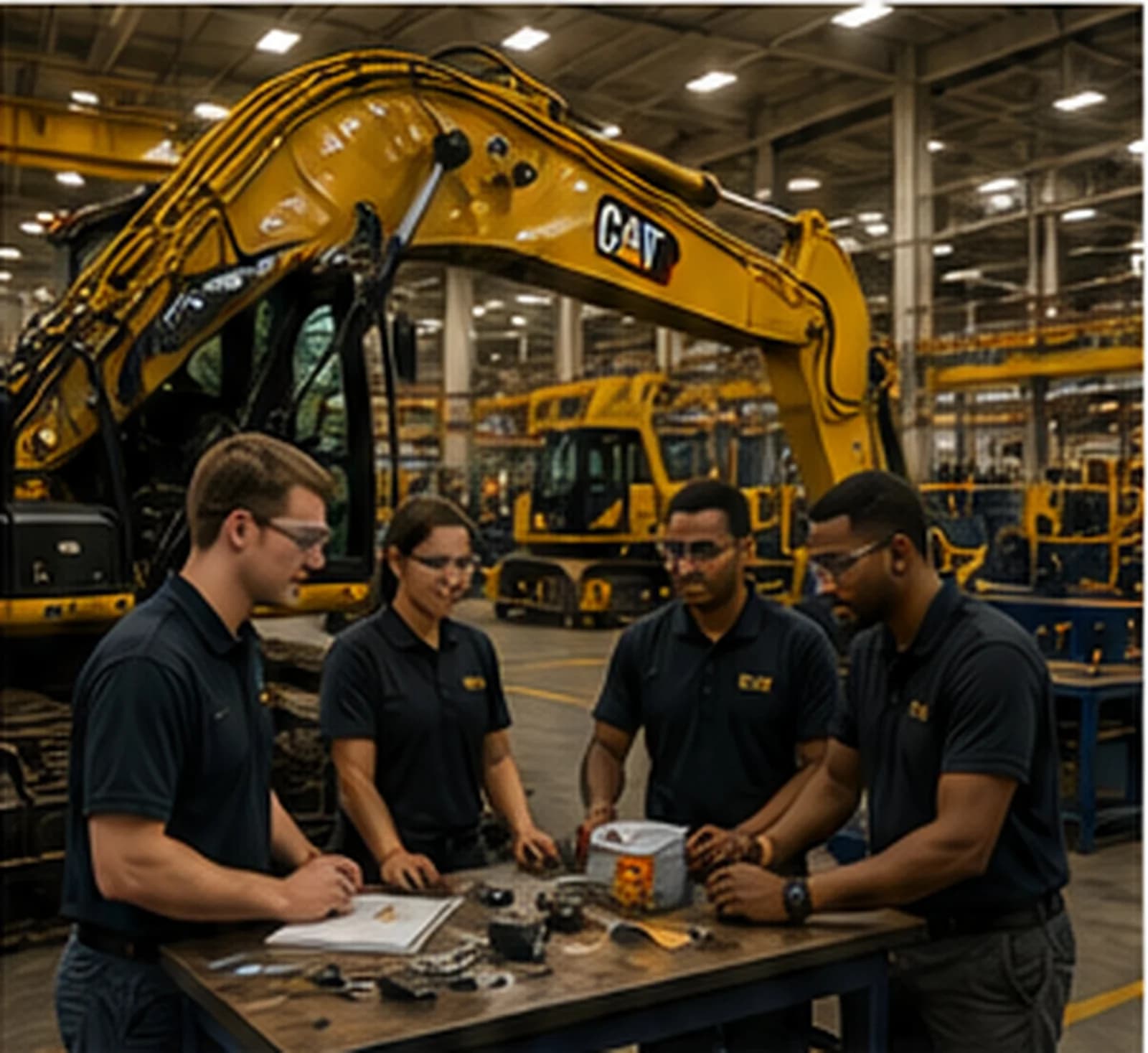
Caterpillar has made Illinois the latest focus of its five-year, $100 million Building the Future Workforce Initiative, committing up to $10 million to programs designed to prepare people for modern manufacturing and industry technician careers. The announcement is notable not only because of the size of the investment, but because it addresses one of the most persistent challenges facing the equipment industry: finding enough people with the technical skills needed to build, maintain, diagnose and support increasingly sophisticated machines.
The Illinois commitment was announced on July 29, 2026, and is intended to reduce barriers to training, define the skills employers will need in future jobs and connect more people with manufacturing careers. Caterpillar says the work will extend across Illinois communities where it has a manufacturing footprint, including East Peoria, Mapleton, Morton, Pontiac and Decatur. The company employs more than 17,000 people in the state, so the program is closely connected to a large existing industrial base rather than being a stand-alone education campaign.
Why Caterpillar Is Investing in Skills, Not Just Factories
Heavy-equipment manufacturing has changed significantly from the image many people still associate with factory work. A modern construction or mining machine contains electronic control systems, sensors, software, telematics, emissions hardware, advanced hydraulics, precision-machined components and increasingly sophisticated automation. The people who build and support those machines therefore need a combination of traditional mechanical knowledge and newer digital skills.
This creates a workforce problem that cannot be solved simply by hiring more people. Employers need workers who can interpret digital work instructions, understand quality-control data, operate computer-controlled production equipment, diagnose electronic systems and work safely around automated processes. Dealers and service organizations face similar challenges because technicians now move between mechanical repairs, electrical troubleshooting, software updates, machine calibration and connectivity systems.
Caterpillar's decision to direct funding toward training reflects that reality. The company is not describing the initiative as a short-term hiring campaign. Instead, it is trying to strengthen the pipeline that feeds manufacturing and technician roles over many years. That includes helping students and parents understand what modern industrial careers look like, improving the connection between training institutions and employers, and experimenting with financing models that make technical education easier to access.
Illinois Provides a Natural Test Bed
Illinois is especially important to Caterpillar because of the company's long history and large presence in the state. Manufacturing communities around Peoria have been closely tied to the company for generations, while facilities elsewhere in Illinois support different parts of the production and business network. That concentration makes the state a useful environment for testing workforce models that could later be adapted in other regions.
The company has identified collaboration as a central part of the effort. Organizations cited in the Illinois announcement include the Greater Peoria Leadership Council, the Economic Development Corporation of Decatur & Macon County, the Livingston Area Career Center and Heartland Community College. The importance of these partnerships is practical: no single school, employer or government program can create an entire workforce pipeline by itself.
A student may first encounter manufacturing through a middle-school or high-school program, then move into a technical college, apprenticeship or paid training pathway. An adult worker may need a shorter reskilling program rather than a multi-year degree. A person already working in manufacturing may need advanced instruction in robotics, CNC machining, data systems or industrial maintenance. Effective workforce development needs to support all of these entry points.
The Four Problems the Initiative Is Trying to Solve
Caterpillar's Illinois program can be understood as an attempt to address four related problems. The first is awareness. Many potential workers still have an outdated understanding of manufacturing careers and may not realize how much technology is involved in today's factories.
The second is access. High-quality technical training can require tuition, transportation, equipment, time away from work and other costs that make participation difficult. If a program is technically available but practically inaccessible, it does not solve the workforce problem.
The third is alignment. Training programs can become disconnected from the skills employers actually need. A strong employer-education partnership allows curricula to evolve more quickly when production technology changes.
The fourth is continuity. A workforce pipeline cannot depend on a single grant or a one-time class. Employers need a repeatable system that introduces people to the industry, trains them, places them in real jobs and provides opportunities for additional advancement.
Caterpillar says the Illinois investment will address these areas through outreach, accessible training, innovative financing models and the sharing of successful approaches with the broader industry. If those models are effective, the benefit could extend beyond Caterpillar itself.
What Modern Heavy-Equipment Manufacturing Requires
The machinery industry is becoming more technology-intensive even when the finished machine still performs familiar work such as digging, loading or hauling. Production workers may interact with robotic welding systems, automated machining centers, digital torque tools, machine-vision inspection, electronic test equipment and connected quality systems.
Technicians face a similar shift in the field. A service call on a modern excavator or wheel loader can involve reading fault codes, checking sensor data, examining hydraulic pressures, confirming software versions and determining whether a problem is mechanical, electrical or electronic. As telematics and remote diagnostics improve, technicians may also use data from the machine before arriving at the jobsite.
This convergence of mechanical and digital knowledge increases the value of well-designed training. A worker who understands only one narrow task can be harder to deploy when production needs change. A worker who understands systems, safety, quality and problem-solving can adapt more easily.
That adaptability is particularly important as manufacturers adopt new power systems. Battery-electric equipment, hybrid systems and alternative fuels create new training requirements around high-voltage safety, charging, thermal management and energy storage. At the same time, conventional diesel equipment remains a major part of the market. Future technicians therefore need broad skills rather than training around a single technology.
The Dealer and Customer Connection
Although Caterpillar's announcement focuses on manufacturing and industry technician careers, the workforce issue has a direct effect on equipment customers. Contractors and fleet owners experience the labor shortage when a machine needs service and a qualified technician is not available quickly.
Downtime is one of the largest hidden costs in equipment ownership. The purchase price of a machine is easy to see, but the financial effect of missed production can be much larger over time. A stronger technician pipeline can therefore improve the customer experience even if the customer never sees the training program behind it.
Dealer networks also depend on skilled parts specialists, service advisors, field technicians, shop technicians and technology experts. As equipment becomes more connected, the service relationship expands beyond physical repairs. Customers may need help with grade-control systems, telematics platforms, payload tools and other digital services.
For manufacturers, workforce investment can therefore support both production capacity and lifecycle support. Building a machine is only the first stage of the customer relationship. Keeping it productive for thousands of operating hours requires people with the expertise to maintain and repair it.
Why the Initiative Matters for Apprenticeships
One of the strongest opportunities in industrial workforce development is the apprenticeship model because it combines education with paid, practical experience. Manufacturing and technician work are difficult to learn entirely in a classroom. Students need exposure to real equipment, real production standards and real safety expectations.
Apprenticeships can also reduce the financial barrier to training because participants earn money while they learn. For employers, the model provides a more direct way to shape skills around actual job requirements. For students, it creates a clearer connection between training and employment.
Caterpillar's emphasis on career pathways suggests that apprenticeship and work-based learning will remain important parts of the broader initiative. The most successful programs will likely be those that show participants a visible progression: entry-level training, first job, advanced certification, specialized technical role and eventually leadership or expert positions.
That progression matters because the industry is competing with many other sectors for technically capable workers. Construction equipment companies are not only competing with each other. They are competing with automotive manufacturing, aerospace, logistics, data centers, energy companies and other industries that need similar electrical, mechanical and automation skills.
Manufacturing Automation Does Not Eliminate the Need for People
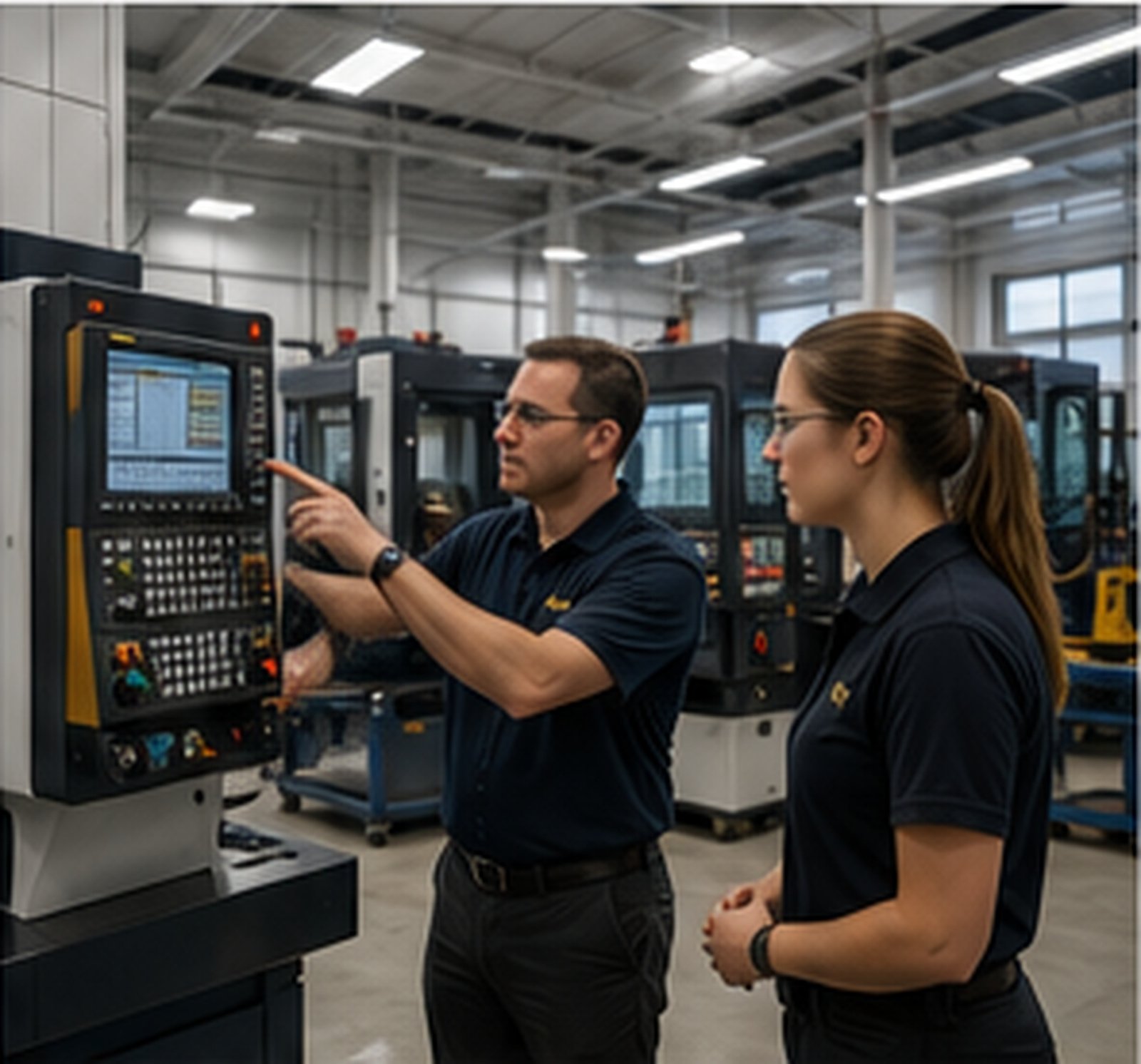
Automation is often discussed as if it simply replaces workers, but equipment factories demonstrate a more complicated reality. Automated systems can take over repetitive, hazardous or highly precise tasks, while people are still needed to program, maintain, monitor, troubleshoot and improve those systems.
A robotic welding cell, for example, still requires technicians who understand welding quality, robot operation, fixtures, sensors and maintenance. A CNC machining center needs skilled people to manage tooling, offsets, quality checks and process improvements. Automated inspection equipment needs workers who understand what the data means and how to respond when a part falls outside specification.
This is why workforce development remains important even as factories become more automated. The number and type of tasks may change, but the need for technical knowledge does not disappear. In many cases, automation raises the skill level required for the remaining jobs.
The same pattern is occurring in the machines built by those factories. Autonomous haulage, operator-assist systems and remote-control technologies may reduce some repetitive work, but they create new jobs in fleet management, software support, communications, system integration and technical maintenance.
Potential Benefits for Illinois Communities
Large manufacturing employers can have an economic effect far beyond the factory gate. Workers spend wages in local communities, suppliers support additional jobs and technical colleges gain stronger incentives to expand relevant programs. When training systems improve, they can also benefit smaller manufacturers that would not have the resources to create large programs independently.
Caterpillar has indicated that successful models from Illinois could be shared more broadly. That approach is important because the manufacturing skills shortage is not unique to one company. A strong regional training ecosystem can help multiple employers and make the area more attractive for future industrial investment.
There is also a retention benefit. Young people are more likely to remain in or return to a community if they can see a clear path to a stable, skilled career. Technical education linked to real local employers can make that path more visible.
For communities with a long manufacturing history, this can help connect the legacy of industrial work with a new generation of jobs built around digital tools, automation and advanced production.
What Success Should Look Like
The long-term success of the Illinois commitment should be measured by more than the number of people who attend a training event. Strong outcomes would include increased completion rates, more people entering manufacturing careers, higher retention, advancement into higher-skill positions and a reduction in hard-to-fill technical vacancies.
Another useful measure will be how quickly training programs adapt when technology changes. A workforce system that teaches yesterday's skills will not remain useful for long. Continuous feedback between employers and educators is therefore essential.
Caterpillar's large footprint gives it the ability to provide that feedback at scale. The company can identify recurring skill gaps across manufacturing, service and technical support roles, while education partners can design programs that respond to those needs.
The initiative could also reveal which training formats work best for different groups. Some learners may benefit from full-time technical programs, while others may need evening classes, short certifications, employer-sponsored training or hybrid online and hands-on instruction.
A Broader Industry Signal
Caterpillar's $100 million workforce initiative sends a signal to the wider machinery industry: human capability is becoming as strategically important as physical production capacity. Manufacturers can invest billions in factories, machine tools and product development, but those assets cannot deliver their full value without skilled people.
The challenge is likely to become more important as the equipment industry adds electric power, autonomy, advanced hydraulics, machine control and connected services. Each new technology layer creates opportunities for productivity, but also increases the knowledge required to build and support the product correctly.
For equipment owners, this is ultimately a reliability issue. A technologically advanced machine is only useful if qualified people are available to keep it operating. For manufacturers, workforce development is therefore part of product support, customer satisfaction and long-term competitiveness.
What Contractors and Dealers Should Watch
Contractors may not participate directly in Caterpillar's Illinois training programs, but they should pay attention to the broader trend. Manufacturers are increasingly treating workforce development as part of their strategic planning, and similar partnerships are likely to appear in other regions.
Dealers can benefit by strengthening relationships with technical schools and creating clearer entry routes for service technicians. Contractors can do the same for operators, mechanics and equipment managers. Companies that wait for skilled workers to appear on the labor market may find themselves competing for a limited pool.
The strongest approach is likely to combine recruitment with internal development. A person with strong mechanical aptitude and a willingness to learn can often become more valuable through structured training than a company can achieve by repeatedly searching for an already perfect candidate.
Looking Ahead
Caterpillar describes the Illinois commitment as the fourth allocation under the broader Building the Future Workforce Initiative. That means the program is still developing, and future announcements will show how the company distributes the remaining resources and which models it decides to expand.
The most important question is whether the investments create repeatable pathways that continue after the initial funding period. If training institutions, employers and communities build durable partnerships, the impact could last much longer than the five-year initiative itself.
For the heavy-equipment industry, the message is clear. Machines are becoming more capable, more connected and more complex, but the people behind them remain essential. Caterpillar's Illinois investment is a reminder that the future of manufacturing will depend not only on the technology inside factories and equipment, but on whether the industry can prepare enough people to understand, build, service and improve that technology.
Sources
- Caterpillar — “Caterpillar Invests in the Future of Manufacturing Talent in Illinois,” July 29, 2026.
- Caterpillar — “Building the Future Workforce Initiative.”

Previous Article
Vermeer and Interlune Expand Partnership to Develop Construction Equipment for Future Lunar Operations
Next Article
Volvo CE Reports Higher Machine Volumes and Improved Q2 2026 Earnings

Corrections and reader feedback
Found an error or have source material we should review? Send a correction report and an administrator can review it.
Report a correction