
DEVELON Expands Compact Track Loader Lineup With DEF-Free DTL26 and DTL30
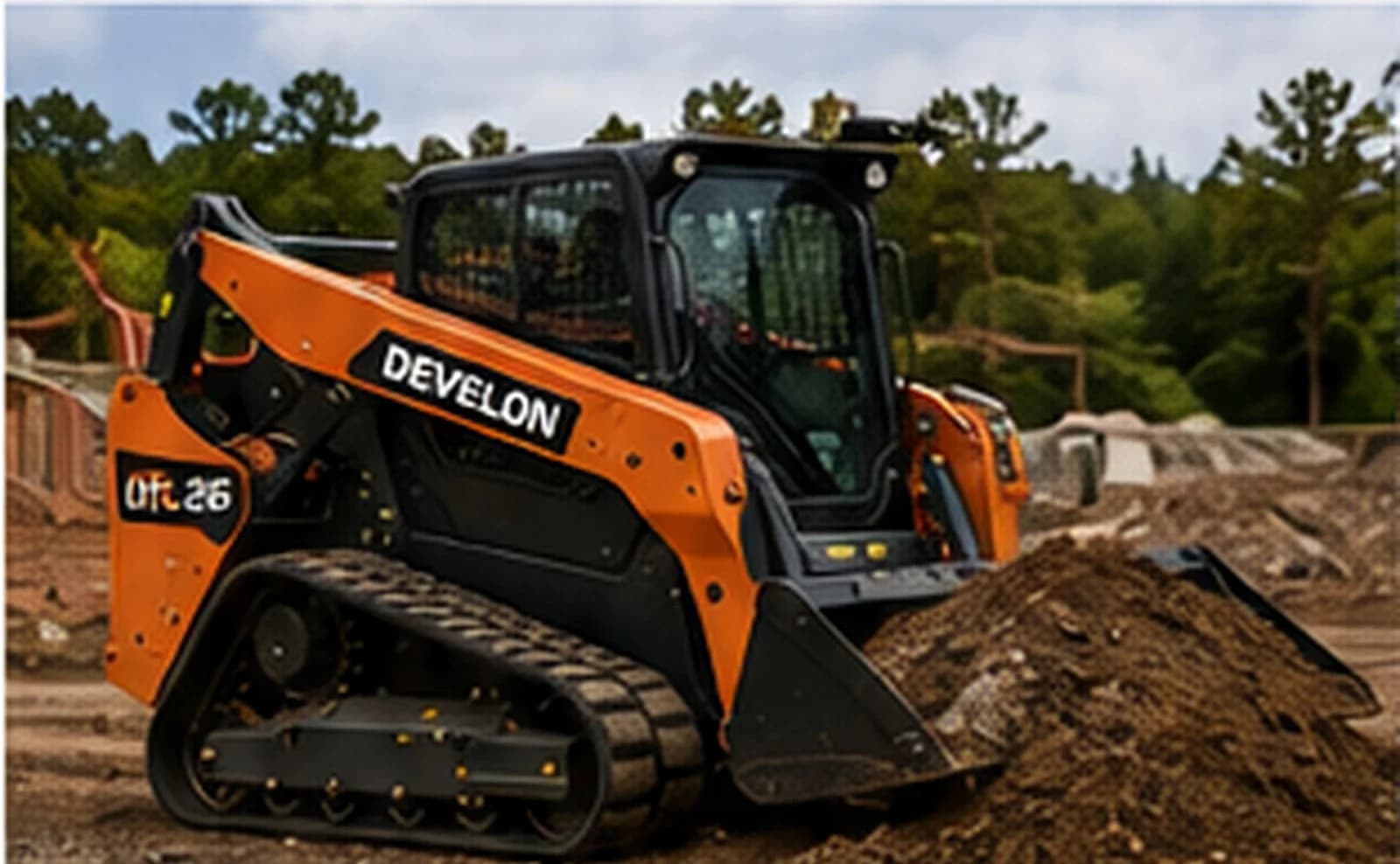
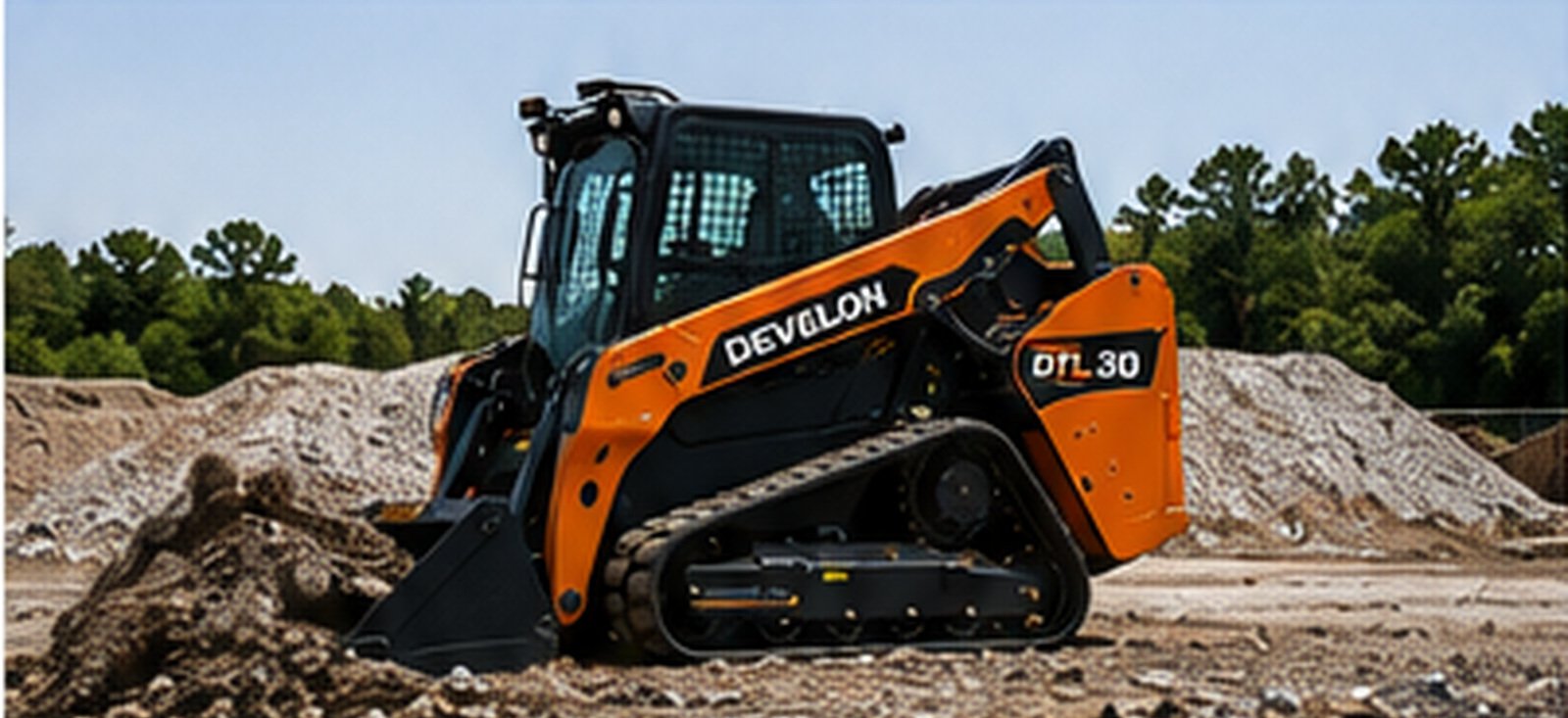
DEVELON's DTL26 and DTL30 add two mid-size choices to its compact track loader range, combining a DEF-free D24 engine strategy with high-flow hydraulic options, operator-assist functions and configurable undercarriage features.
DEVELON Expands Compact Track Loader Lineup With DEF-Free DTL26 and DTL30
What DEVELON announced
DEVELON has broadened its compact track loader family with the DTL26 and DTL30, two machines positioned below the larger DTL35. The launch gives contractors a choice of mid-size machines built around the company's D24 diesel engine. The most attention-grabbing part of the announcement is the emissions-system strategy: DEVELON says the engine is optimized so the machines do not require diesel exhaust fluid or a selective catalytic reduction system. For owners who operate compact loaders in cold climates, remote jobsites or fleets with many different machine types, eliminating a separate DEF supply can simplify daily servicing and fluid management. The change does not remove normal emissions-system responsibilities, but it does remove one consumable and the associated storage, handling and refill steps.
Capacity and positioning
The DTL26 is listed with a 2,600-pound rated operating capacity, while the DTL30 is rated at 3,000 pounds, with both figures stated at 35 percent of tipping load. That places the models in a useful middle ground for contractors who need more lift and attachment capability than the smallest CTLs provide but do not necessarily need the size, weight or cost of a larger high-horsepower machine. Capacity numbers should always be read together with lift path, hinge-pin height, counterweight configuration and attachment weight. A loader that spends most of its time loading trucks may be evaluated differently from one that primarily runs a brush cutter or trencher.
DEF-free design and maintenance implications
DEF became a routine part of Tier 4 Final fleet management for many higher-powered machines, but it adds another fluid that must be kept clean and available. In freezing conditions, storage and thawing are practical concerns even though modern aftertreatment systems are designed to manage temperature. DEVELON's approach on these two models is to remain below the power threshold that would push the application toward an SCR/DEF architecture. For a small contractor, that can make the morning checklist simpler. For a rental fleet, it may reduce one common source of customer confusion. The benefit should still be evaluated against total fuel use, service intervals and actual machine productivity rather than treated as a stand-alone reason to buy.
Hydraulics and attachment work
DEVELON is clearly positioning the DTL26 and DTL30 as attachment carriers as much as loaders. An optional high-flow auxiliary hydraulic package is rated at 27 gallons per minute, supporting demanding tools such as cold planers, brush cutters and snow equipment. Creep-speed control is especially relevant when the attachment needs high hydraulic power while the carrier moves at a slow, controlled pace. That combination is useful for trenching, milling and other operations where travel speed has a direct effect on cut quality. A hydraulic quick coupler is also available, reducing the need for the operator to leave the cab during routine attachment changes.
Cab, controls and visibility
The machines use an 8-inch touchscreen and are promoted with a wide-cab design, minimized A-pillars and a standard rearview camera. Available Smart Assist functions include return to dig, bucket shake and auto self-leveling. These features are not unusual individually in modern compact equipment, but together they show how manufacturers are shifting competition from raw specifications toward the quality of the operator's entire shift. A return-to-dig function can reduce repetitive control movements during loading cycles; self-leveling can help maintain the attachment angle during lift; bucket shake can speed material cleanout. Operators still need training, particularly around stability and attachment limits, but automation can make common cycles easier to repeat.
Undercarriage and jobsite configuration
DEVELON offers different undercarriage-related choices, including torsion suspension, triple-flange idlers and a fixed-frame arrangement. Those options matter because a compact track loader used on graded residential sites has different priorities from a machine pushing through demolition debris or working on abrasive aggregate. Ride quality, track retention, service complexity and ground contact all affect the ownership experience. A reversible cooling fan is another practical option for high-debris environments because radiators and coolers can lose performance when screens load with dust, chaff or fine material.
Safety technology
An optional 270-degree around-view monitor paired with ultrasonic proximity sensors is aimed at blind-spot awareness. Compact loaders frequently work in congested environments where laborers, trucks and attachments move close to the machine, and rearward visibility can be limited by the loader's structure. Camera systems do not replace a spotter, site rules or direct observation, but they can provide another layer of information. The effectiveness of any camera package depends on lens cleanliness, display placement and whether operators are trained to use it without becoming overly dependent on the screen.
Who should look closely at these machines
The DTL26 and DTL30 are likely to attract landscapers, utility contractors, site-preparation crews, snow contractors, rental fleets and general contractors that need one carrier to work with many attachments. The DTL26 may appeal where transport weight and maneuverability are important, while the DTL30 offers additional rated capacity for heavier loading and handling. Buyers should compare them not only with other CTLs but also with the work currently performed by skid steers, compact wheel loaders and small telehandlers. In some fleets the best return comes from a machine that can replace several single-purpose tasks; in others, the more specialized machine remains more efficient.
Why this launch matters
Compact track loaders sit in one of the most competitive parts of the construction-equipment market. Contractors expect one machine to grade, load, carry, trench, sweep, cut brush, handle pallets and power hydraulic attachments, often on sites where a larger loader cannot work efficiently. That makes a product launch meaningful only when the machine improves the day-to-day equation of productivity, serviceability, attachment capability and operator comfort. A few extra horsepower on paper is less important than whether an operator can keep the machine productive for a full shift, whether routine checks are easy to complete and whether the hydraulic system can support the attachments a contractor already owns. For fleet managers, the strongest compact-loader updates are the ones that reduce complexity while expanding the number of profitable jobs the machine can perform.
The operator is part of the productivity equation
Modern compact equipment is increasingly designed around the reality that skilled operators are difficult to recruit and expensive to lose. Visibility, seat comfort, climate control, control customization and automatic functions are therefore business features as much as ergonomic features. A loader that is easier to understand can shorten the learning curve for a newer operator, while a smoother ride and better cab environment can reduce fatigue for an experienced operator working long shifts. Features such as return-to-dig, self-leveling and creep control can also make repetitive tasks more consistent. None of these systems replaces judgment, but they can reduce the number of small control inputs an operator must make during a production cycle.
Attachments determine real-world versatility
A compact track loader earns its place in a fleet by doing more than bucket work. High-flow auxiliary hydraulics can open the door to power-hungry attachments such as cold planers, brush cutters, snow blowers and certain trenchers. A hydraulic quick coupler can reduce the interruption between tasks, while creep-speed functions can let the machine move slowly without sacrificing hydraulic output to the attachment. Buyers should still verify hydraulic flow, pressure, electrical connections, coupler geometry and attachment weight before assuming compatibility. The practical value of a new loader is therefore tied not only to its rated operating capacity, but also to how well it integrates with the tools that generate revenue across different seasons.
What buyers should verify before ordering
Specification sheets are the beginning of a buying decision, not the end. Contractors should compare rated operating capacity using the same percentage of tipping load, confirm whether published weights refer to cab or canopy configurations, and check how options change machine weight and capacity. Hydraulic performance should be matched to the intended attachments, while overall width, ground pressure, travel speed and lift geometry should be evaluated against actual jobsites. Service access deserves equal attention. Daily checks that can be completed from ground level and cooling packages that are easy to clean may not be headline features, but they affect uptime every week of the machine's working life.
Fleet economics: think in productive hours
A compact track loader's economics are driven by productive hours, attachment utilization, transport cost, fuel consumption, routine maintenance, wear items and resale value. A machine that costs more at purchase can still be the better investment if it spends more hours on revenue-producing attachments or reduces downtime. Conversely, a feature-rich loader can be poor value if the fleet never uses the features. Owners should estimate annual hours by task, identify the attachments that generate the most margin and compare service intervals and consumable costs. This approach turns a specification comparison into a business comparison.
Transport and jobsite logistics
Transport is often overlooked when buyers move up in CTL size. Machine operating weight, attachment weight and trailer capacity have to be considered together with the tow vehicle and local regulations. A heavier loader may provide more stability and lift, but it can also require a different trailer or reduce the number of attachments carried on the same trip. On tight residential sites, overall width and ground disturbance may be just as important as capacity. The best machine is the one that fits the full workflow from yard to jobsite and back.
Final assessment
The strongest way to evaluate any new compact track loader is a structured demonstration using the buyer's own attachments and typical material. Operators should test visibility, entry and exit, low-speed control, hydraulic response, ride quality and service access. Fleet managers should record cycle times and fuel use where possible rather than relying on impressions alone. New-model announcements create useful shortlists, but the purchase decision should be based on how the machine performs in the specific work that pays for it.
Editorial perspective: specifications need context
Machinery news is most useful when a specification is connected to the work it changes. Horsepower, rated capacity, hydraulic flow, battery size or investment dollars can all become misleading when isolated from application. A productive fleet decision considers the complete system: machine, attachment, operator, transport, service support, energy or fuel supply, site conditions and expected annual utilization. That is why the implications of an announcement may be more important than the announcement itself. Readers should use manufacturer figures to identify what deserves testing, then verify the result with demonstrations, production records and dealer support information.
What remains unknown
Early announcements rarely answer every ownership question. Final pricing, regional availability, option packaging, real-world fuel or energy use, software support and long-term residual value may become clear only after machines or programs have been in the field. Where a manufacturer makes a percentage improvement claim, buyers should ask what baseline machine and test conditions were used. Where a new technology is described as autonomous or intelligent, the operating envelope and intervention requirements matter. A careful buyer separates verified facts from expectations and treats early claims as inputs for further evaluation rather than guaranteed results.
Why this story belongs on Machinery.org
The machinery industry is changing through hundreds of incremental decisions: a manufacturer redesigns a cab, a dealer opens closer to customers, a company adds automation, a workforce program trains technicians, or an engineering partnership pushes equipment into a new environment. Each development affects how machines are selected, supported and used. Machinery.org follows these changes because equipment buyers need more than a list of model numbers. They need context that explains what a development could mean for uptime, productivity, safety and total cost of ownership.
Choosing between the DTL26 and DTL30
The two machines occupy neighboring positions in DEVELON's compact track loader range, so buyers should resist treating the choice as a simple bigger-is-better decision. A contractor whose work is dominated by grading, landscape preparation, light material handling and jobs where transport weight matters may prefer the more compact DTL26. A fleet that regularly lifts heavier pallets, loads dense material or uses demanding attachments may find the additional rated capacity of the DTL30 more useful. The right answer depends on the entire operating package: machine weight, trailer capacity, hydraulic demand, attachment weight, ground conditions and the amount of time spent in confined areas. Buyers should also compare how each machine feels with the same bucket or attachment. Visibility over the attachment, balance during turns, ride behavior and control response can matter more in daily work than a specification difference that looks large on paper.
A practical demonstration checklist
A useful demonstration should reproduce the work the loader will actually perform. Buyers can begin with cold start, entry and exit, daily service checks and attachment connection, then move into loading, grading and low-speed attachment operation. High-flow users should test the exact attachment they expect to run and confirm hydraulic flow, pressure, coupler compatibility and cooling performance. Operators should try return-to-dig, self-leveling, bucket shake, creep control and camera functions instead of assuming those features will automatically improve production. It is also worth checking how easily the cooling package can be cleaned after dusty work and how quickly common service points can be reached. Finally, the machine should be loaded on the intended trailer with the expected attachment so transport weight and balance are verified before purchase. That kind of end-to-end test turns a product launch into a realistic fleet decision rather than a brochure comparison.
Bottom line
For equipment buyers, the DTL26 and DTL30 story is ultimately about choosing the right balance of lift capacity, hydraulic capability, service simplicity and transport practicality. The DEF-free engine approach may reduce one layer of daily fluid management, while the available high-flow hydraulics and operator-assist functions broaden the range of work these loaders can perform. Contractors should still compare attachment compatibility, dealer support, operating weight, trailer requirements and local pricing before making a decision. The most important test is how the machine performs with the buyer's own attachments and materials under real jobsite conditions. That practical evaluation will show whether the new DEVELON models deliver enough productivity and ownership value to justify a place in the fleet.
Sources and publication note
Original editorial writing based on the following sources. Manufacturer claims should be verified against final regional specifications before publication.
LECTURA Press / source material supplied by DEVELON: https://lectura.press/en/article/develon-introduces-def-free-compact-track-loaders/69406
Construction Equipment: https://www.constructionequipment.com/earthmoving/compact-track-loaders/news/55397301/develon-expands-its-compact-track-loader-lineup-with-the-dtl26-and-dtl30

Previous Article
Shohei Ohtani Named Global Brand Ambassador for LANDCROS as Hitachi Construction Machinery Prepares for 2027 Identity Change
Next Article
WM and Caterpillar Move Landfill Equipment Toward Autonomous Operation

Corrections and reader feedback
Found an error or have source material we should review? Send a correction report and an administrator can review it.
Report a correction