
Komatsu and AIM Intelligent Machines Advance Autonomous Dozers and Excavators
Komatsu, EARTHBRAIN and AIM Intelligent Machines are moving a construction-autonomy partnership into commercial deployment, combining digital construction plans with physical-AI control of bulldozers and hydraulic excavators.
Komatsu and AIM Intelligent Machines Advance Autonomous Dozers and Excavators
A construction-autonomy partnership moves toward deployment
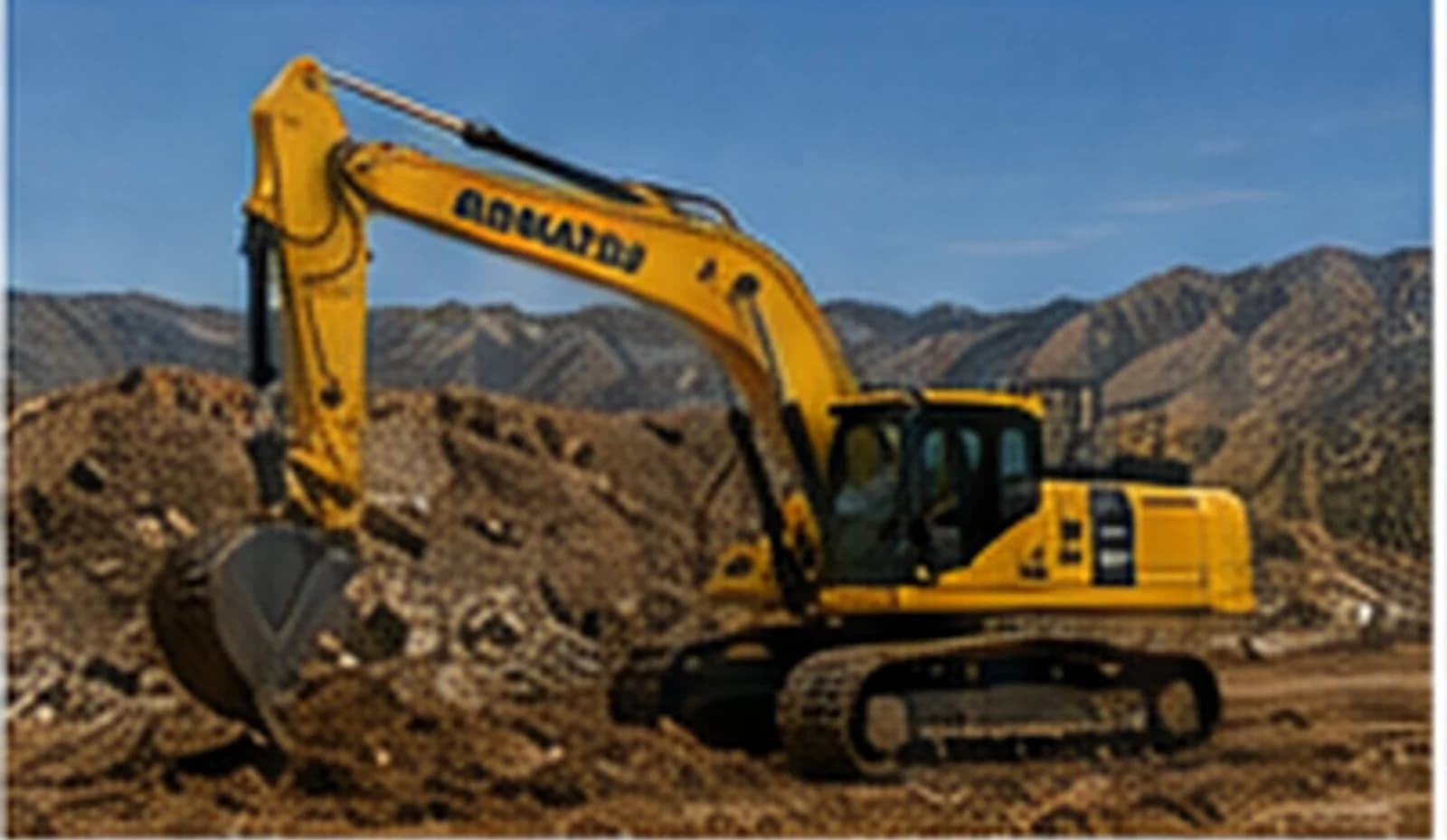
Komatsu and its digital-construction subsidiary EARTHBRAIN have entered a strategic partnership with AIM Intelligent Machines, a developer of autonomous operation technology for bulldozers and hydraulic excavators. Komatsu says the companies have moved beyond joint technology validation and business development into commercial deployment in the United States, where autonomous Komatsu machines are already operating at customer jobsites. A Japanese-market introduction is planned from 2027. The announcement matters because it connects autonomy directly with mainstream earthmoving machines rather than limiting the discussion to haul trucks in large mines.
How the workflow is supposed to connect
The proposed system links construction plans and target-terrain data generated through Komatsu's Smart Construction environment with AIM's physical-AI platform. In Komatsu's description, the machines can use the project objective and terrain data to determine work methods and travel routes, then execute tasks autonomously. That connection between plan and machine is the central idea. A dozer or excavator does not create value simply by moving without an operator; it has to move the right material to the right place and leave the site closer to the design surface.
Why excavators are a difficult autonomy problem
Excavators have more complex motion than a haul truck following a route. The upper structure rotates independently of the undercarriage, the boom, arm and bucket interact with material whose resistance changes from cycle to cycle, and the machine may work near trenches, trucks, utilities and people. Productive digging depends on positioning and judgment as well as repeatable control. Autonomous excavation therefore requires perception, machine control and task planning to work together. Even a system that performs well in bulk earthmoving may need human supervision for unusual material, buried obstructions or changing site priorities.
Dozers bring a different challenge
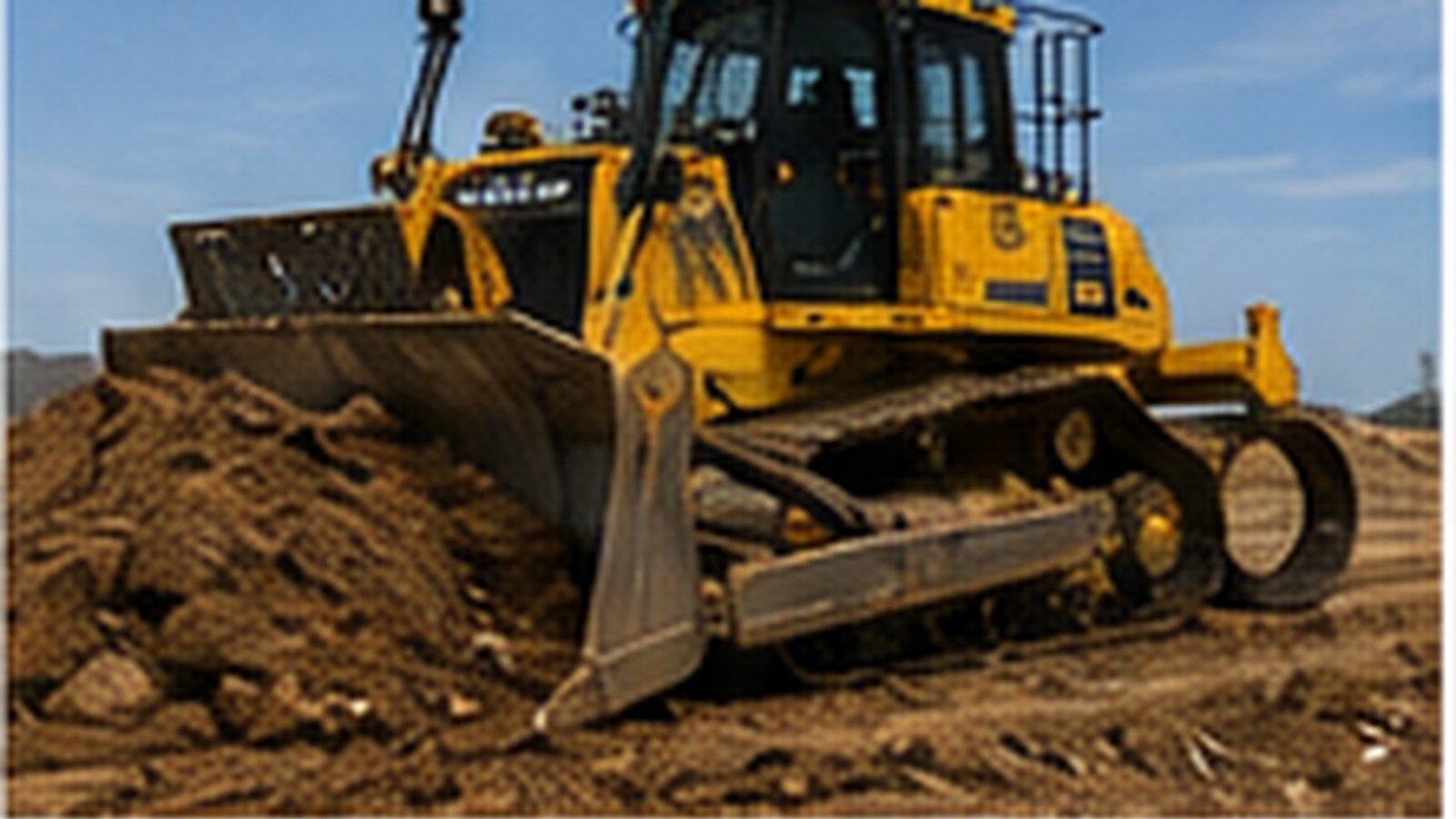
Dozer work can be highly repetitive, which makes it attractive for automation, but the machine operates through constant interaction between blade load, traction and terrain. Efficient pushing is not simply a matter of following a GPS line. The system has to manage how much material is carried, where it is placed and whether the machine is slipping or digging too deeply. Integration with a target surface can make the task more measurable, while autonomy can potentially deliver repeatable passes. The economic value will depend on whether the autonomous system can achieve useful production rates across normal variations in soil and weather.
Retrofit could change the adoption curve
One of the most important claims in the announcement is that AIM's technology can be retrofitted to existing bulldozers and hydraulic excavators. Construction fleets turn over equipment gradually, and many contractors cannot justify replacing productive machines simply to gain a new automation feature. A workable retrofit path could let owners test autonomy on selected machines and jobs before making larger fleet decisions. The retrofit model also creates questions: supported machine generations, installation time, sensor protection, calibration, warranty interaction and dealer support will all influence whether the concept scales.
Labor shortage versus labor transformation
Autonomy is often discussed as a response to labor shortages, but on construction sites the more realistic near-term effect may be a change in how skilled people are used. Operators may spend more time supervising machines, planning work, resolving exceptions and managing digital site information. Entry-level roles may also change as basic repetitive tasks become more automated. Training will need to include machine operation, digital models and system limitations. Contractors that treat autonomy as a plug-and-play replacement for people may overlook the new skills required to deploy it safely.
A single digital workflow
Komatsu says the partnership is intended to let customers manage planning, autonomous operation, progress visualization and performance data in one workflow. That is strategically important because jobsite technology has often grown as separate products: one system for machine control, another for survey data, another for telematics and another for project management. Integration can reduce duplicate data entry and make progress easier to understand, but it also increases dependence on software reliability and data quality. Site teams will need clear procedures for version control so machines are not acting on outdated terrain files or work plans.
Why autonomy is moving beyond mining
Autonomous heavy equipment has been proven most visibly in large mines, where haul routes are controlled, tasks repeat continuously and sites can support dedicated communications infrastructure. Construction and waste operations are more complicated. Work zones change, people and support vehicles move through the site, material conditions vary and machines may be reassigned several times in one shift. That makes recent autonomy projects important: they are testing whether the technology can move from highly structured environments into operations where the machine must understand changing objectives and work safely around a more dynamic jobsite.
Remote control and autonomy are not the same
Remote operation keeps a human operator in direct control while moving that person away from the machine. Autonomy asks the machine and its software to execute at least part of the task without continuous human input. The distinction matters because the safety case, communications requirements and workflow design are different. Remote control can reduce exposure to heat, dust, unstable ground or other hazards while preserving human judgment. Autonomous operation can potentially improve consistency and utilization, but it also requires reliable perception, localization, task planning, fail-safe behavior and clear rules for interaction with people and conventional equipment.
The integration problem is as important as the machine
A productive autonomous machine must be connected to the work plan. Digital terrain models, target grades, haul or travel routes, production priorities and progress data all need to move between planning systems and the equipment doing the work. If those systems are fragmented, an autonomous machine can become an isolated technology project rather than a useful part of daily operations. The strongest announcements in this area therefore emphasize workflow integration, retrofit paths and data visibility instead of simply showing a machine moving without an operator in the cab.
What contractors should watch
Fleet owners should look for evidence beyond demonstrations. Important questions include the supported machine models, the conditions in which the system can operate, how obstacles are detected, what happens when communications are interrupted, how a supervisor pauses or redirects work, and how production data is recorded. Contractors also need to understand who is responsible for installation, calibration, training and support. A technology can be impressive in a controlled pilot while still being difficult to deploy economically across a mixed fleet. Commercial success will depend on repeatable installation, measurable productivity and a support model that works outside a laboratory environment.
Commercialization depends on support
Construction companies rarely have robotics engineers on every jobsite. For autonomous equipment to become mainstream, installation, calibration, software updates and troubleshooting must fit within normal dealer and technology-support structures. A contractor needs to know who answers the phone when a machine refuses to start an autonomous task at 6 a.m. Support quality may become as important as the autonomy algorithm itself.
Human-machine workflows will evolve
The likely near-term jobsite is mixed rather than fully autonomous. Some machines will work conventionally, some will use machine control, and selected repetitive tasks may be autonomous. Surveyors, operators and supervisors will share digital plans while people handle exceptions and changing priorities. Designing traffic and communication around that mixed environment will be one of the industry's practical challenges.
Final assessment
Komatsu, EARTHBRAIN and AIM are attempting to connect autonomy to an existing digital construction workflow and to offer a retrofit route. Those two elements address real adoption barriers. The next step is to show how the system performs across different soils, machine generations and contractors, and to quantify how often human intervention is required.
Editorial perspective: specifications need context
Machinery news is most useful when a specification is connected to the work it changes. Horsepower, rated capacity, hydraulic flow, battery size or investment dollars can all become misleading when isolated from application. A productive fleet decision considers the complete system: machine, attachment, operator, transport, service support, energy or fuel supply, site conditions and expected annual utilization. That is why the implications of an announcement may be more important than the announcement itself. Readers should use manufacturer figures to identify what deserves testing, then verify the result with demonstrations, production records and dealer support information.
What remains unknown
Early announcements rarely answer every ownership question. Final pricing, regional availability, option packaging, real-world fuel or energy use, software support and long-term residual value may become clear only after machines or programs have been in the field. Where a manufacturer makes a percentage improvement claim, buyers should ask what baseline machine and test conditions were used. Where a new technology is described as autonomous or intelligent, the operating envelope and intervention requirements matter. A careful buyer separates verified facts from expectations and treats early claims as inputs for further evaluation rather than guaranteed results.
Why this story belongs on Machinery.org
The machinery industry is changing through hundreds of incremental decisions: a manufacturer redesigns a cab, a dealer opens closer to customers, a company adds automation, a workforce program trains technicians, or an engineering partnership pushes equipment into a new environment. Each development affects how machines are selected, supported and used. Machinery.org follows these changes because equipment buyers need more than a list of model numbers. They need context that explains what a development could mean for uptime, productivity, safety and total cost of ownership.
What deployment could look like on a real construction site
Construction autonomy will have to fit into jobsites that already contain people, survey data, conventional machines and changing production priorities. A realistic deployment may begin with a defined task such as rough grading, trench excavation or repetitive loading in a controlled zone. Digital design data can tell the machine what geometry is required, while the autonomy system manages movement and tool control within limits set by the site team. A supervisor would still need a clear way to pause the machine, change the plan and intervene when ground conditions or site priorities change. This is different from simply programming a machine to repeat the same motion. Earthmoving requires the machine to respond to material resistance, changing elevations and the presence of other equipment. Success will depend on how well the autonomous system communicates with the rest of the jobsite rather than on how impressive the machine looks when operating alone during a demonstration.
Retrofit potential and mixed fleets
The involvement of AIM Intelligent Machines is notable because autonomy does not have to begin with an entirely new fleet. Retrofit approaches can allow contractors to add autonomous capability to selected existing machines, potentially lowering the barrier to testing the technology. That could be especially important for large contractors that operate mixed fleets and replace machines on different schedules. At the same time, retrofit introduces engineering questions around controls, sensors, hydraulic response, machine condition and safety validation. A system that works well on one model cannot automatically be assumed to perform identically on another. Contractors will need clear compatibility requirements and support procedures. In the near term, mixed fleets are likely to be normal: some machines may operate autonomously in controlled zones, others may use operator-assist functions, and conventional equipment will continue to work around them. Managing that interaction may be as important as the autonomous capability itself.
Why digital job plans matter
Autonomy becomes more valuable when it is connected to the digital plan for the work. Modern construction projects increasingly use 3D models, survey control, machine guidance and production tracking. An autonomous dozer or excavator can use that information to understand target elevations, cut-and-fill requirements and task boundaries. The opportunity is to turn the design model from a passive reference into an active production instruction. That can improve repeatability, but it also raises the importance of data quality. If the model is wrong, outdated or poorly aligned with site control, an autonomous machine can repeat the wrong action very consistently. Field teams therefore need strong processes for version control, survey verification and approval of changes. Komatsu and AIM's partnership will be most meaningful if it makes the digital workflow easier to manage rather than adding another isolated system that contractors must maintain separately.
Bottom line
The Komatsu and AIM partnership is significant because autonomy becomes more useful when it can be integrated into machines and workflows that contractors already understand. Excavators and dozers perform tasks that demand continuous awareness of terrain, material behavior, nearby equipment and changing jobsite priorities, so reliable automation must handle more than simple point-to-point travel. The collaboration brings together machine engineering and autonomy software with the goal of improving repeatability, safety and productivity in selected applications. Contractors should expect progress to arrive in stages, with assisted functions and supervised autonomous work likely expanding before completely unattended operation becomes routine. Field validation, dealer support, training, jobsite connectivity and integration with existing fleet systems will determine how quickly these technologies move from demonstrations into everyday construction operations.
Sources and publication note
Original editorial writing based on the following sources. Manufacturer claims should be verified against final regional specifications before publication.
Komatsu official newsroom: https://www.komatsu.com/en-us/newsroom/2026/komatsu-aim-enter-strategic-partnership

Previous Article
Hitachi Construction Machinery Prepares for Its 2027 Transition to LANDCROS
Next Article
Vermeer and Interlune Expand Partnership to Develop Construction Equipment for Future Lunar Operations
Corrections and reader feedback
Found an error or have source material we should review? Send a correction report and an administrator can review it.
Report a correction