

Conveyor Belt Width and Aggregate Flow in Stone Crushing Equipment
Read our latest editorial analysis: Conveyor Belt Width and Aggregate Flow in Stone Crushing Equipment. Expert heavy machinery commentary, industry developme…
Representative machinery image from the Machinery.org media library.
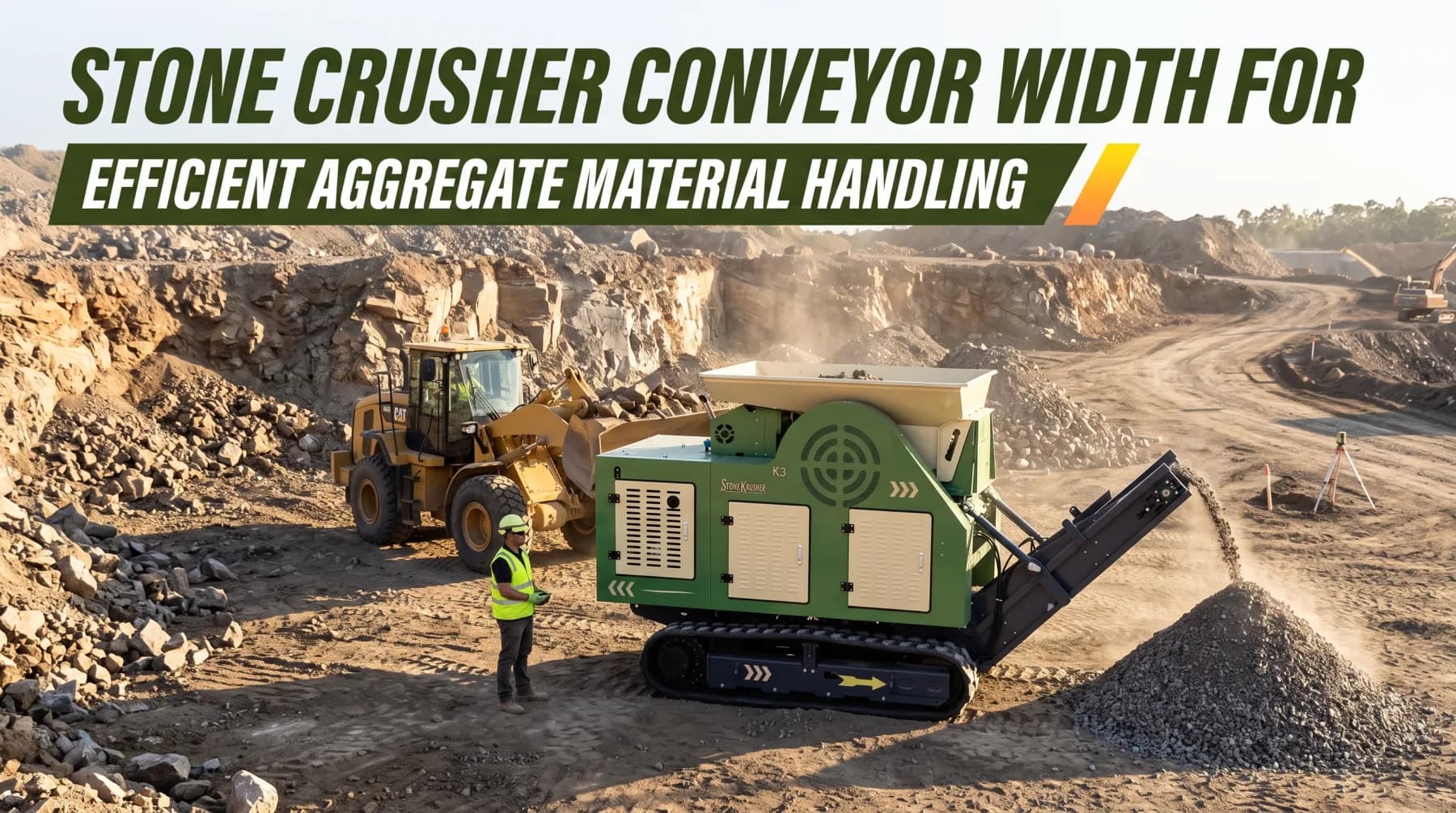
A stone crusher conveyor must handle a steady stream of processed material while keeping the crushing and stockpiling areas organized. Feed rates that exceed belt capacity can cause spillage, uneven loading, belt tracking problems, and material buildup around the conveyor. Stockpile height and discharge clearance also affect how smoothly crushed aggregate moves away from the crusher.
Conveyor width influences how much material the belt can carry and how evenly that material can be distributed across its surface. The belt must suit the crusher's output and the size and characteristics of the aggregate being processed, while conveyor length and discharge position determine how far material can be moved and where it can be stored. Proper feed chute alignment, centered loading, and suitable stockpile spacing help maintain consistent material flow.
Routine inspection is also important during extended crushing operations. Operators should monitor belt tracking, rollers, pulleys, buildup, and signs of wear, while clearing accumulated material only after following the required shutdown and lockout procedures. Matching belt width, feed rate, conveyor layout, and stockpile management helps reduce spillage and keeps aggregate production moving efficiently.
Conveyor Width and Material Flow
Conveyor width sets the surface available for carrying crushed aggregate away from the crusher. Every piece of stone that leaves the crushing chamber has to land on that belt, settle into a stable position, and ride to the discharge point. A belt with suitable width gives material room to spread out and travel steadily. A belt that's too narrow for the flow forces material toward the edges, where it can spill, bounce off, or build up along the frame.
Width works together with belt speed and belt shape. Many crusher conveyors use troughing idlers, which angle the outer rollers upward so the belt forms a shallow channel. That trough helps hold material toward the center and increases how much the belt can carry for a given width. Even with a trough, the belt needs clear space along each edge. When material rides close to the edges, small changes in loading or tracking push it over the side.
Steady flow depends on even loading. Material should land in the center of the belt at a consistent rate rather than in surges. Off-center loading pushes the belt to one side, which causes mistracking, edge wear, and spillage. Surging feed from the hopper can briefly overload the belt even when the average flow is well within its limits. Smooth, controlled feeding into the crusher is one of the simplest ways to keep material flowing cleanly across the conveyor.
Spillage costs more than wasted material. Stone that falls from the belt collects around the tail pulley, return rollers, and frame, where it can damage the belt and wear components. Cleaning it up means stopping production, and working around a conveyor with buildup adds exposure to pinch points. A well-matched width and steady loading reduce those interruptions and keep the operation focused on output.
Key takeaway: Conveyor width provides the surface for moving crushed aggregate, so a suitable width combined with centered, steady loading keeps material traveling smoothly and reduces buildup and spillage during continuous crushing.
Matching Width to Crusher Output
A conveyor should handle the crusher's expected material flow with room to spare. When the belt can't keep up, the discharge area becomes a bottleneck. Material piles up at the crusher outlet, spills from the belt, and can even back up into the chamber. When the conveyor is properly matched, crushed stone leaves the crusher as fast as it's produced, and the whole operation runs at a steady pace.
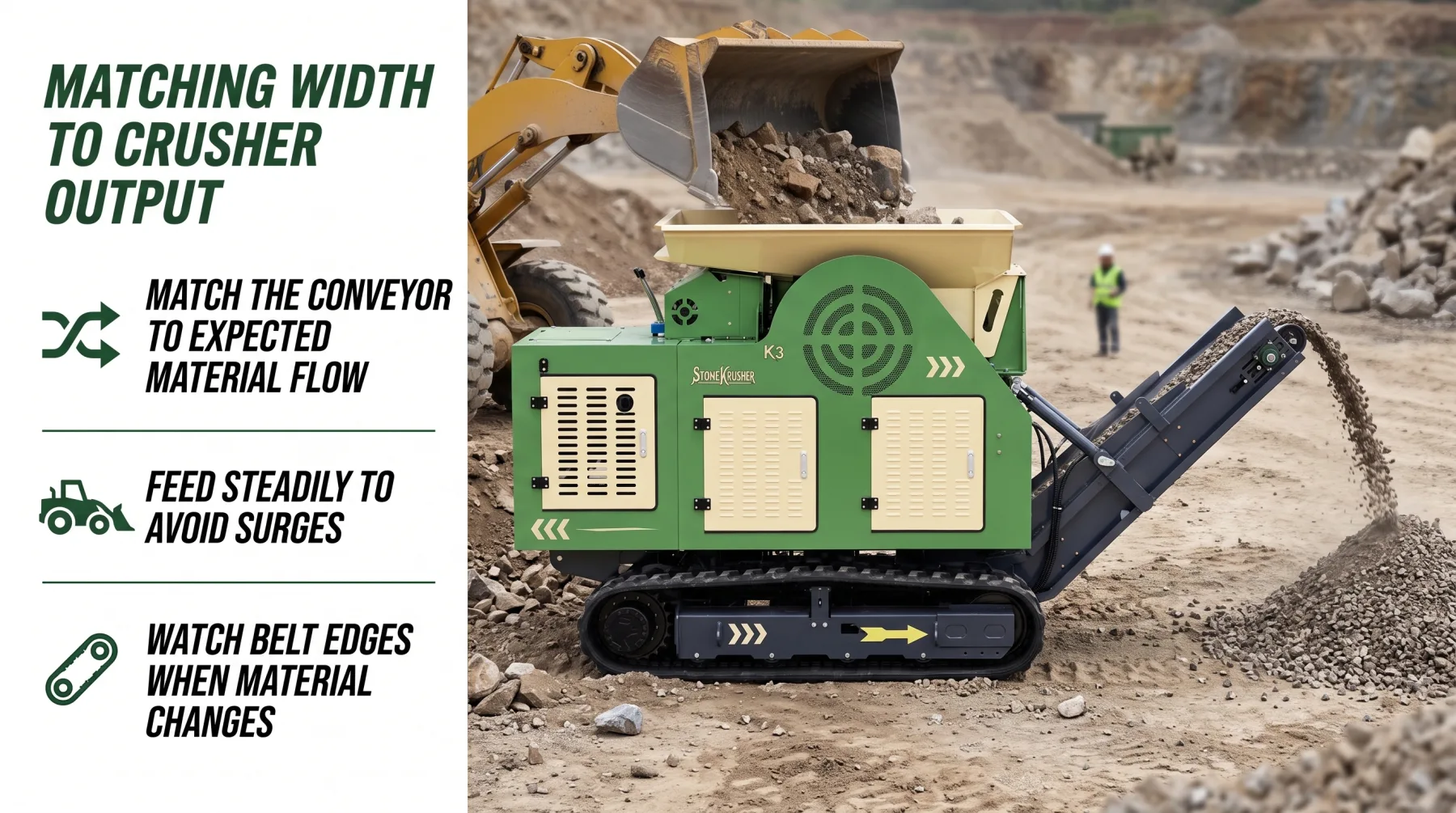
Conveyor capacity depends on several factors working together. Belt width sets how much cross-sectional area the material can occupy. Belt speed determines how quickly that material moves. Trough angle, material density, and the way the material settles on the belt also play a part. The manufacturer typically matches the conveyor to the crusher's rated output under expected conditions. Your role is to operate within that match rather than push past it.
Crusher output changes with the job. Feed size, material hardness, moisture, and the crusher's discharge setting all affect how much material passes through in an hour. A crew feeding soft, broken concrete may see a very different flow than one feeding hard, blocky rock. Watch the belt during the first few hours on any new material. If the load rides close to the edges or the belt slows under weight, reduce the feed rate until the flow settles.
The feeding method matters just as much. A loader that dumps full buckets in quick succession creates surges that a conveyor may struggle to clear, even when the average hourly output is reasonable. Consistent, moderate feeding keeps the crusher choke-fed where the manufacturer recommends it and sends a steady stream to the belt. Coordinate with the loader operator so the feed rate stays matched to what the crusher and conveyor can handle together.
If your conveyor regularly runs at its limit, review the setup with the manufacturer or dealer. Running a belt constantly overloaded speeds wear on the belt, idlers, bearings, and drive components.
Key takeaway: Match the conveyor to the crusher's expected material flow, and keep feeding steady and moderate, so the discharge area never becomes a bottleneck in the material-handling process.
Aggregate Size and Conveyor Surface
The size and shape of the crushed material affect how it behaves on the belt. Larger or irregular pieces need enough belt space to settle into a stable position. A large, flat slab or a long, angular chunk can rock, roll, or slide toward the edge, especially on an incline. Smaller, more uniform aggregate spreads across the belt more evenly and tends to settle into a consistent profile.
Belt width should suit the largest pieces the crusher will send down the conveyor. When oversized material rides on a belt that's too narrow, it can catch on skirting, strike guards, or fall from the transfer point. Your crusher's discharge setting controls much of this, so confirm the setting produces material the conveyor is designed to carry. Unusual feed material, such as concrete with protruding rebar or long slabs of stone, deserves extra attention.
Material characteristics also affect how stone sits on the belt surface. Rounded gravel rolls more easily than angular crushed rock, which tends to interlock and hold its position. Wet, fine material can stick to the belt and carry back along the return side, where it builds up on rollers and pulleys. Dry fines may blow off in the wind and create dust around the work area. Each of these behaviors calls for attention to belt cleaning, loading, and conveyor angle.
The belt itself must suit the work. Crushing aggregate subjects the belt to impact, abrasion, and cutting from sharp edges. Rebar, wire, and other contaminants in recycled material can slice or puncture the belt. Remove visible metal before feeding the crusher where practical, and follow the manufacturer's guidance on belt type and replacement. A belt in good condition handles the full size range of your material more reliably.
Key takeaway: Larger or irregular aggregate needs enough belt space for stable movement, so match the belt and discharge setting to the size range and type of material you process.
Conveyor Length and Transfer Distance
Width is only one part of conveyor design. Conveyor length determines how far crushed material travels from the crusher, and the discharge position sets where it lands. Together, width, length, and discharge height shape the entire material-handling arrangement around the crusher.
A longer conveyor moves material farther from the crushing area, which leaves more room around the machine for feeding, access, and maintenance. Length also affects discharge height on an inclined conveyor. The higher the discharge point, the taller the stockpile can grow before it reaches the head pulley. That extra capacity means fewer interruptions to move material away from the discharge area.
Incline angle deserves careful attention. A steeper conveyor raises the discharge point but makes it harder for material to stay in place on the belt. Rounded stone and wet fines may roll or slide back down a steep belt, and that rollback creates spillage near the tail end. The manufacturer designs the conveyor's working angle for the materials it's expected to carry. Stay within the specified range, and watch for rollback whenever you change materials or adjust the conveyor position.
Transfer points need planning too. Where crushed material passes from one conveyor to another, or from the conveyor to a loader or truck, alignment matters. Material should land centered on the receiving surface with as little drop height as practical. Large drops increase impact, dust, and wear, and they can damage the receiving belt or scatter material.
Many crushers fold their discharge conveyors for transport. Before operating, confirm the conveyor is fully raised or extended to its working position and secured with the manufacturer's pins or locks. Check overhead clearance, especially near power lines, before raising the conveyor.
Key takeaway: Conveyor length and discharge position determine how far material travels and where it lands, so plan length, incline, and transfer points together to support an efficient material-handling layout.
Stacking and Material Placement
A conveyor does more than carry stone away from the crusher. It also places finished aggregate in a location that supports the next step of the job. Proper discharge positioning creates space for continued crushing, keeps the work area organized, and reduces how often a loader has to rehandle material.
Plan the stockpile location before crushing begins. The discharge area should sit on firm, level ground with enough room for the pile to grow. It should also leave a clear, safe path for the loader or truck that will remove material later. Keep the stockpile away from the crusher's feed area, traffic routes, excavation edges, and pedestrian walkways. A pile that grows into a travel lane or against equipment creates both a safety problem and a production delay.
Watch the pile as it grows. When the stockpile reaches the head of the conveyor, material can back up onto the belt, overload the drive, and spill around the frame. Assign a loader to pull material from the pile at regular intervals, or plan to reposition the crusher before the pile reaches its limit. Never use the conveyor to push or level the pile.
Drop height affects stockpile quality. As material falls from the discharge point, larger pieces tend to roll down the sides while finer material collects near the center. This separation, called segregation, can make the stockpile less consistent. Where uniform material matters, such as road base, keeping the drop height reasonable and loading from different parts of the pile helps produce a more consistent product.
Good material placement pays off across the whole job. When finished aggregate lands where it's needed, crews spend less time moving material twice and more time producing it.
Key takeaway: Proper discharge positioning places crushed aggregate away from the crushing area, supports organized stockpiling, and reduces the need for additional handling equipment.
Conveyor Inspection and Maintenance
A crusher conveyor handles continuous impact, abrasive material, dust, and long operating hours, making regular inspection important for reliable performance. Before cleaning, inspection, or adjustment, shut down the system and follow the manufacturer's lockout procedure. Check the conveyor components regularly for wear, damage, buildup, and alignment issues.
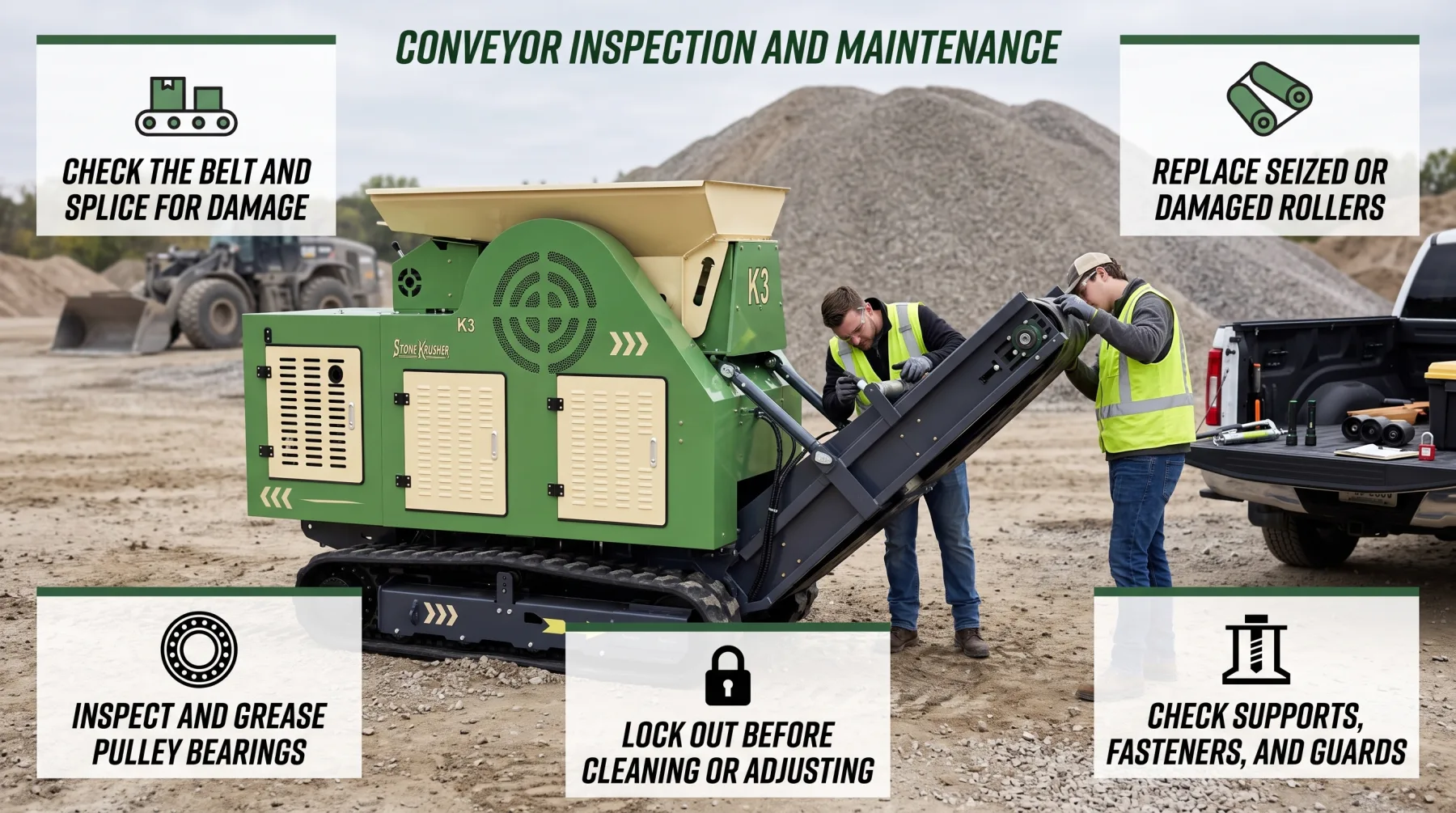
Belt Condition: Inspect for cuts, tears, punctures, fraying, worn areas, and damage around the belt splice.
Rollers & Idlers: Check rollers for seized bearings, packed material, damage, and signs of uneven belt wear.
Bearings & Pulleys: Inspect for leaks, overheating, unusual noise, surface wear, and material buildup around pulley components.
Frame & Supports: Check support legs, brackets, welds, fasteners, guards, and locking components for damage or looseness.
Belt Tracking & Cleaning: Monitor belt alignment and inspect skirting, scrapers, cleaners, and transfer areas for wear and material buildup.
Key takeaway: Inspect belts, rollers, bearings, supports, and connection points regularly, and clear accumulated material only with the conveyor locked out, to maintain consistent performance during crushing work.
Conclusion
Stone crusher conveyor width plays a central role in efficient aggregate material handling, but it delivers the best results when it works alongside the rest of the setup. A suitable width with centered, steady loading keeps crushed stone flowing without spillage. Matching the conveyor to crusher output prevents the discharge area from becoming a bottleneck, while belt space suited to aggregate size keeps larger and irregular pieces stable. Conveyor length, incline, and discharge position shape how far material travels and where it lands, and thoughtful stacking keeps the site organized and reduces rehandling. Regular inspection and safe cleaning of belts, rollers, bearings, and supports tie everything together and keep the conveyor reliable through long crushing days. Before your next shift, lock out the conveyor, walk its full length, and confirm your feed rate and stockpile plan suit the material you're about to crush.
Frequently Asked Questions
Why does conveyor width matter on a stone crusher?
Conveyor width affects how crushed material is carried, supported, and distributed during transfer. A suitable belt width gives material enough space to move steadily while helping keep the load centered. Proper width can also reduce spillage, buildup, and material loss around the conveyor and discharge area.
Should conveyor width match crusher capacity?
Yes. Conveyor width should be suitable for the expected material flow and crusher production rate so the conveyor does not become a restriction in the crushing process. An appropriately sized conveyor supports steady material transfer and helps maintain a balanced crushing operation. Feeding should remain consistent and within the system's designed capacity.
Does aggregate size affect conveyor performance?
Yes. Larger, irregular, or heavier aggregate requires adequate belt space and suitable conveyor components for stable movement. The conveyor should be compatible with the crusher's discharge size, material characteristics, and expected flow rate. Matching the belt design and operating conditions to the processed material helps reduce spillage and excessive component wear.
What parts of a crusher conveyor need inspection?
Inspect the belt, rollers, bearings, pulleys, supports, fasteners, guards, and discharge areas regularly. Look for belt damage, abnormal wear, loose components, buildup, or alignment problems. Any material buildup should be removed using the manufacturer's safe procedure. Always shut down and lock out the conveyor according to the required safety procedure before inspection, cleaning, or maintenance.

Reader feedback
Have any comments, corrections, or suggestions for this blog post? Reach out to our support team.
Report feedback