
Forklift Guides Guides & Checklists
Comprehensive technical guides, operating manuals, and maintenance tutorials for Forklift Guides.
200
ArticlesPublished Guides & Manuals
24
TopicsEquipment & Maintenance Categories
100%
VerifiedCurated Technical Standards
Published guides
Forklift Guides guides
Showing page 1 of 2 (7 guides in Forklift Guides).
 GUIDE
GUIDEForklift Guides
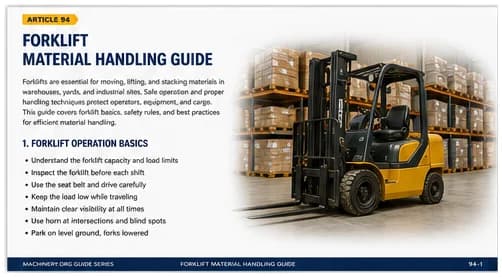
Forklift Material Handling Guide
Figure 94.1 - Forklift material handling overview.
 GUIDE
GUIDEForklift Guides
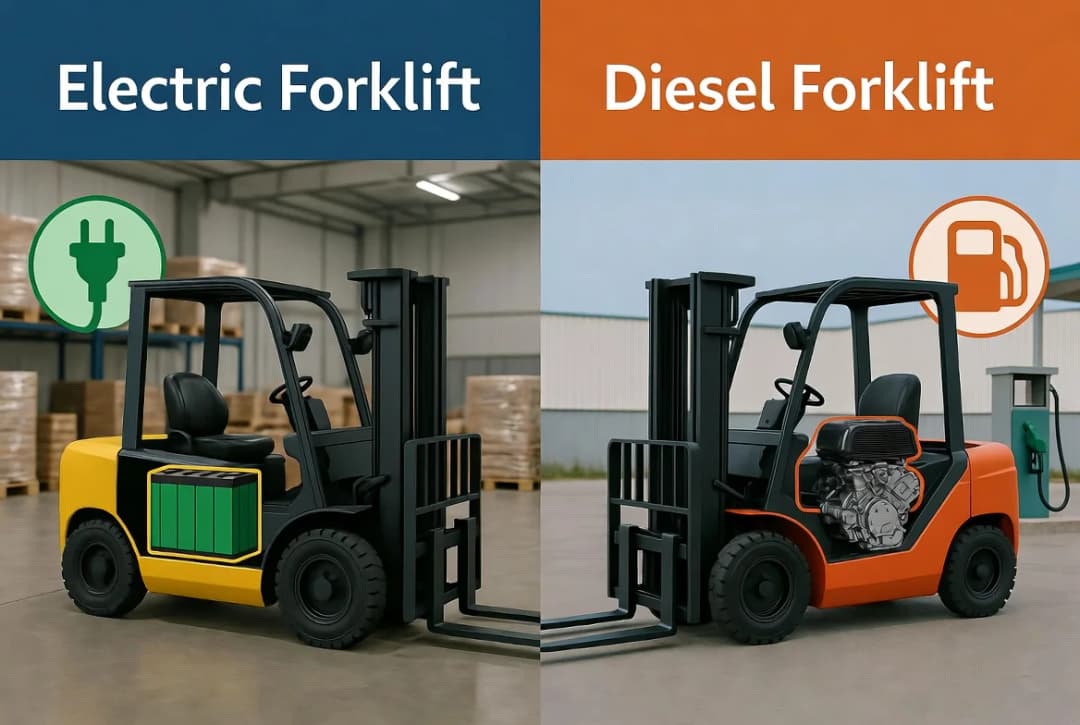
Electric Forklift versus Diesel Forklift
Electric and diesel forklifts differ primarily in energy source, emissions, operating cost and suitability for indoor versus outdoor work. Electric forklifts produce zero tailpipe emissions, operate quietly, and deliver the lowest energy cost per hour (commonly €1.40–€2.50 or equivalent). They are the default choice for warehouses, food and pharmaceutical facilities, and any enclosed space with air-quality constraints. Battery charging requires infrastructure and either multi-hour charge cycles.
 GUIDE
GUIDEForklift Guides
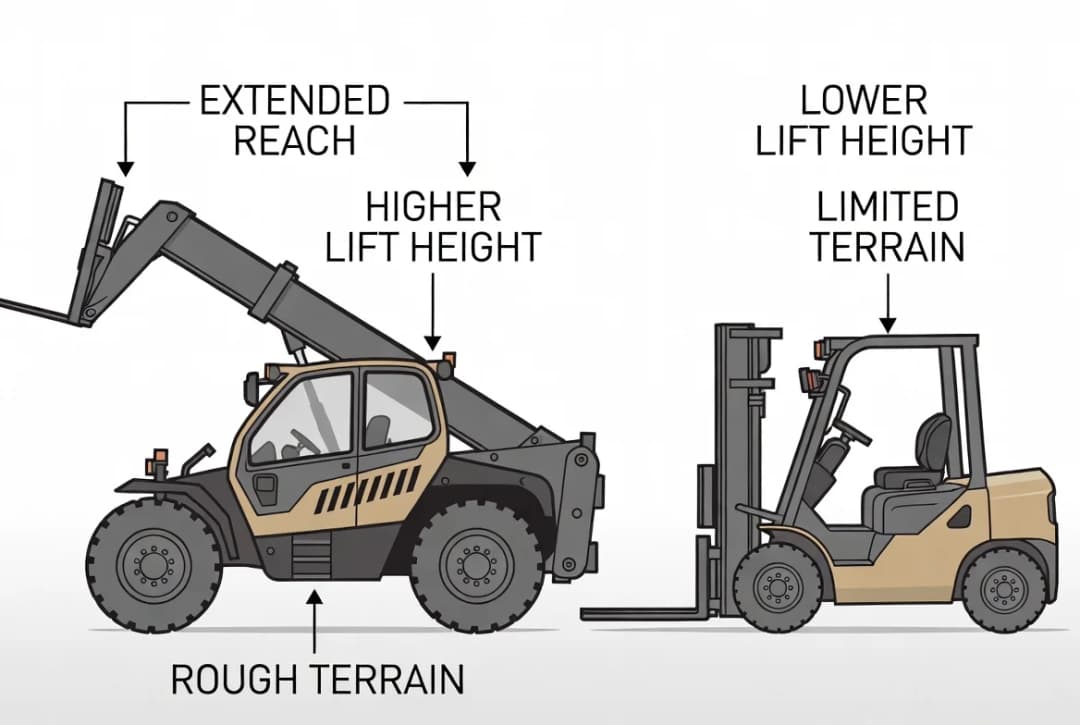
Telehandler versus Forklift
A telehandler (telescopic handler) and a traditional forklift both lift and move loads, but they serve different environments. A forklift is optimised for flat, hard surfaces such as warehouse floors and has a vertical mast. A telehandler has a telescopic boom that can extend forward and upward, giving it both lift height and forward reach. Telehandlers are designed for rough terrain with large flotation tyres, four-wheel drive and often four-wheel steer. They can place loads through windows, o.
 GUIDE
GUIDEForklift Guides
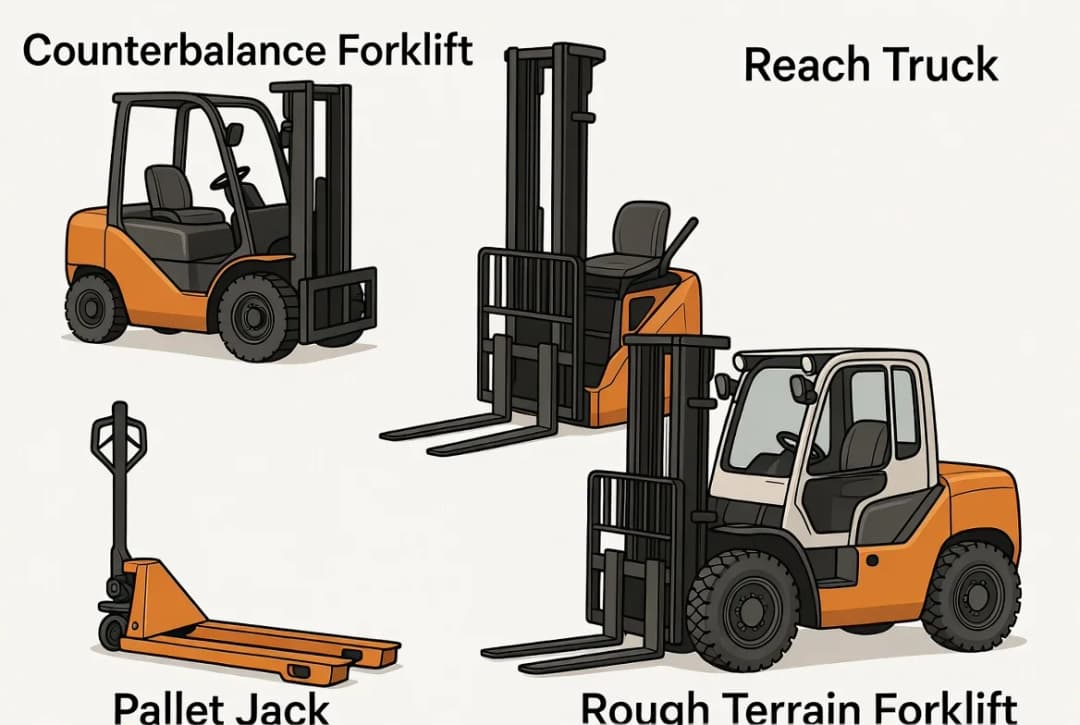
Choosing the Correct Forklift
Selecting the correct forklift is a foundational decision that affects productivity, safety, operating cost, and facility compatibility for years. A mismatched machine leads to inefficient material handling, higher accident risk, excessive wear, and unnecessary capital or rental expense. The process begins with a clear analysis of the work environment, the loads to be handled, the required lift heights, the available power infrastructure, and the skill level of the operators.
 GUIDE
GUIDEForklift Guides
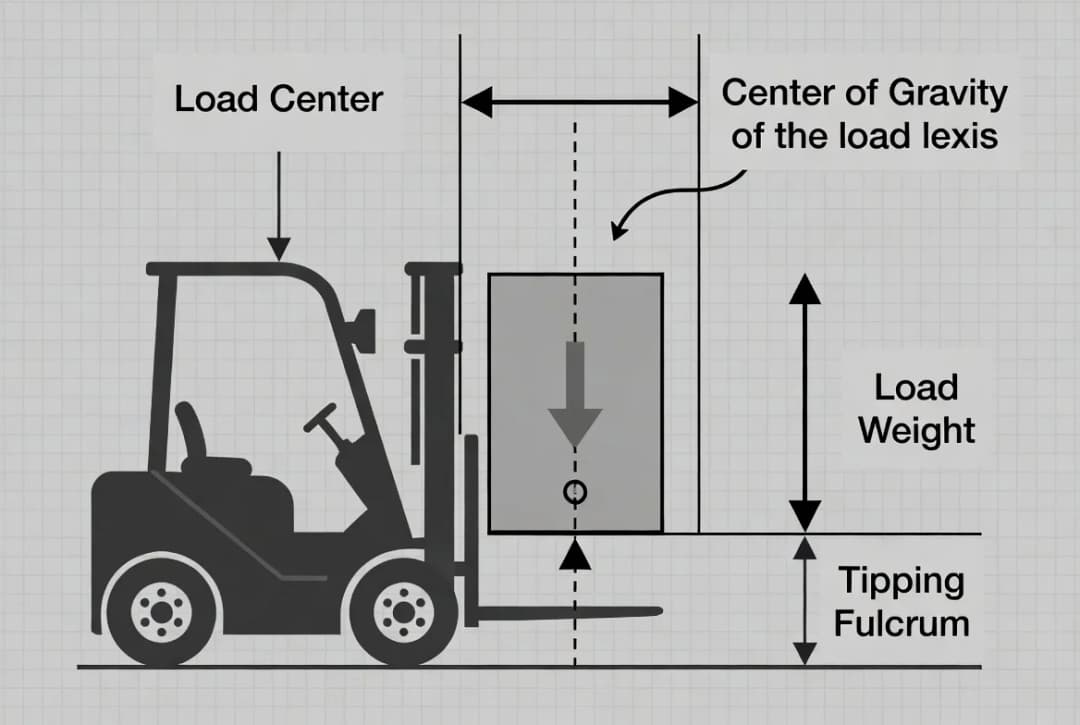
Load Center Explained
The load center is one of the most critical yet frequently misunderstood concepts in forklift operation and specification. It is the horizontal distance from the vertical face of the forks (or the front face of the fork carriage) to the center of gravity of the load. Standard rated capacities are almost always stated at a 24-inch (600 mm) or 500 mm load center. When the actual load center is greater than the rated value, the truck’s safe lifting capacity decreases, sometimes dramatically.
 GUIDE
GUIDEForklift Guides
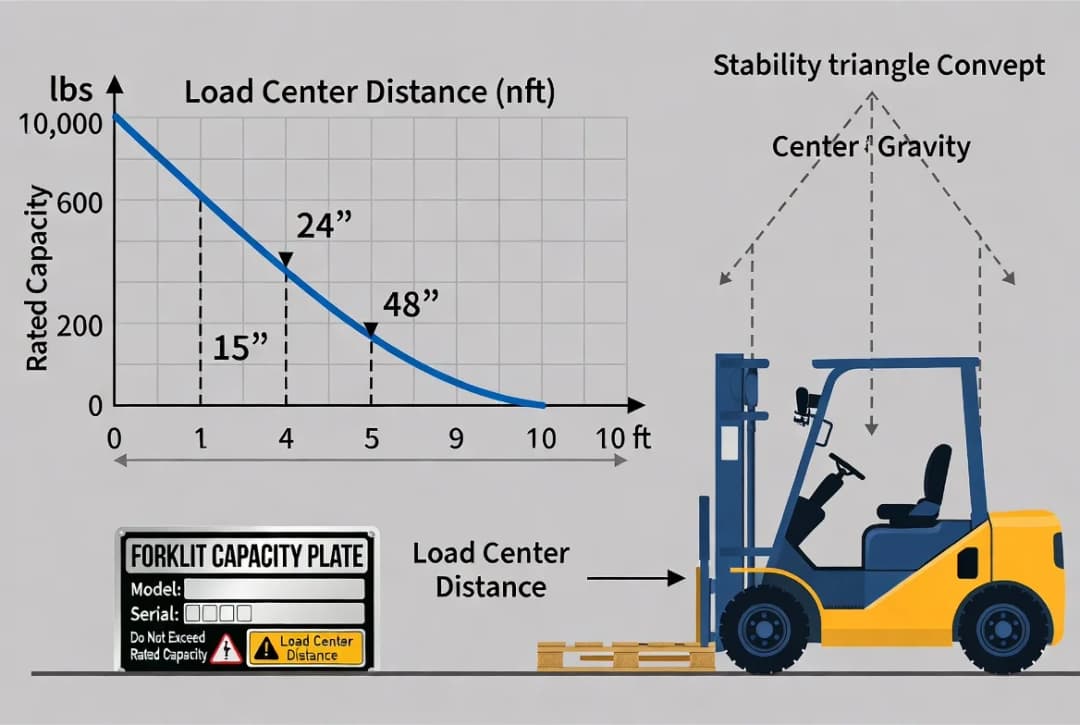
Forklift Capacity Explained
Forklift capacity is the maximum weight a truck can safely lift and transport under specified conditions. It is not a single fixed number; it varies with load center, lift height, attachment configuration, and sometimes with the presence of side-shift or other options. The capacity rating that appears on the data plate is the maximum load the truck can handle at a stated load center (usually 24 inches or 500 mm) and at a stated lift height, with the mast vertical and on firm level ground.